How to solve plastic lumber boards bend or warp after cooling?
Why do finished plastic lumber boards bend or warp after cooling?
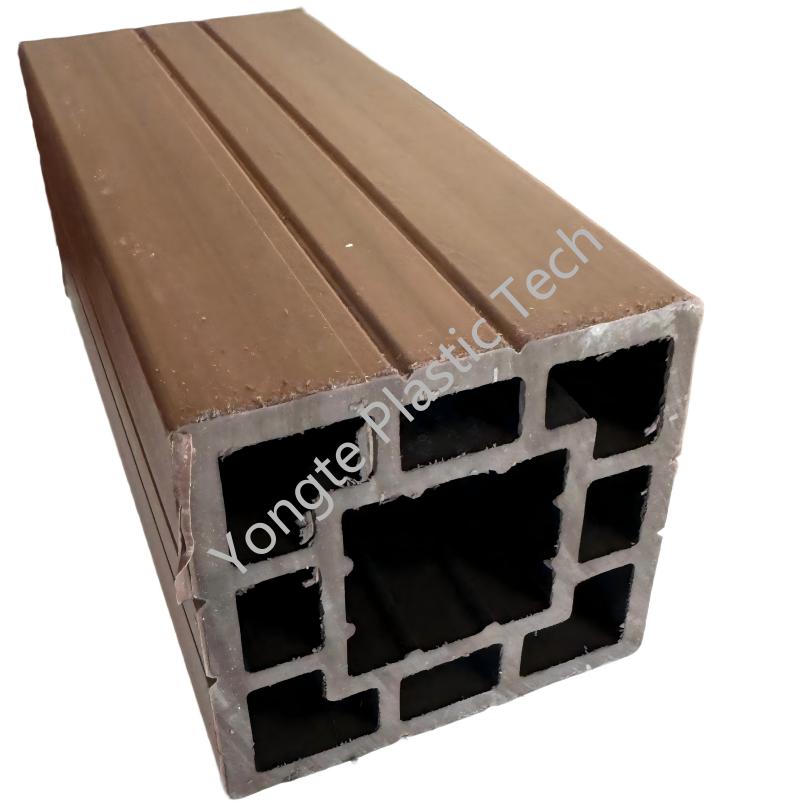
Bending and warping problem after cooling is the main problem faced in recycled plastic lumber extrusion, and it directly affects the flatness, stacking stability and installation quality of the final profile. This issue is closely related to the uneven shrinkage of recycled PP and PE materials during the cooling process. When the board leaves the die, the outer surface contacts the calibration sleeve and cooling water first, so it solidifies quickly, while the core remains molten for a longer time. The shrinkage difference between the surface layer and the core layer generates internal stress. If this stress is not balanced, the board will bend or warp after cooling. The problem becomes more complicated when using mixed post-consumer recycled materials, because melt strength, crystallinity and shrinkage behavior often vary from batch to batch. In addition, unstable haul-off speed, uneven cooling temperature, inconsistent wall thickness and improper die gap adjustment can further increase deformation. In outdoor applications, repeated temperature changes will gradually release the residual stress and make the warping more obvious. Therefore, controlling cooling uniformity, stabilizing extrusion parameters and improving internal stress distribution are key measures to reduce bending and warping in plastic lumber production.
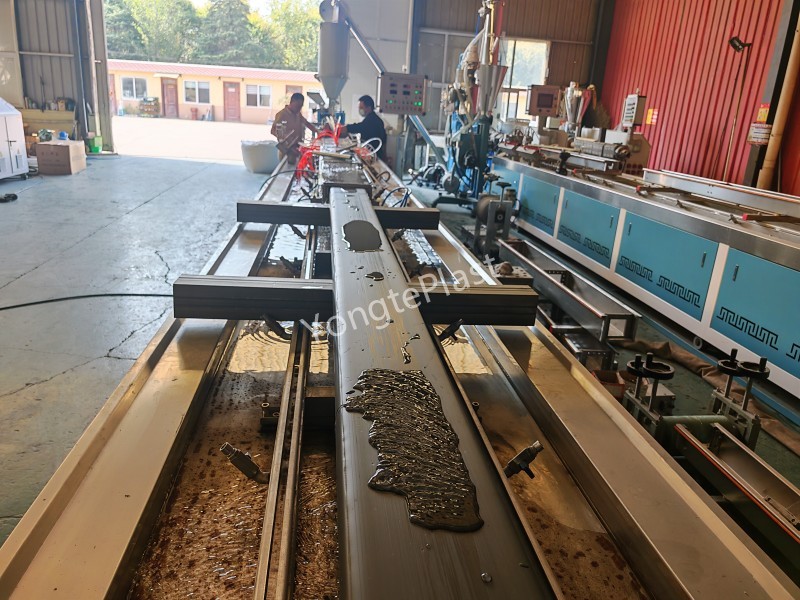
Solution solve the problem
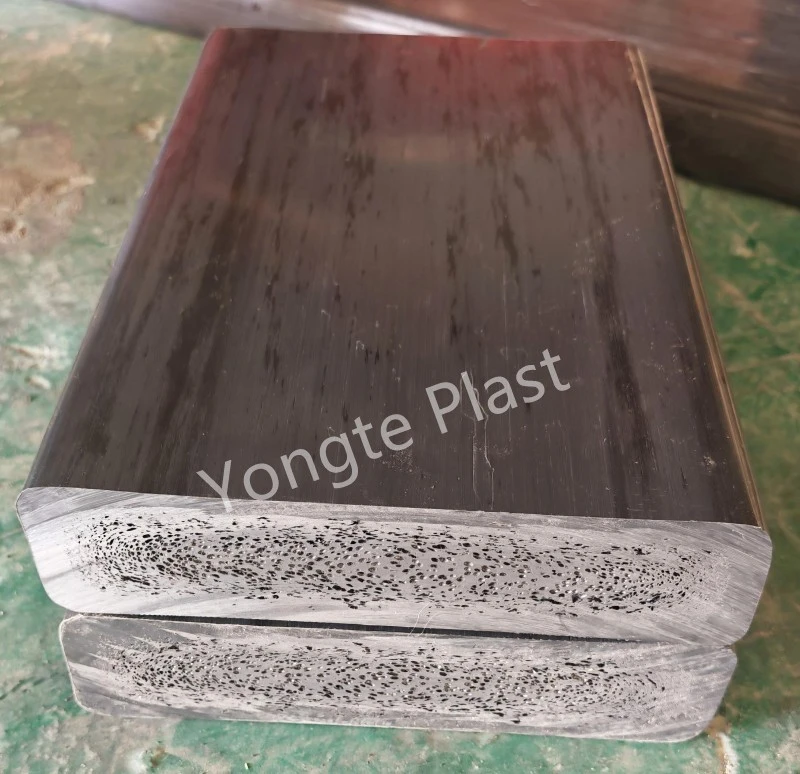
1, Foaming technology
we recommend integrating microcellular foaming technology into the design of our plastic lumber extrusion machine.
Unlike solid extrusion where the material’s thermal shrinkage and crystallization stresses concentrate at the core and outer layers, the foamed structure creates a buffering layer that allows dimensional relaxation during cooling. Field feedback from desert-region projects, where surface temperatures can swing by tens of degrees Celsius between day and night, shows that foamed slats remain straight and dimensionally stable, avoiding the visible bowing that commonly affects solid boards over time. The uniform microcellular structure also reduces density variations along the profile length, which further prevents uneven shrinkage that often triggers curvature.
2, Increasing calibrator length to 1000mm or even more
Extending the length of the vacuum calibration sleeve provides more controlled cooling time for the extruded recycled plastic board before it reaches ambient temperature. As the profile enters the calibrator, the extended contact distance allows the outer skin to solidify more gradually, which reduces the temperature gradient between the surface layer and the core material. This slower and more uniform cooling helps balance the shrinkage rate across the board thickness and lowers the level of residual stress that often causes bending or warping after cooling. In microcellular foaming extrusion, a longer calibrator is particularly beneficial because it stabilizes the growth of internal bubbles early, preventing excessive expansion or uneven cell formation before the profile dimension is fully locked. Combined with stable water temperature control and evenly distributed vacuum zones, this measure improves the straightness, flatness and dimensional consistency of the final recycled plastic lumber product.
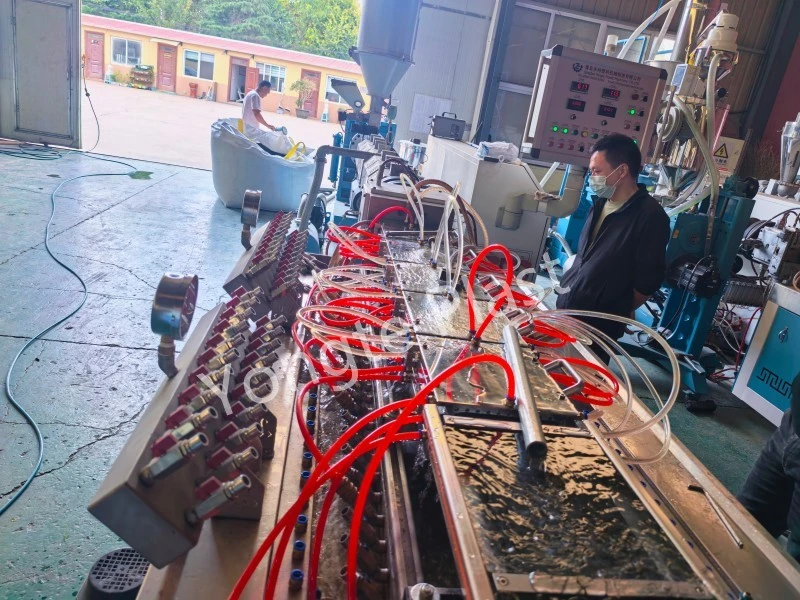
3, increasing water cooling tank to 6m or even 10m,
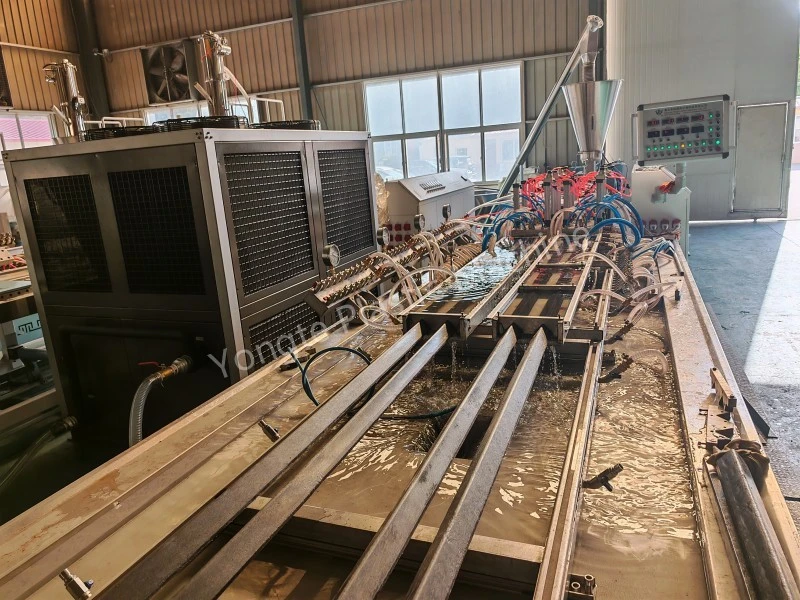
This additional cooling length helps reduce the temperature difference between the surface and the core of the recycled plastic profile after it leaves the calibrator. As the board travels through a longer water tank, the cooling process becomes slower and more uniform, which lowers the risk of uneven shrinkage and residual stress accumulation. For microcellular foaming extrusion, stable and prolonged cooling also helps lock the cell structure in place before the profile reaches the haul-off unit. When combined with appropriate water temperature, uniform water flow and stable line speed, a longer cooling tank can improve dimensional stability, reduce post-cooling bending and warping, and enhance the overall surface quality of the final recycled plastic lumber product.
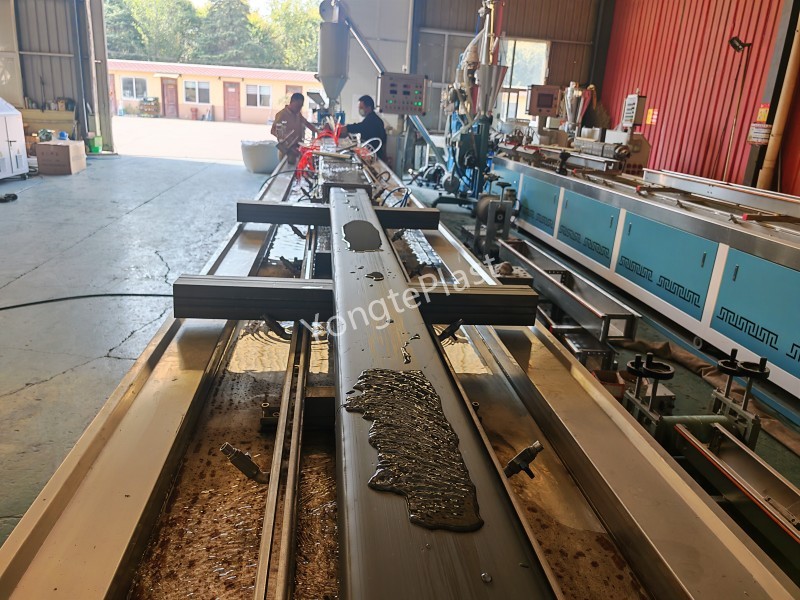
Summary
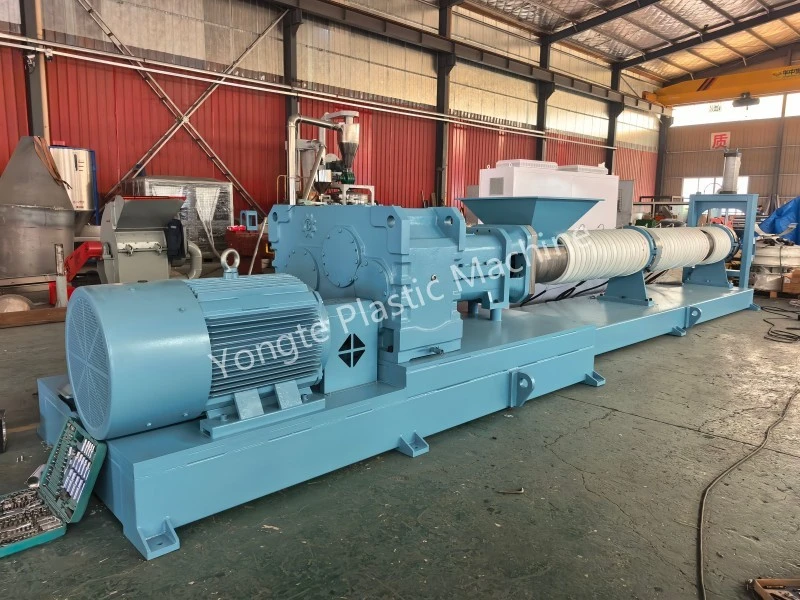
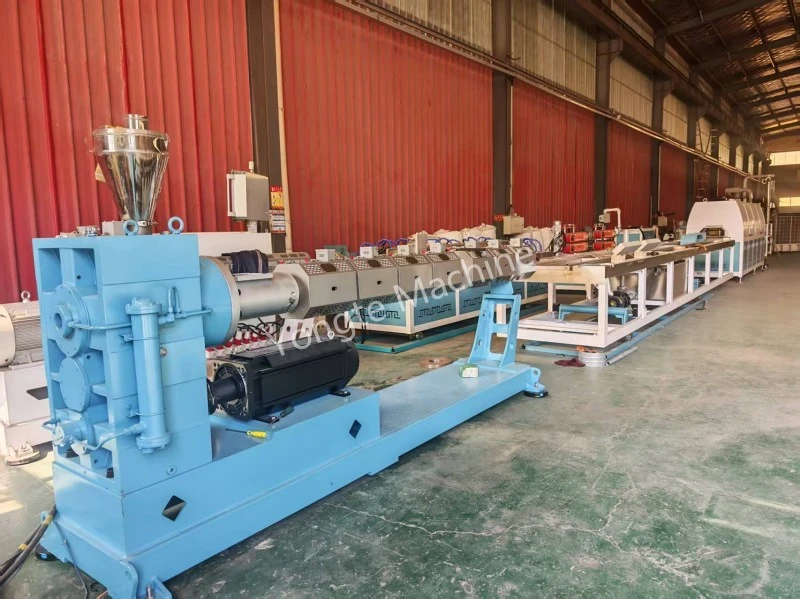
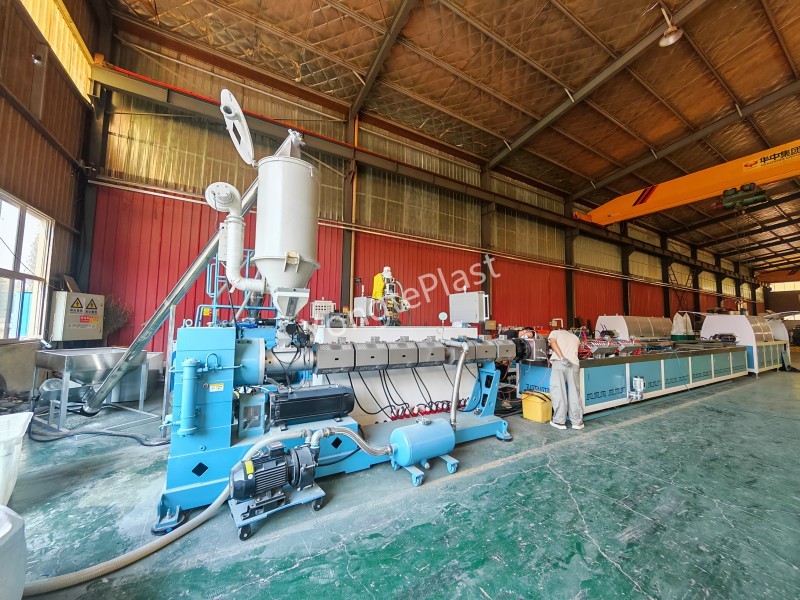
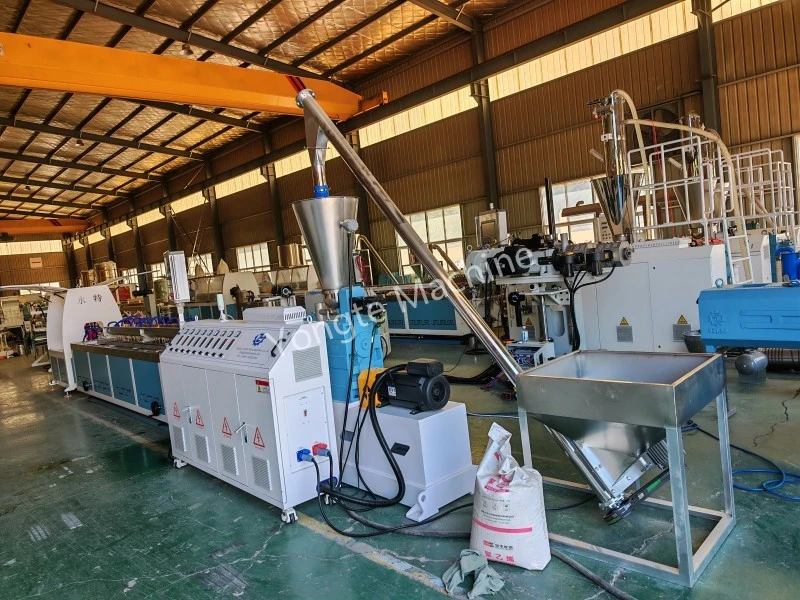
Our plastic lumber extrusion line has been developed to address the process instability commonly encountered when using recycled polyolefin feedstock. The screw design, barrel temperature profile and calibration control system are configured to handle variations in melt strength and filler content without compromising output stability. During normal production, the line supports consistent extrusion pressure, uniform cooling and reliable haul-off speed, which helps maintain consistent board dimensions and surface finish. In addition, the equipment layout allows operators to adjust vacuum level, water temperature and line speed according to the specific recycled material being processed. This flexibility is particularly important for microcellular foaming recycled plastic lumber production, where small changes in material composition can affect cell structure, density and final profile accuracy. Over time, a stable extrusion system not only reduces scrap rate and machine interruption, but also supports more consistent product quality across different production batches.
Related News
- How many molds are needed for one set of wpc door frame?
- Can Yongte Supply Turnkey Project Service for WPC decking plant?
- How can plastic film wastage be used to produce wood-plastic composite (WPC) products?
- Why We Adopt Microcellular Foaming in Recycled Plastic Lumber Extrusion Machine?
- why are both the vacuum tank and the spray tank essential in PE pipe extrusion line?
- Why We Equip PE Pipe Extruder with 33:1 L/D?
Leave me a message




News Recommendations