Why We Adopt Microcellular Foaming in Recycled Plastic Lumber Extrusion Machine?
Technical Explanation: Why Microcellular Foaming Technology Is Integrated into Yongte Plastic Lumber Extrusion Machine
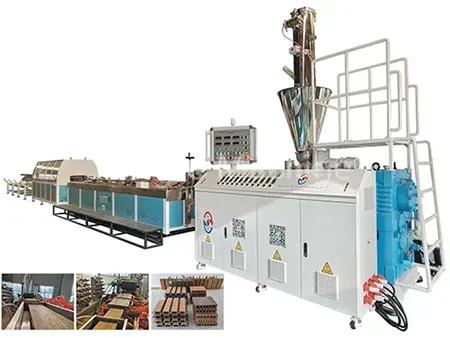
Yongte is a high-end plastic extrusion equipment manufacturer with more than 20 years of engineering experience, specializing in turnkey extrusion solutions that convert post-consumer recycled PP/PE waste into durable plastic lumber profiles for outdoor fencing, decking, construction and landscaping projects.
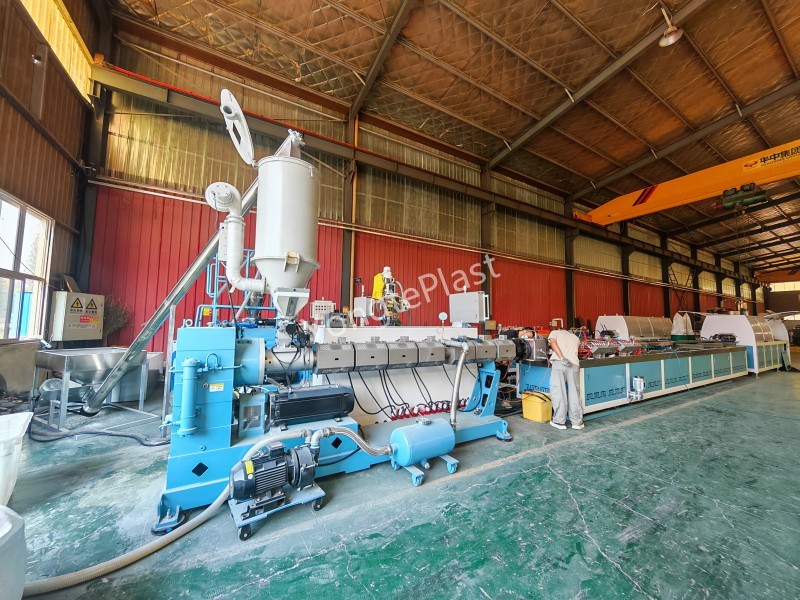
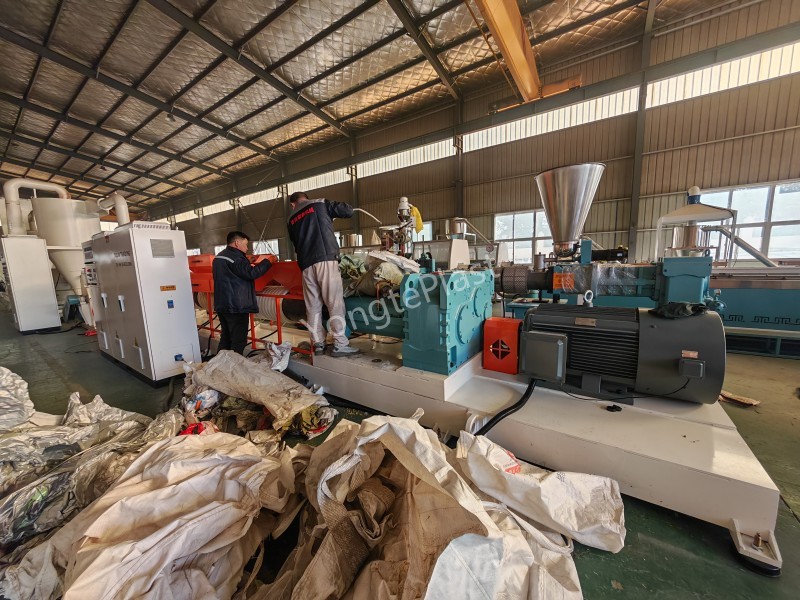
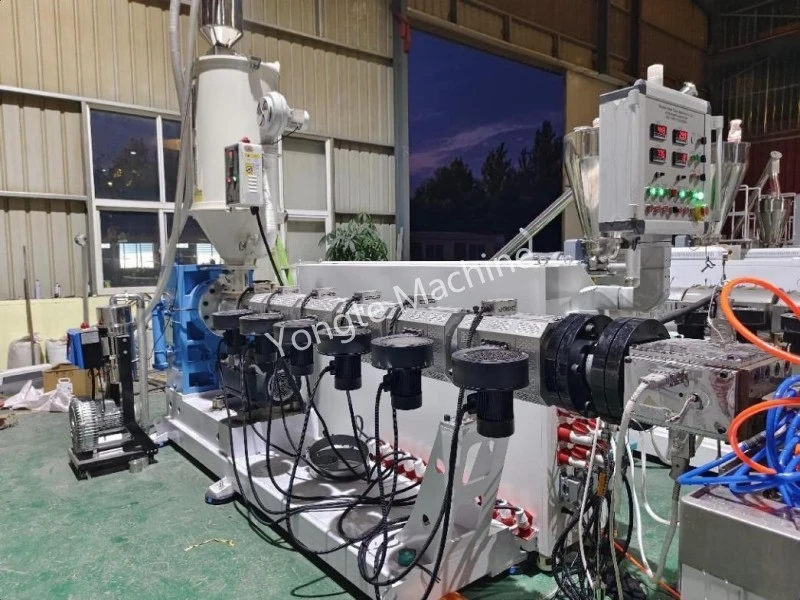
Plastic lumber, also known as recycled plastic profile, is generally produced from post-consumer recycled PP and PE feedstock. Compared with virgin resin, recycled polyolefin materials feature inconsistent melt index, impurity content and material composition, which brings a series of tough challenges to the extrusion forming process. For this reason, we recommend integrating microcellular foaming technology into the design of our plastic lumber extrusion machine. The core advantages and technical logic are elaborated as follows: Unlike general-purpose extruders, our plastic lumber lines are purpose-built for challenging mixed recycled feedstock, which often suffers from inconsistent melt index, impurity variation and unstable melt delivery. For this reason, our R&D team incorporates microcellular foaming technology as a core built-in compensation system, rather than treating it only as a weight-reduction option. The technical principles and practical field performance are explained below:
1. Compensate for fluctuations in extrusion pressure and melt flow rate caused by recycled PP/PE raw materials
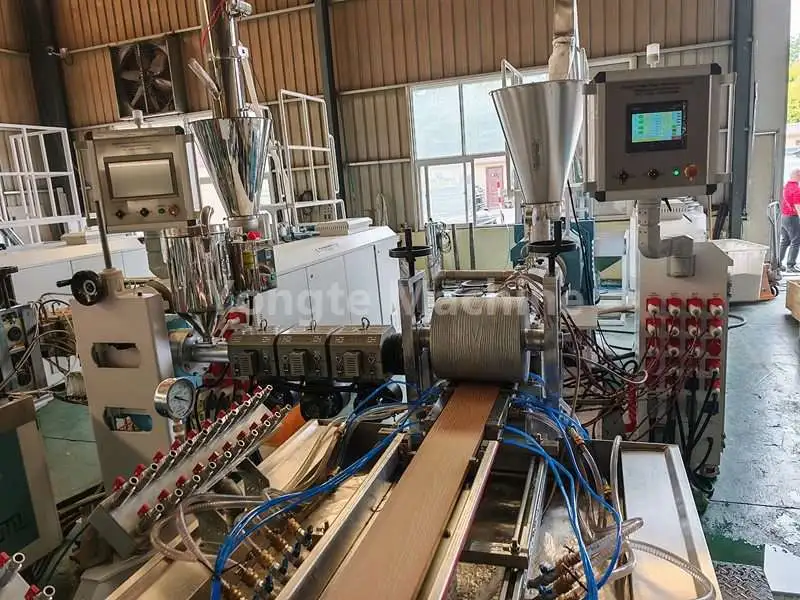
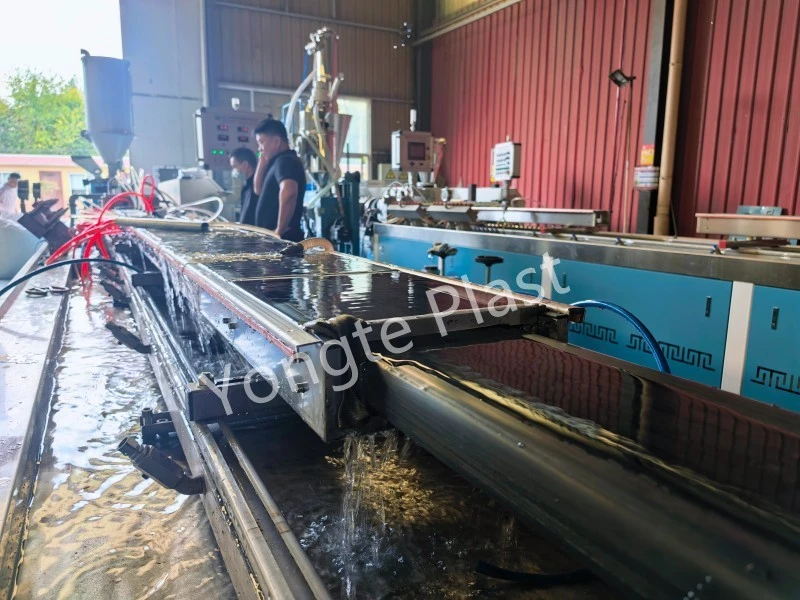
Recycled PP and PE waste comes from diverse sources such as agricultural films, packaging bags and rigid plastic scrap. Batch-to-batch differences in degradation level, mixing ratio and contamination will continuously disturb melt conveying inside the barrel, resulting in swinging extrusion pressure and unstable output flow. Yongte’s plastic lumber machine adopts a matched screw, feeding system and precise foaming injection unit. Countless uniformly distributed microcells form inside the melt and act as a pressure buffer. When pressure or flow drifts temporarily, the microcellular structure absorbs local pressure spikes and smooths out fluctuations. This greatly widens the raw material tolerance window, allowing stable production even with low-grade, mixed recycled plastics. In our Qatar customer project for plastic lumber fencing profiles, the line runs steadily on locally sourced mixed recycled PE scrap that would trigger frequent dimensional drift on traditional solid extrusion machinesyongteplas....
2. Correct uneven melt discharge from the extrusion die: fast flow at the center and slow flow along the edges
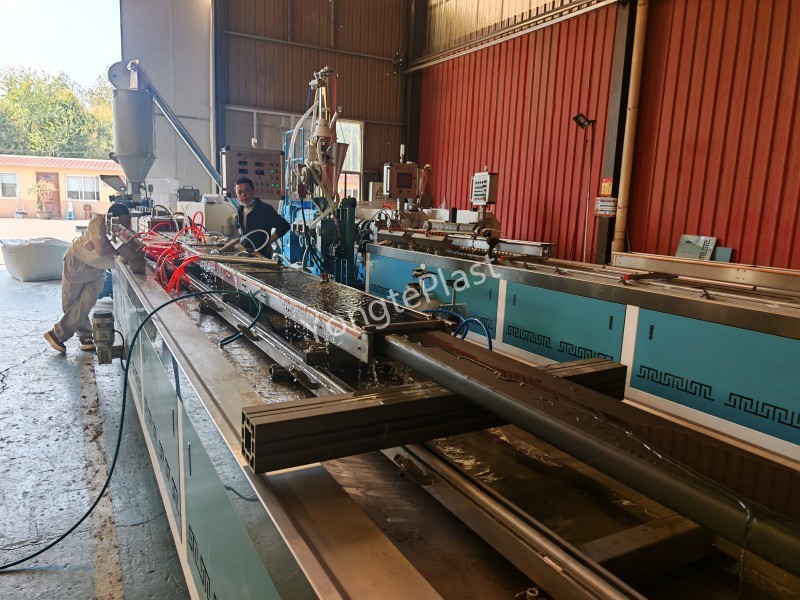
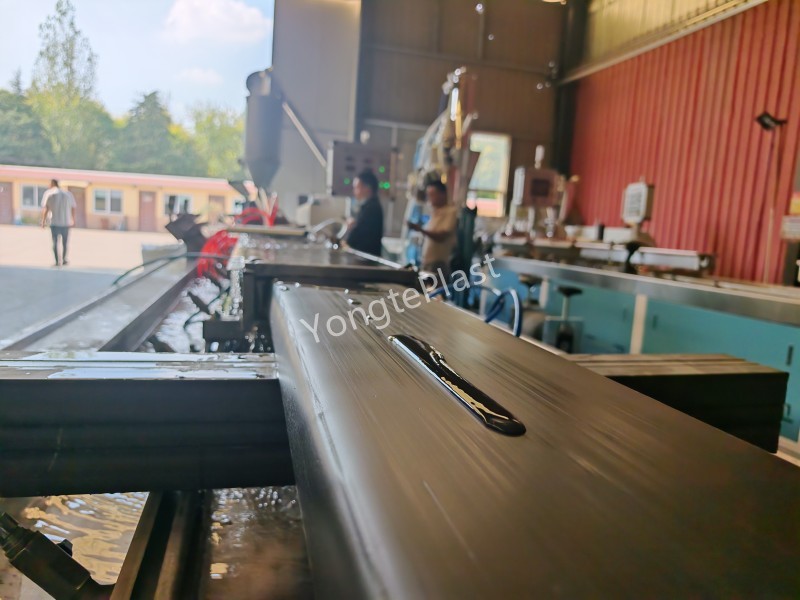
Thick plastic lumber flat dies naturally face a classic velocity distribution problem: molten plastic runs faster through the middle section of the die opening while material at the two side edges lags behind. Without compensation, profiles will show uneven thickness, wavy edges, twisting and poor straightness. Yongte optimizes die flow channel design together with microcellular foaming control. After exiting the die, the controlled expansion force of microcells compensates the velocity gap between the fast-flow core zone and slow edge zone. The foaming expansion homogenizes cross-section growth, helping the profile keep consistent width, thickness and straightness. Our 200×50 mm thick plastic lumber trial line verified this effect: after enabling microcellular foaming, edge lag and wavy defects were significantly reduced without heavy manual die adjustment during production runs.
3. Reduce shrinkage and deformation triggered by thermal expansion and contraction of the solid plastic matrix
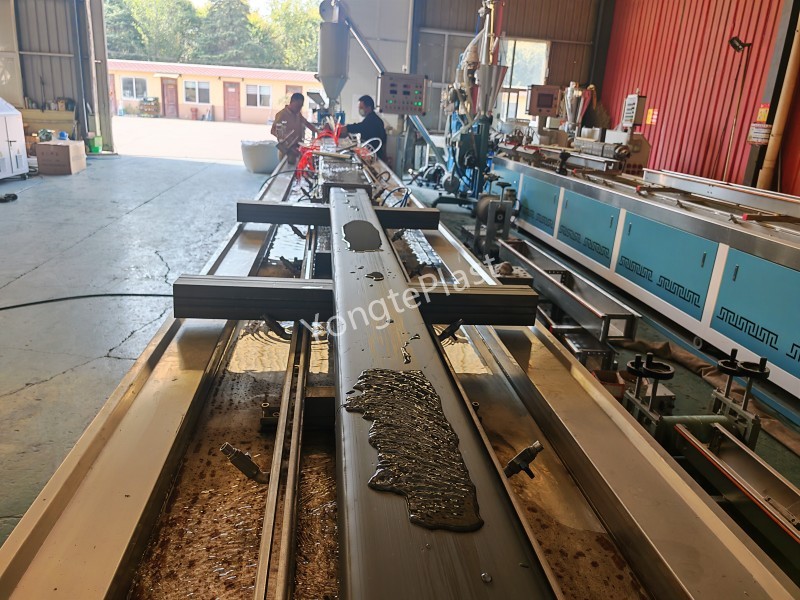
Dense solid recycled polyolefin profiles have a high thermal expansion coefficient. Large internal stress accumulates during cooling and continues to release under ambient temperature cycles, leading to bending, twisting, concave surfaces and permanent dimensional distortion. With Yongte microcellular foaming configuration, the solid plastic matrix is transformed into a structure with fine, closed microcells evenly dispersed inside. These tiny cells serve as flexible stress buffer zones, absorbing and releasing internal stress during cooling and temperature cycling. The finished plastic lumber gains much better dimensional stability and lower warping risk under hot outdoor conditions. Middle East customers using our foamed plastic lumber lines report far fewer complaints about thermal bending for fencing and slats exposed to strong sunlight.
4. Form internal cellular structure to improve internal heat dissipation and eliminate core bulging defects
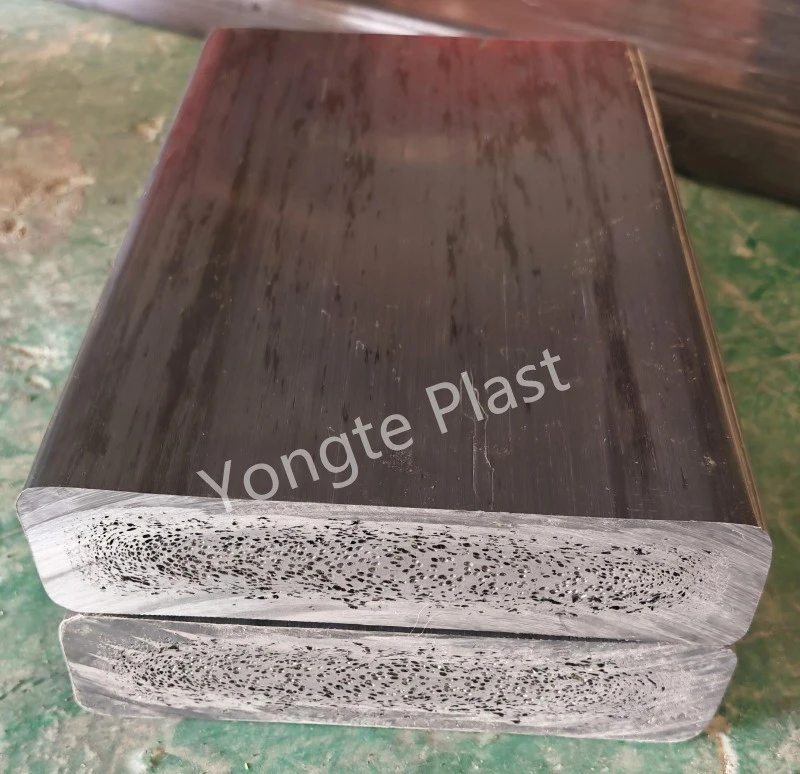
Recycled Plastic is a poor thermal conductor. For thick solid lumber profiles, the outer skin cools and solidifies rapidly after leaving the die, while the core retains high temperature for a long time. Delayed thermal expansion of the hot inner melt pushes the already hardened skin outward, creating the well-known core bulging / center swelling defect. Yongte’s microcellular foaming creates a network of isolated tiny pores inside the profile core. These voids improve heat transfer inside the thick section and accelerate core heat release, narrowing the temperature difference between the surface and core. The cooling rate across the whole cross-section becomes synchronized, effectively suppressing delayed core expansion and bulging. This is one of the most valued improvements for customers producing thick plastic lumber panels.
Summary
To sum up, microcellular foaming on Yongte plastic lumber machines is a targeted solution for four typical recycled plastic extrusion pain points: unstable extrusion pressure & melt flow, die discharge velocity imbalance, thermal shrinkage deformation and slow core cooling with center bulging. It improves process tolerance, finished profile flatness, dimensional stability and final yield. It empowers recyclers to turn low-value mixed PP/PE waste into high-quality, marketable plastic lumber for outdoor construction, fencing and decking.
Related News
- How many molds are needed for one set of wpc door frame?
- Can Yongte Supply Turnkey Project Service for WPC decking plant?
- How can plastic film wastage be used to produce wood-plastic composite (WPC) products?
- How to solve plastic lumber boards bend or warp after cooling?
- why are both the vacuum tank and the spray tank essential in PE pipe extrusion line?
- Why We Equip PE Pipe Extruder with 33:1 L/D?
Leave me a message




News Recommendations