What type of Plastic lumber machine can use recycled plastic?
Plastic Lumber Machine Manufacturer
We are a professional manufacturer of plastic lumber machines. Our diversified machine models support the production of various plastic lumber products by utilizing a wide range of recycled plastic waste materials, including waste PP, PE and other recycled plastic resources.
All our machines feature a robust structural design and adopt advanced extrusion technology, effectively ensuring consistent density and flawless smooth surface finishing for finished plastic lumber products. To cater to personalized production demands, we provide customized design solutions, enabling flexible adjustment of machine output capacity and mold specifications as per clients’ specific requirements.
Beyond high-quality complete production equipment, we deliver comprehensive one-stop after-sales services. Our full-range support covers on-site installation guidance, professional operator training, and long-term stable supply of spare parts, ensuring stable operation of your production line and timely resolution of all potential operational issues.
Types of Plastic lumber machine
We have developed three tailored machine series corresponding to mainstream types of plastic lumber products, covering different application scenarios and performance requirements. The three machine models differ greatly in production positioning, product structural characteristics, mechanical performance and applicable scenarios, fully covering light decorative, conventional flat board and heavy load-bearing production demands in the plastic lumber industry:
1. Foamed Plastic Lumber Profile Machine
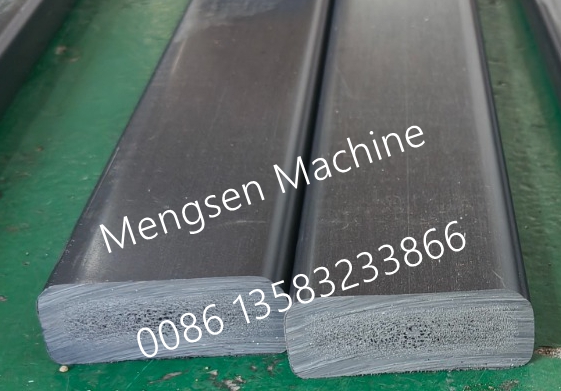
This machine is specially designed for producing low-density, lightweight foamed plastic lumber, which is widely used in landscape decoration, non-load-bearing indoor partitions and other similar scenarios. Adopting internal foaming and surface rigidifying technology, the equipment creates a dense, rigid outer surface and a uniformly porous internal structure, perfectly balancing lightweight performance and surface structural strength.
This mature molding design ensures a high pass rate for mass production and fully meets diversified market demands for lightweight plastic lumber. Additionally, the production line can be equipped with optional online embossing and fixed-length cutting devices to realize synchronous extrusion and sizing cutting, significantly boosting overall production efficiency.
2. Thin Solid Plastic Lumber Profile Machine
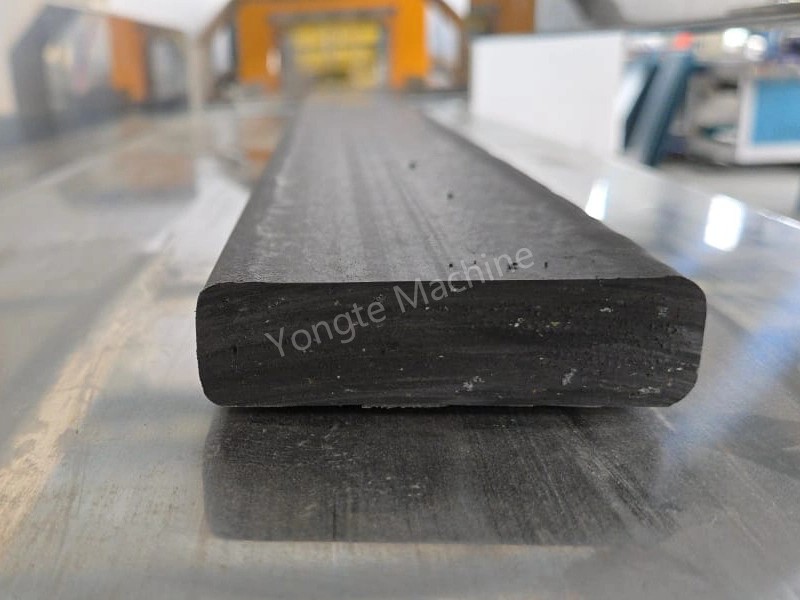
Ideal for producing thin flat solid plastic lumber, this equipment fits applications including fence panels, furniture boards for chairs, desks and tables, and outdoor guardrail plates. It is equipped with a high-efficiency vacuum dehumidification system, high-pressure extrusion die and precision vacuum calibration system. This configuration thoroughly removes moisture from raw materials, delivers ultra-smooth product surfaces and guarantees uniform wall thickness, effectively preventing thickness deviation that may compromise subsequent assembly and service performance.
Similarly, optional online embossing and fixed-length cutting units are available for this production line to streamline processing procedures and improve production efficiency.
3. Solid Plastic Pole & Post Machine
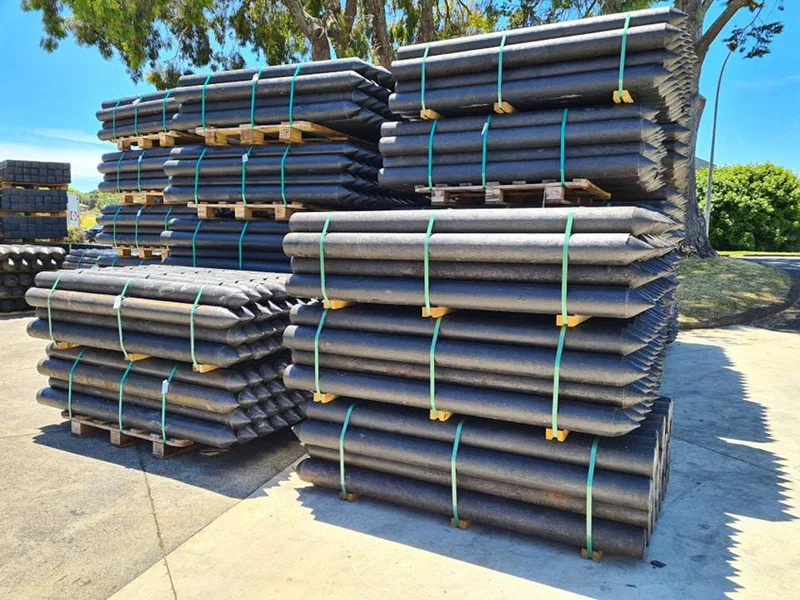
Developed exclusively for load-bearing structural applications, this machine produces high-compactness, high-compressive-strength solid plastic poles and posts. The finished products feature excellent deformation and fracture resistance, meeting the long-term service requirements of outdoor load-bearing facilities such as agricultural fences and outdoor support structures.
The equipment adopts a specially reinforced extrusion barrel, which provides higher and more stable extrusion pressure. It enables thorough plasticization and tight compression of raw materials, forming a fully dense internal structure for finished products. Even for large-size and long-specification plastic poles, the machine maintains outstanding and stable dimensional accuracy.
Core Differences Between the Three Machine Series
1. Positioning & Product Structure:
The foamed plastic lumber profile machine focuses on lightweight foamed products with a porous internal structure and rigid surface; the thin solid plastic lumber profile machine produces homogeneous thin solid flat boards with full dense structure; the solid plastic pole & post machine is specialized in thick solid profile products with overall high compactness.
2. Performance Advantages:
The foamed model prioritizes light weight and diverse appearance processing to meet decorative needs; the thin solid model features precise thickness control and flatness for easy assembly; the solid pole model highlights super high compression resistance, structural stability and deformation resistance for long-term outdoor use.
3. Core Configuration Focus:
The foamed plastic lumber machine adopts internal foaming and surface rigidifying technology; the thin solid plastic lumber machine is equipped with high-precision vacuum dehumidification and calibration systems for flatness control; the plastic pole machine applies a reinforced extrusion barrel to achieve high-pressure integral compression of raw materials.
4. Application Orientation:
The foamed product line serves non-load-bearing decorative scenarios; the thin solid line targets daily outdoor and furniture flat panel applications; the solid pole line is dedicated to heavy-duty load-bearing structural scenarios.
Each machine series is professionally developed to match the unique molding processes and dimensional standards of corresponding plastic lumber products, guaranteeing high-efficiency, stable and standardized production. Furthermore, we support personalized auxiliary configuration upgrades. Clients can opt for automatic feeding systems, online stacking robots and other intelligent accessories according to their production scale and product needs, so as to optimize production workflows, reduce manual labor costs and realize automated, intelligent production.
Related News
- Advantages of Rubber Soaker Irrigation Pipes vs Traditional Irrigation Tubes
- Can Yongte Supply Turnkey Project Service for WPC decking plant?
- 200x50mm Recycled Solid Plastic Lumber Machine Tested Successfully
- Yongte WPC Column making machine with co-extrusion is successfully tested
- How can plastic film wastage be used to produce wood-plastic composite (WPC) products?
- WPC Extrusion Machine Temperature Setting
Leave me a message