WPC Doors: Vacuum lamination vs. PUR laminating
WPC Doors: Vacuum lamination vs. PUR laminating
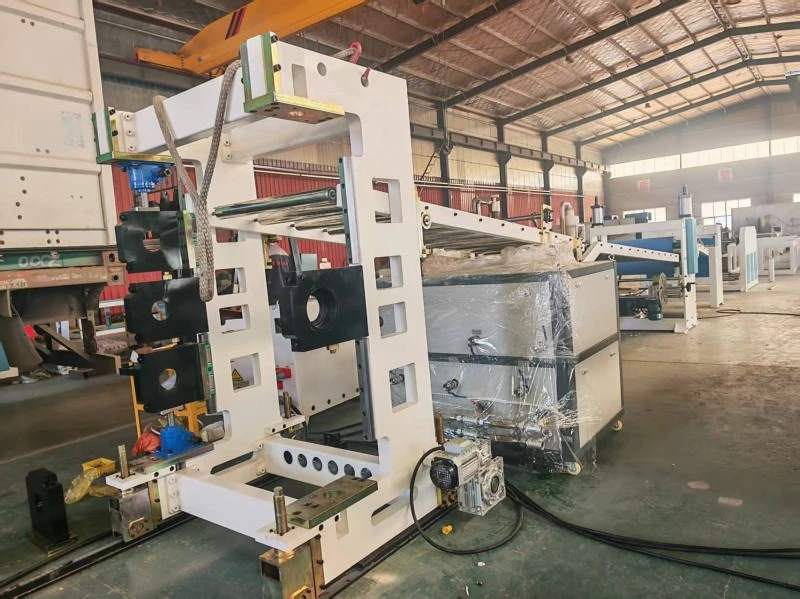
Both options utilize PVC decorative face sheets, with the primary differences lying in the application method and the target door profiles. Vacuum lamination relies on negative pressure to stretch the film material and adhere it to the door panel surface, enabling it to tightly conform to recessed or protruding contours and intricate lines; whereas hot-melt bonding employs PUR hot-melt adhesive, utilizing a roller pressing process for flat application or wrapping, making it more suitable for door panels with smooth surfaces and simple lines.
I. Process Principles
✅ Vacuum lamination
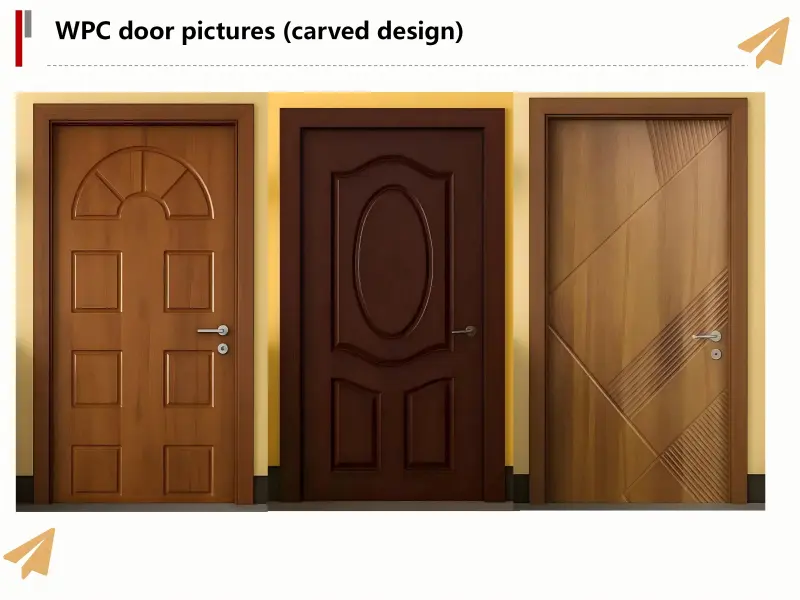
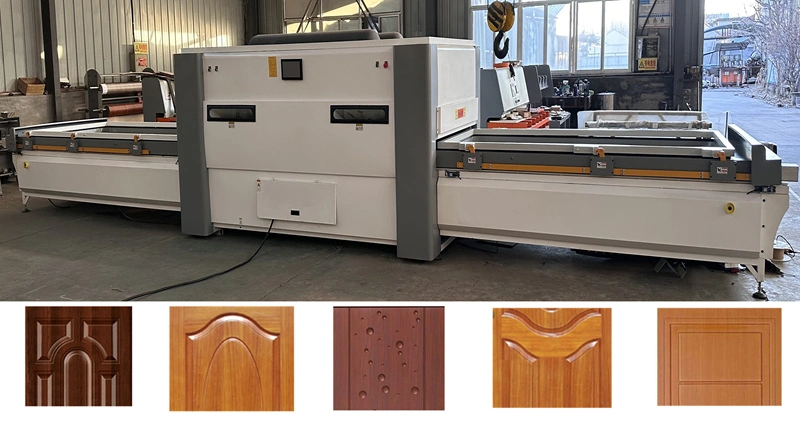
The raw wood-plastic composite door panels first undergo CNC milling to create embossed and recessed structural patterns on their surfaces, after which they are fed into a vacuum lamination machine for film laminating. Once the equipment is activated, the PVC decorative film is heated to gradually soften it, granting it excellent ductility; subsequently, the softened film material is tightly adhered to the front face and the four side edges of the door panel via a vacuum negative-pressure system, achieving simultaneous coverage of all five surfaces. Under this negative pressure, the PVC film is fully stretched, conlamination precisely to the complex geometries—such as reliefs and grooves—of the door panel surface, thereby fully preserving and accentuating the pre-milled three-dimensional textures and linear details.
· Adhesive: The liquid cold adhesive is sprayed onto the wood-plastic composite door panels and activated at high temperature.
· Suitable for doors featuring carved details, grooves, or intricate three-dimensional designs.
✅ PUR laminating
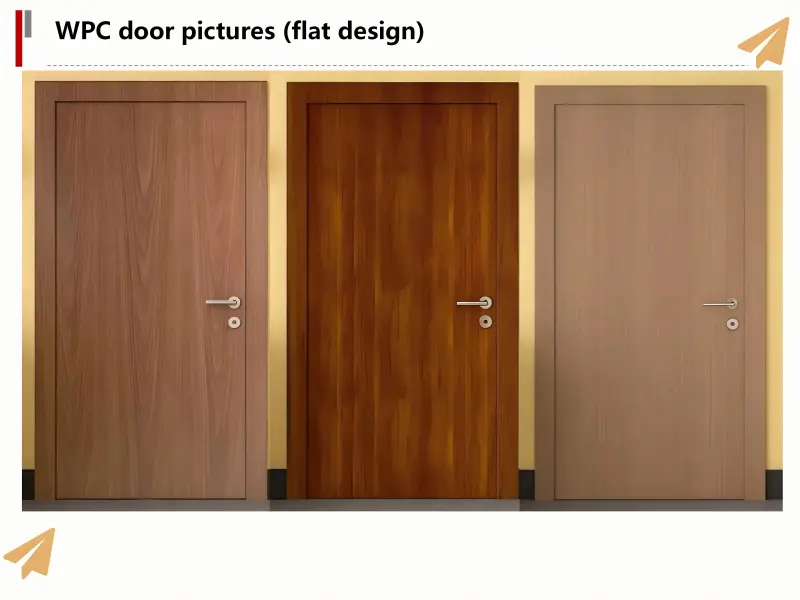
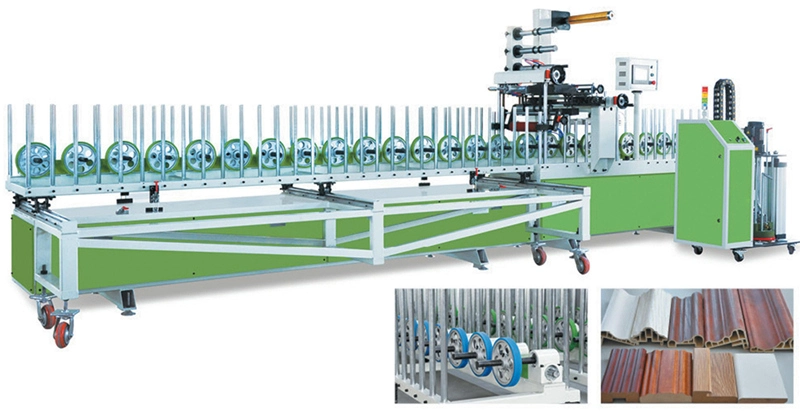
The WPC door panel undergoes sanding first to achieve a uniform and even surface roughness on the substrate, thereby enhancing the adhesion between the subsequent adhesive layer and the substrate. The PUR hot-melt adhesive is melted under heating conditions and evenly applied to the surface of the substrate or the film material via roller laminating; it is then continuously rolled by multiple pressure rollers, ensuring tight bonding between the film material and the substrate under pressure. This process can be applied for single-sided, double-sided, or 360° six-sided film laminating, offering broad applicability. Since the film material experiences negligible stretching during the laminating process, its original thickness and morphology are well preserved; consequently, this method is particularly suitable for flat door panels, door panels with shallow grooves, door casings, and door frame profiles—components where high surface flatness and dimensional stability are critical requirements.
· Adhesive: PUR hot-melt adhesive; once cured, it is irreversible and will not melt upon further exposure to heat.
· Suitable for: flat-panel doors, minimalist light-vein finishes, door casings, and baseboards
II. Key Performance Comparison
|
Comparison Item |
Vacuum lamination |
Thermoplastic PUR laminating |
|
Design capability |
It offers high strength and is suitable for deep grooving, three-dimensional embossing, and complex door profiles; however, the film requires stretching, and inner corners are prone to whitening and thinning of the film. |
Limited performance; primarily suitable for flat or shallow relief applications; the film exhibits minimal stretchability, making deep sculptural designs difficult to achieve and prone to wrinkling. |
|
Lamination coverage area |
Standard 5-sided design (front + four sides); the back side is typically plain white and must not share the same color as the front. |
Features full six-sided wrapping, with matching colors on both the front and back sides, and integrated wrapping for door frames and moldings. |
|
Adhesive stability |
Film stretching at molded corners; in prolonged exposure to high-temperature or high-humidity environments, hollow spots and peeling may occur at recessed corners and edges. |
PUR adhesive exhibits irreversible curing properties, excellent heat and cold resistance, high bonding strength, resistance to delamination and blistering, and superior stability. |
|
Surface texture |
After membrane stretching, the texture undergoes slight deformation, and corner textures are elongated. |
The membrane experiences no stretching, ensuring higher fidelity in reproducing wood grain and tactile textures, along with uniform and stable performance. |
|
production efficiency |
Single-batch processing, slow product iteration cycles, and high membrane consumption. |
Continuous rolling production line featuring high speed, ideal for mass production of standardized flat-panel doors. |
|
prime cost |
High investment in molds / tooling; relatively high unit cost per panel |
While equipment investment is high, the unit cost in mass production is lower, and consumables are more cost-effective. |
|
applicable scene |
Interior doors; French/European style doors with decorative trims – ideal for dry environments |
Interior doors, kitchen and bathroom doors, damp areas, export-grade WPC doors, and complete matching door casings in the same color scheme |
III. Summary of Advantages and Disadvantages
Vacuum lamination
advantage
· It offers the highest level of decorative expressiveness, supporting deep carving, Roman lines, and a wide variety of complex door profiles, with an extensive range of styles available.
· The front panel features integrated laminating on all four sides, ensuring that no edge seal seams are visible on the front surface.
shortcoming
· In grooves and at corners, the PVC film becomes stretched and thinned; in prolonged exposure to warm, humid environments, it is prone to blistering, cracking, and whitening.
· The back side cannot be the same color; it must be plain; the film has high wear.
· Exposure to intense sunlight can accelerate aging and cause shrinkage.
Thermoplastic PUR laminating
advantage
· Provides strong adhesion; the PUR adhesive exhibits resistance to extreme temperatures and humidity, offering superior waterproof and moisture-proof performance, making it ideal for humid environments.
· All six sides feature the same color; the door, door frame, and trim can be unified in design, making this style highly popular in export projects.
· The membrane remains unstretched, ensuring stable surface wood grain and tactile effects, with no elongation or deformation.
· It offers high mass production efficiency and excellent consistency of finished products.
shortcoming
· It is difficult to create deep three-dimensional reliefs; this technique is only suitable for flat surfaces or very shallow forms.
· The costs of equipment and PUR adhesive raw materials are high, leading to relatively high unit prices for small-batch orders.
IV. Equipment Selection Recommendations
1. For doors featuring European-style deep carving or intricate designs → choose vacuum lamination . Vacuum lamination is the ideal choice for door panels with pronounced surface textures, European-style deep carved patterns, or complex three-dimensional shapes. This process leverages the extension properties of the membrane material after it has been heated and softened, allowing the PVC film to conform precisely to embossed details, grooves, and other intricate features under negative pressure—thereby fully preserving and enhancing the rich dimensional layering and decorative effects of the design.
2. For applications involving minimalist door panels, use in bathrooms and other humid environments, or full-set door-and-wall color coordination, the PUR hot-melt adhesive laminating process should be prioritized. Such door panels typically feature relatively smooth surfaces with simple decorative trim, and thus have lower requirements for membrane material tensile strength. This makes the PUR process—where the membrane material experiences minimal stretching—particularly suitable, as it ensures surface smoothness and dimensional stability. Furthermore, bathrooms and other humid environments impose stricter requirements on material properties, including water resistance, moisture resistance, and thermal stability. The adhesive layer formed after PUR curing exhibits excellent water and heat resistance, enabling reliable long-term performance in humid conditions. For full-set door-and-wall color coordination, the PUR hot-melt adhesive laminating ensures uniformity in both the decorative film material and color between door panels and wall panels, thereby guaranteeing consistent overall visual aesthetics.
3. Regions such as the Middle East and Africa are predominantly characterized by high-temperature environments, which impose stricter requirements on the heat resistance of door panels and decorative surface materials. The PUR heat-glue laminating process is prioritized because, upon heating, the PUR adhesive melts and bonds to form a stable adhesive layer. This layer exhibits superior thermal stability, making it resistant to issues such as delamination, blistering, or detachment of the decorative film under sustained high-temperature conditions. Consequently, this approach ensures enhanced operational reliability of the products in high-temperature environments.
Related News
- Advantages of Rubber Soaker Irrigation Pipes vs Traditional Irrigation Tubes
- Can Yongte Supply Turnkey Project Service for WPC decking plant?
- 200x50mm Recycled Solid Plastic Lumber Machine Tested Successfully
- Yongte WPC Column making machine with co-extrusion is successfully tested
- How can plastic film wastage be used to produce wood-plastic composite (WPC) products?
- WPC Extrusion Machine Temperature Setting
Leave me a message