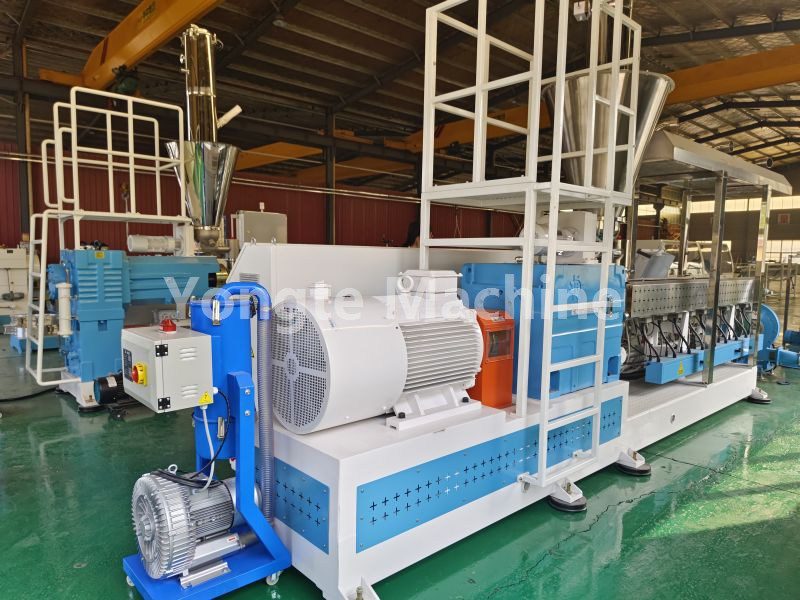
How to loosen stuck screw of WPC parallel twin screw extruder?
Detailed steps and methods for loosening stuck screw of WPC parallel twin screw extruder by manually rotating the coupling.
Safety precondition: The entire machine must be powered off and locked out; abrupt starting of the main unit to forcibly drive the screw is strictly prohibited. The PE wood-plastic material contains wood powder; after cooling, the material exhibits high hardness and significant clamping force on the screw. The total length of the barrel is 3 meters; therefore, the heating and insulation time should be longer than that required for a compact-type machine barrel.
I. Recommended baking temperature parameters (preferred for cold material jamming scenarios)
PEWPC Normal Operating Temperature: 170–190°C; Baking Heating Setpoint Temperature: 205–215°C
⚠ The maximum temperature should not exceed 220°C for extended periods; when wood powder is exposed to temperatures above 220°C, it is highly prone to coking and carbonization, making the resulting lumps much harder to remove.
3-meter barrel zone-based heating control (typically divided into 5–6 zones)
Zone 1 (Feeding Section): 210–215°C [High-risk area for jamming; prioritize heating]
Zone 2: 205210°C
Zone 3: 205210°C
Zone 4: 200–205°C
Zone 5 (Melt Transport): 200–205°C – Nozzle/Flange Zone: 200–205°C
Do not only heat the rear section! The vast majority of PE wood-plastic material issues occur within the first 12-meter section of the cylinder.
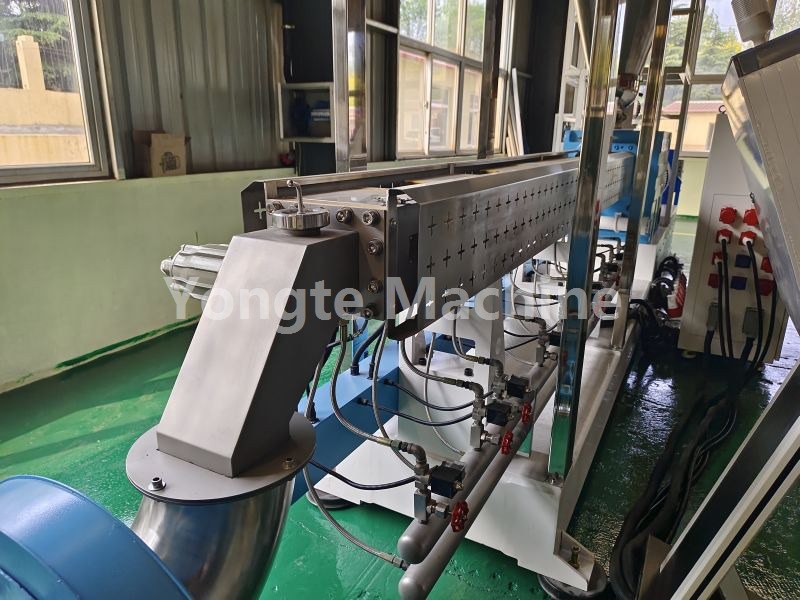
II. Thermal Insulation and Rotation Sequence (Special for 3-meter-long cylindrical vessels)
1. Once the temperature reaches the set value, maintain it for at least 90 minutes before proceeding;
2. Every 2530 minutes, the system will experience a power-off event; manually engage the steering wheel coupling (forward/reverse).
· Allow slight back-and-forth rotation: Stop further heating! Do not increase the temperature any further; repeatedly reverse the rotation of the disk and the screw;
· Keep it still: continue insulating for another 60 minutes; the total baking time should not exceed 3 hours.
If the food still doesn't cook through after baking for more than 3 hours, continuing to heat it will only burn the wood powder; in this case, stop heating and prepare to disassemble the machine to remove the screw.
Turning technique: Rotate the drum back and forth at a small angle; avoid applying force in a single direction. Once the material begins to loosen, gradually increase the rotation angle to crush the cured material.
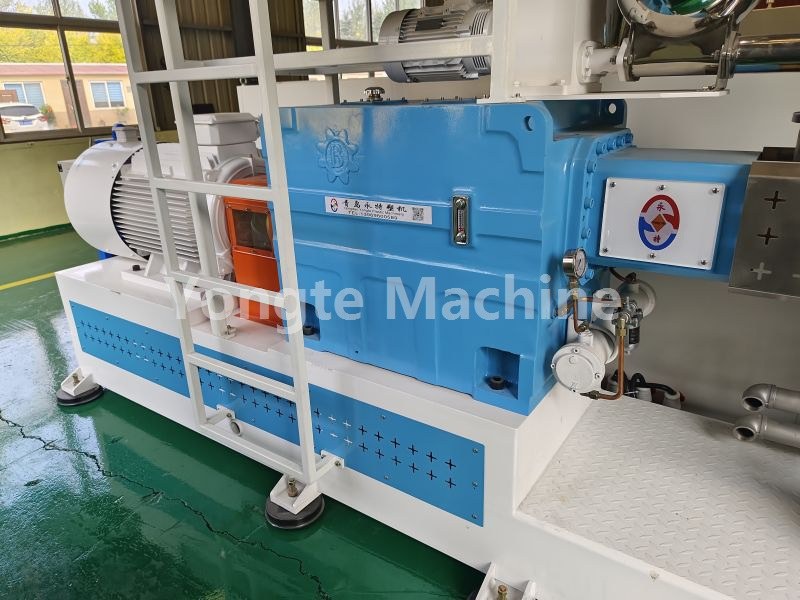
III. Device becomes loose after heating; Procedure for restoring the device upon power-on
1. Once the motor has been rotated smoothly without any resistance, install the coupling cover;
2. Low-speed no-load pulse for 35 seconds; observe the main unit's no-load current;
3. Once the no-load current returns to normal, first feed pure PE cleaning material; do not directly feed the wood-plastic composite material into the extrusion barrel – remove the old material from the low-speed extrusion barrel first.
4. Once the discharge stream is clean, free of hard lumps or black spots, gradually switch back to feeding the PEWPC production material, while progressively increasing the rotational speed and feeding rate.
IV. Heating Failure Disassembly and Cleaning Procedure
1. Heat to approximately 200°C; remove the nozzle and transition flange, then clear the front discharge port;
2. Use an extended pusher rod at the front end of the barrel to push the solidified material outward along the screw rod;
3. If the device does not move, remove two screws and clean the threaded grooves of the hardened cooling residue (PE-wood-plastic composite) section by section;
4. Carefully inspect the meshing clearance between the two screws and check whether there are any foreign metal particles on the inner wall of the barrel;
If the card jamming point consistently occurs at the same position, it is highly likely due to iron filings or other foreign objects; these must be identified, otherwise, restart the device immediately to reinsert the card.
Related News
- Advantages of Rubber Soaker Irrigation Pipes vs Traditional Irrigation Tubes
- Can Yongte Supply Turnkey Project Service for WPC decking plant?
- 200x50mm Recycled Solid Plastic Lumber Machine Tested Successfully
- Yongte WPC Column making machine with co-extrusion is successfully tested
- How can plastic film wastage be used to produce wood-plastic composite (WPC) products?
- WPC Extrusion Machine Temperature Setting
Leave me a message