Application of Wood-Plastic Composite Material in Solar Energy Systems
Application of Wood-Plastic Composite Material in Solar Energy Systems
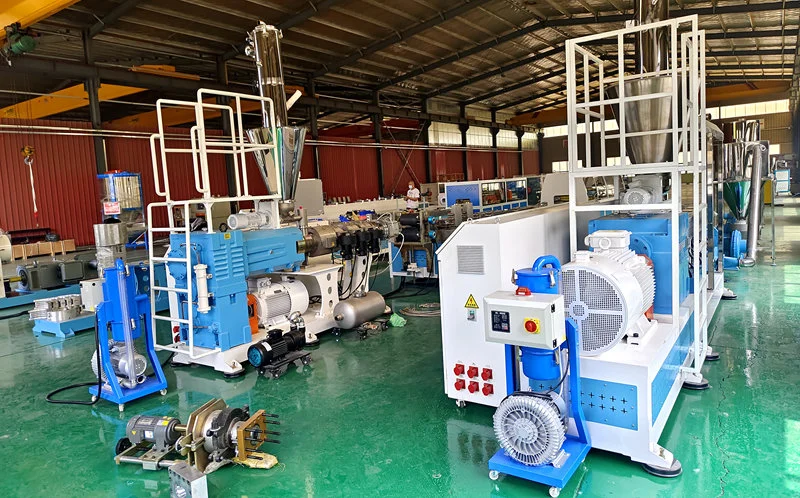
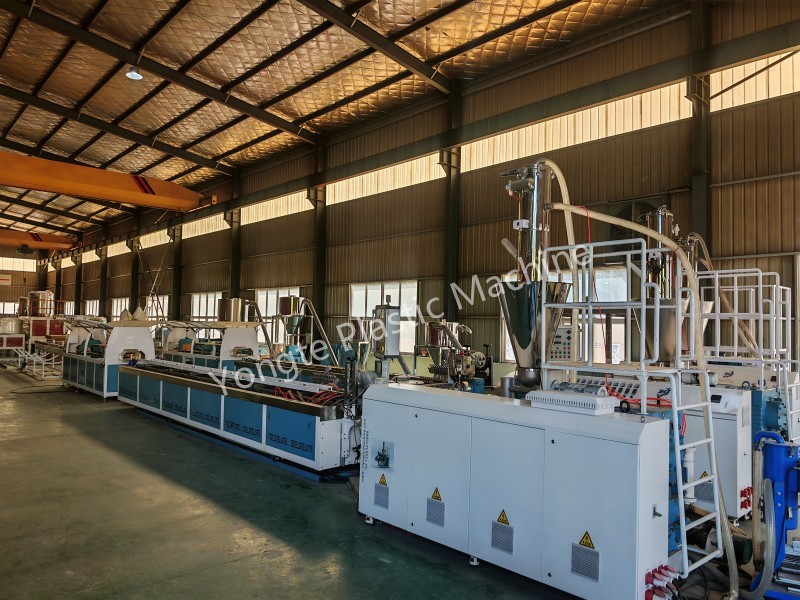
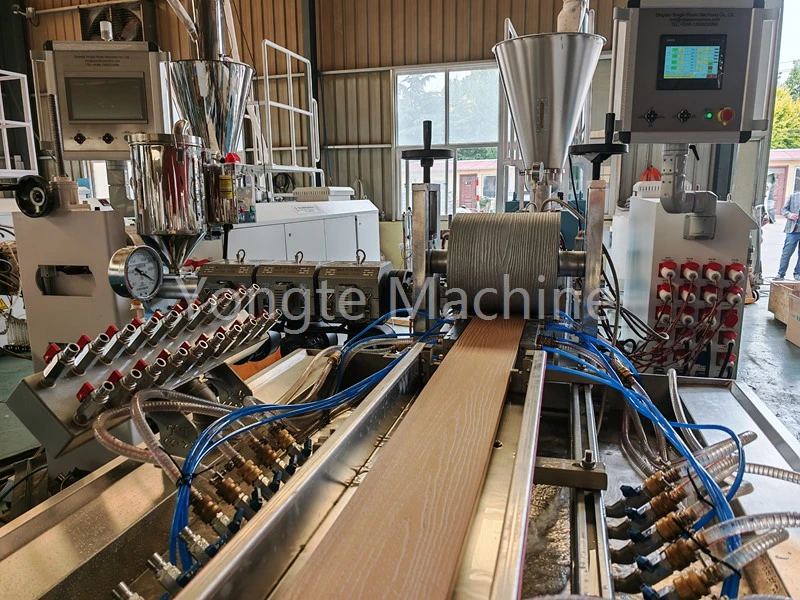
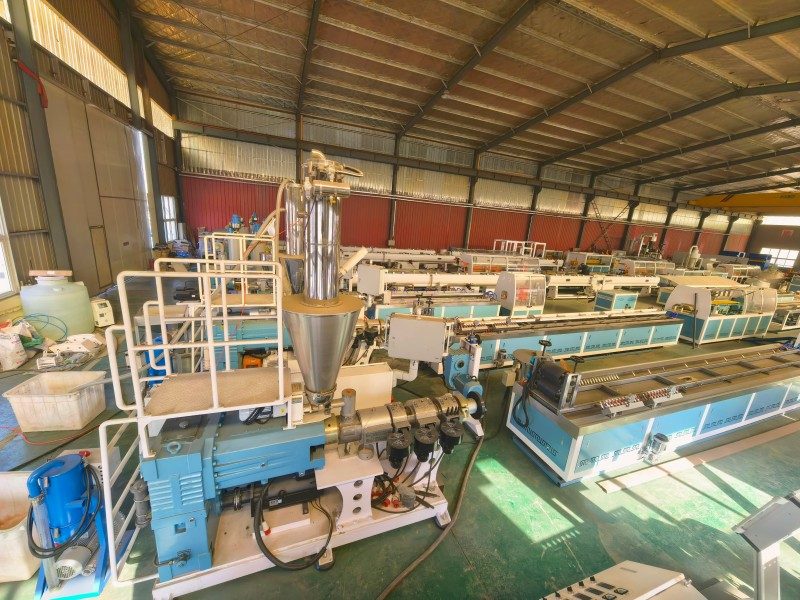
Yongte is a professional manufacturer of wood-plastic composite (WPC) processing machinery, specializing in converting recycled plastic and wood fiber materials into high-performance construction products. This advanced equipment plays a pivotal role in sustainable building practices by transforming waste materials into durable, eco-friendly construction solutions. Its widespread application effectively reduces environmental impact while addressing the escalating demand for green building materials. Can such WPC materials be integrated into solar energy system construction?
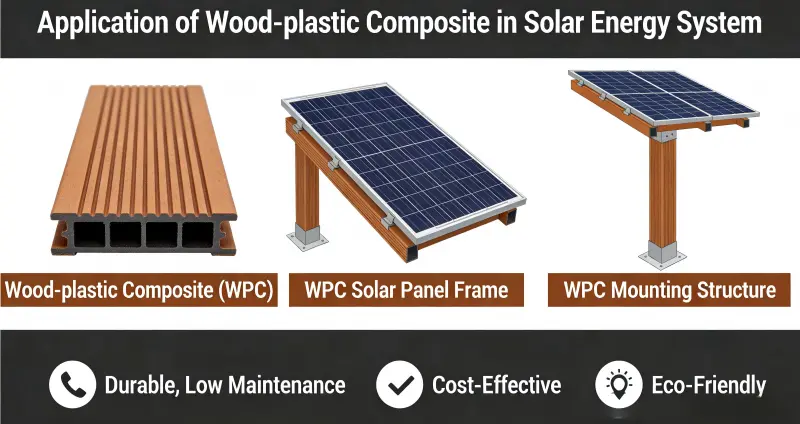
Wood-plastic composite (WPC) has emerged as a key material in solar energy systems, including photovoltaic (PV) mounts, floating power stations, PV building integration, and concentrated solar power (CSP) storage, due to its eco-friendly, weather-resistant, lightweight, low-maintenance, and easy-to-process properties. It is progressively replacing traditional metal and wood materials.
I, Core Application Scenarios
1. Photovoltaic Support System (Most Popular)
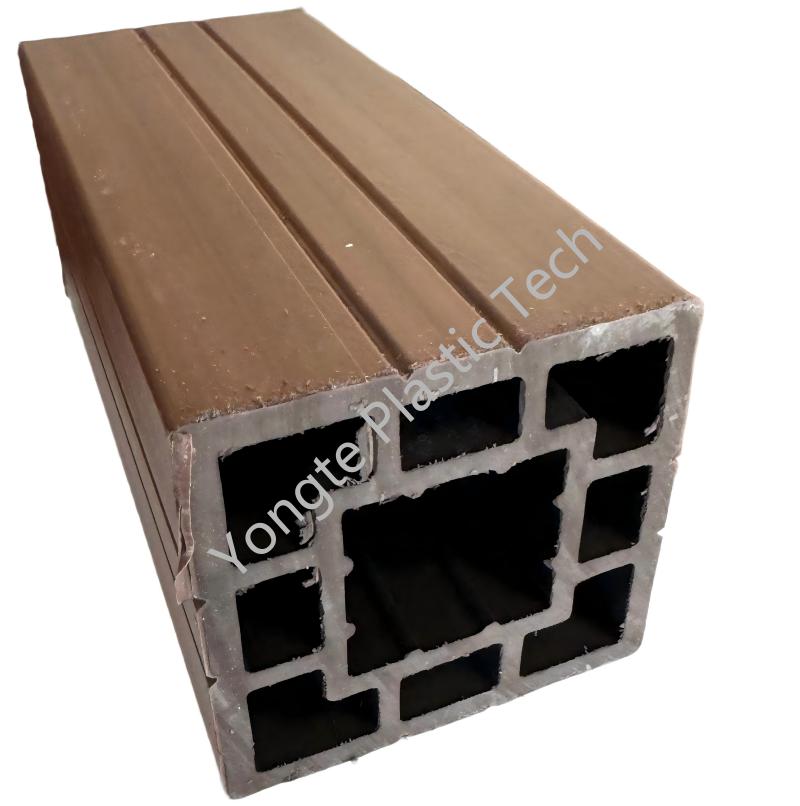
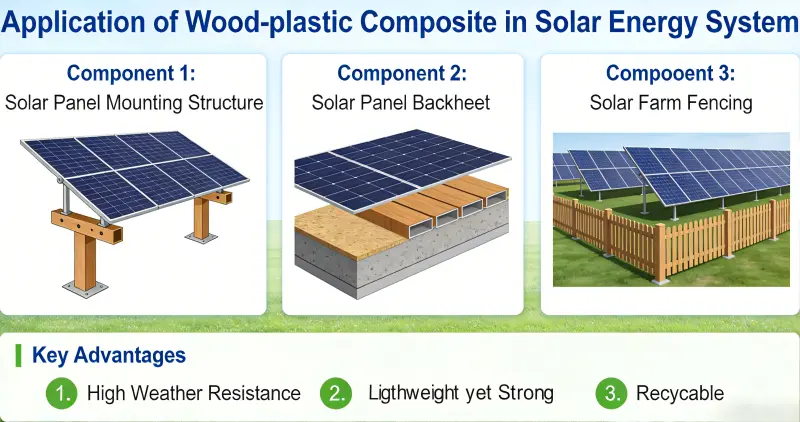
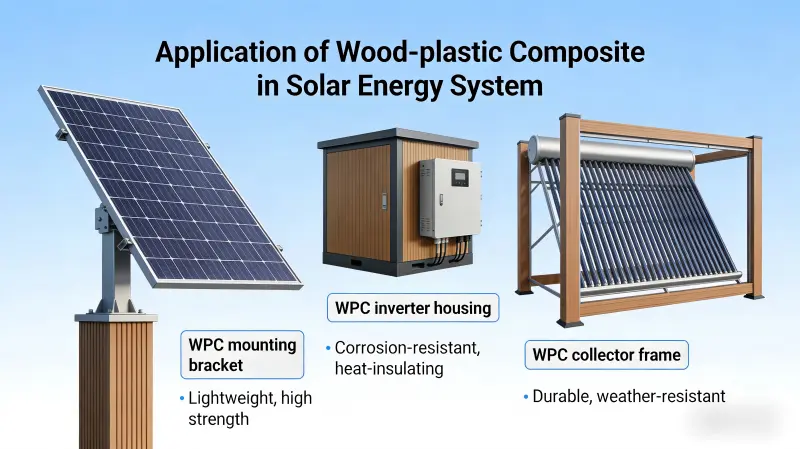
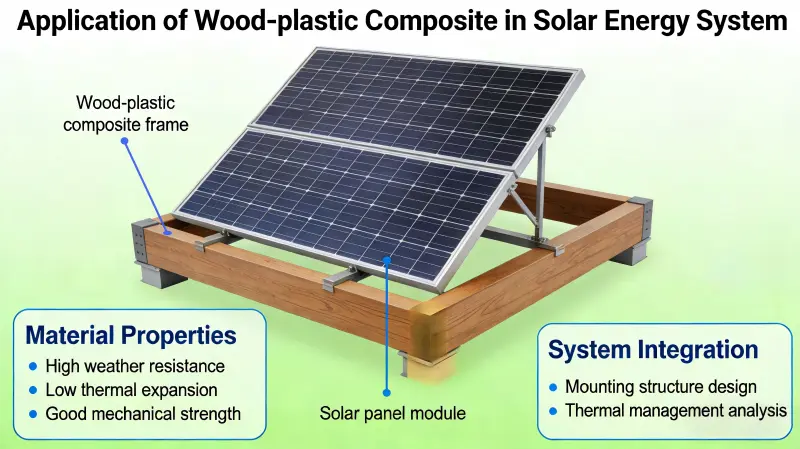
· Land-based photovoltaic support structures include support columns, crossbeams, guide rails, and clamping blocks for photovoltaic modules.
Advantages: UV resistance, acid and alkali resistance, mold prevention, rust-free, with a service life of 20–30 years; lightweight (approximately 1/3 the weight of steel), resulting in low transportation and installation costs; low thermal expansion and contraction rate, with dimensional stability superior to wood; no need for anti-corrosion or painting, leading to extremely low maintenance costs.
Process: Extrusion or injection molding, featuring mortise-and-tenon or snap-fit connections, eliminating welding and drilling requirements, with over 30% higher installation efficiency.
· Floating photovoltaic support/float: a floating power station designed for lakes, reservoirs, and fish ponds.
Advantages: Waterproof and moisture-resistant, with low water absorption (<0.5%), corrosion-resistant, suitable for long-term aquatic environments; controllable density, applicable as buoyancy material; wind and wave resistant, aging-resistant, ideal for long-term outdoor service.
Case: Wood-plastic foam boards are used for buoyancy tanks, support columns, and base plates in floating power stations, reducing overall costs while enhancing stability.
2. Building Integrated Photovoltaics (BIPV)
· Photovoltaic wood-plastic exterior/mural panels: These panels combine flexible thin-film photovoltaic cells with wood-plastic substrates through hot pressing, increasing thickness by just 2–3mm. They deliver 80–120 kWh of electricity per square meter annually, serving as a triple-purpose solution for enclosure, decoration, and power generation.
· Photovoltaic wood-plastic balcony/curtain wall: The base plate and frame are made of wood-plastic composite, with embedded photovoltaic panels to achieve integrated power generation and protection.
· Photovoltaic wood-plastic pergolas/vehicle sheds: These structures use wood-plastic composite as the supporting framework, with photovoltaic panels installed on the roof, serving multiple purposes including shading, power generation, and landscape enhancement (e.g., wood-plastic grape trellis photovoltaic systems).
· Pedestrian-friendly photovoltaic flooring: Integrated with wood-plastic composite flooring, it is designed for terraces, rooftops, and docks, supporting up to 300kg of weight while enabling both walking and power generation.
3. Solar Thermal and Energy Storage Systems
· Photothermal-to-thermal energy storage wood-plastic composites: By incorporating phase-change materials (e.g., n-18) and thermal conductive fillers (BN, SiO₂) into wood-plastic composites, a photothermal-thermal storage-thermal conduction chain is established. This design achieves a photothermal conversion efficiency of 69.54% and a 200% increase in energy storage density, making it suitable for building energy conservation, solar thermal collection, and thermal storage applications.
· Solar collector/heat storage tank: The wood-plastic composite is used for the collector shell and heat storage tank, offering thermal insulation, corrosion resistance, and easy molding, which reduces system heat loss and maintenance costs.
4. Other Supporting Applications
· Photovoltaic junction box/enclosure: Modified wood-plastic is used for the junction box shell, offering insulation, flame retardancy, and anti-aging properties, replacing plastic/metal.
· Photovoltaic tracking system components: lightweight, weather-resistant non-load-bearing structural parts for tracking mounts.
· Photovoltaic power station fencing and walkways: eco-friendly and durable wood-plastic composite fencing with low-maintenance walkway panels.
II, Comparison of Core Advantages of Wood-Plastic Composite in Solar Energy Systems
|
function |
Wood-Plastic Composite (WPC) |
Traditional steel |
Traditional wood |
|
weather fastness |
Excellent (UV-resistant, acid and alkali resistant, mold-proof) |
Rust-prone and requires anti-corrosion treatment |
prone to decay, insect infestation, and cracking |
|
maintenance cost |
Very low (no need for painting or anti-corrosion) |
High (periodic rust removal/painting) |
High (Regular Maintenance) |
|
weight |
Light (about 1/3 of steel) |
repeat |
secondary |
|
Environmental protection |
High (recycled plastic + wood powder, recyclable) |
Medium (high energy consumption production) |
Low (consumes forest resources) |
|
workability |
Good (sawable / planable / nailable / mortise-and-tenon) |
Welding/Cutting required |
Good, but prone to deformation |
|
life span |
20–30 years |
10–15 years (after preservation) |
5–10 years |
III. Technical Key Points and Development Directions
· Formulation modification: Incorporation of nano TiO₂, antioxidants, and flame retardants to enhance UV shielding efficiency (>95%), heat resistance, and flame retardancy (Class B1).
· Structural design: co-extrusion, foaming, honeycomb structure, enhancing strength, thermal conductivity/insulation, and buoyancy performance.
· Interface enhancement: Chemical pretreatment + interface coupling, addressing the compatibility issue between wood fibers and plastics, and improving mechanical properties (tensile/bending strength increased by over 50%).
· Integrated functionality: PV, energy storage, thermal insulation, and decorative elements combined, advancing toward smart, efficient, and low-carbon solutions.
IV. Summary and Trends
Wood-plastic composites have evolved from auxiliary materials to core structural and functional materials in solar energy systems, demonstrating significant advantages in photovoltaic mounting systems, floating power stations, and Building Integrated Photovoltaics (BIPV). With future advancements in formulation optimization, structural innovation, and cost reduction, their applications will expand further, positioning them as one of the key materials for green, low-carbon, and long-lasting solar energy systems.
Related News
- Advantages of Rubber Soaker Irrigation Pipes vs Traditional Irrigation Tubes
- Can Yongte Supply Turnkey Project Service for WPC decking plant?
- 200x50mm Recycled Solid Plastic Lumber Machine Tested Successfully
- Yongte WPC Column making machine with co-extrusion is successfully tested
- How can plastic film wastage be used to produce wood-plastic composite (WPC) products?
- WPC Extrusion Machine Temperature Setting
Leave me a message