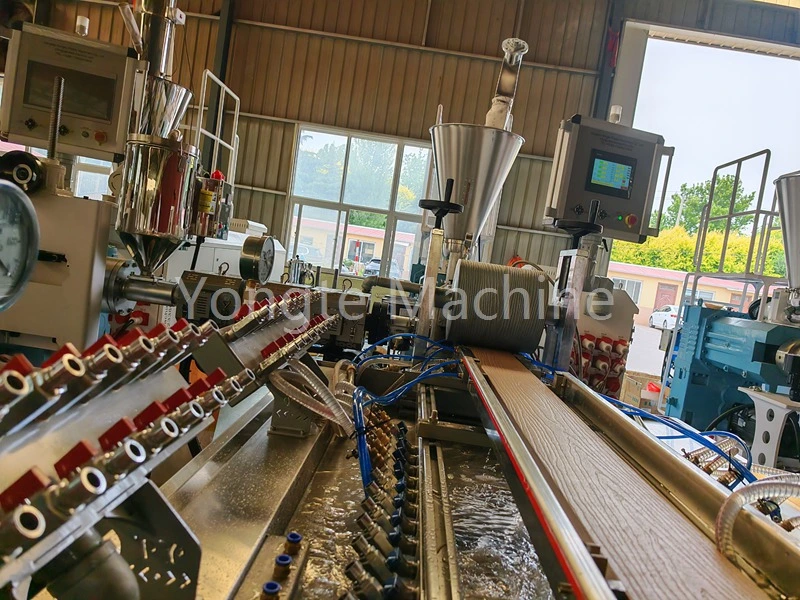
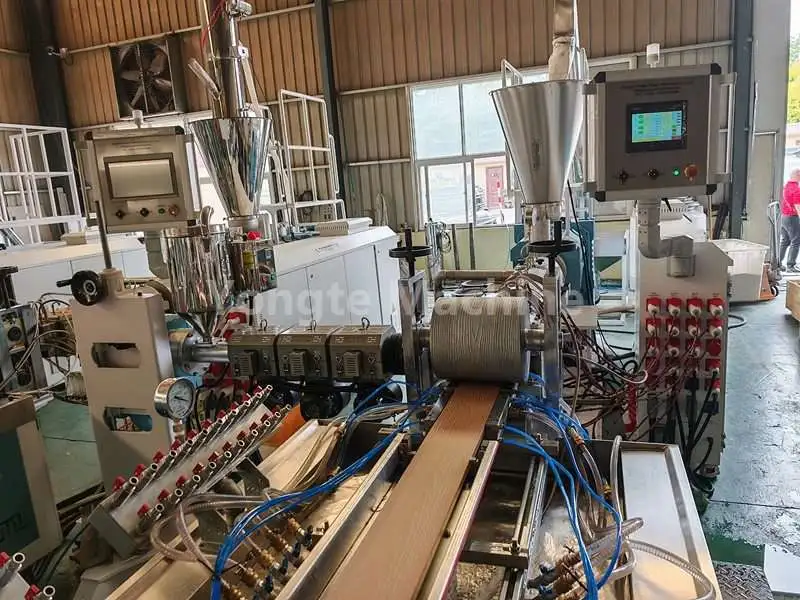
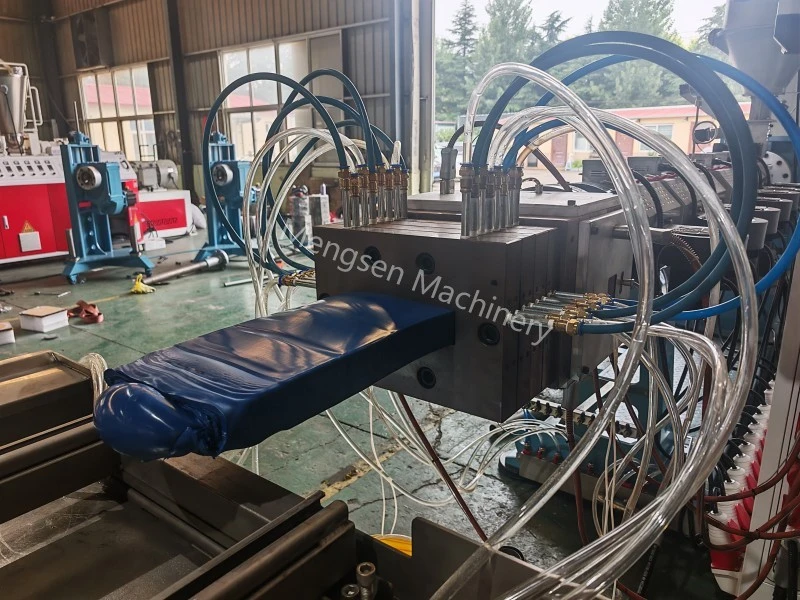
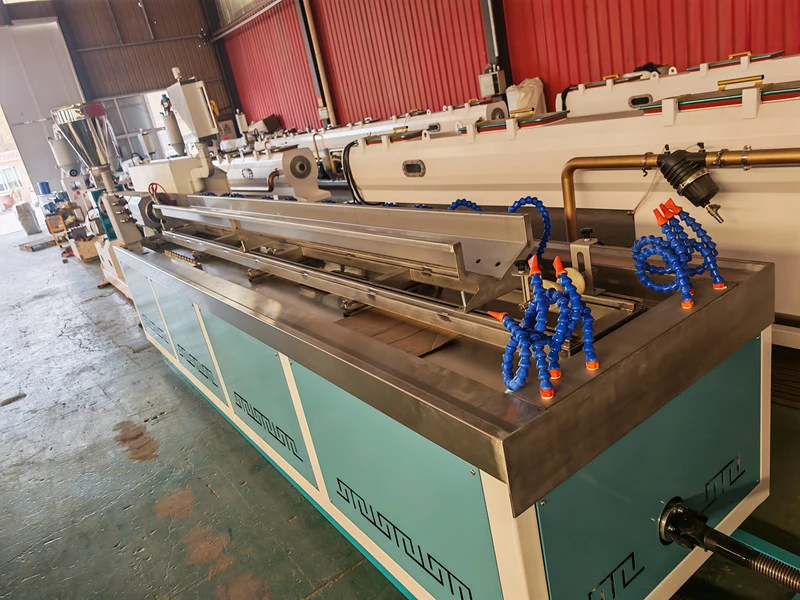
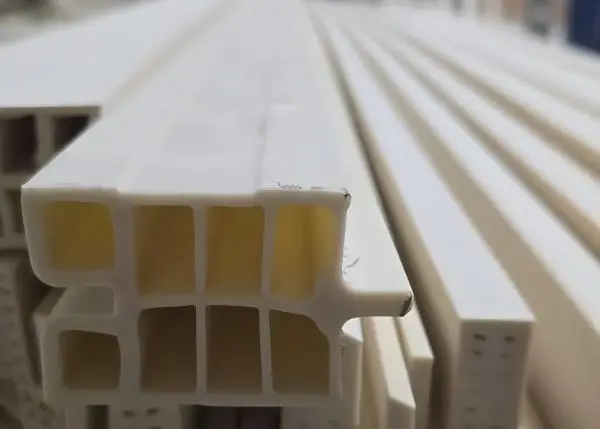
How to solve the problem of WPC door frame foaming failure?
During the manufacturing of wood-plastic door frames, many factories encounter the problem of excessive density in the frames; even when an adequate amount of foaming agent is used, the product fails to foam or expand properly.
This issue can directly lead to a surge in product costs, substandard mechanical properties, or failure to meet delivery requirements. As a result, many production personnel may blindly adjust process parameters without ever identifying the root cause. Below, we will outline a comprehensive troubleshooting approach in ascending order of complexity to help you quickly pinpoint the source of the problem. Let's begin with the most straightforward aspect to investigate—namely, the raw materials and formulation stage—since this is often the most common source of such issues.
Priority Judgment Phenomenon:
① The die-molded part shows no expansion at all → Insufficient decomposition of the foaming agent / Low temperature / Insufficient melt strength
② Internal foaming has already occurred in the machine head; upon mold ejection, the material retracts and does not foam → Pre-foaming (internal pressure relief – most common cause)
I. Raw Materials and Recipe
1. Foaming system
· Insufficient AC foaming agent dosage or absence of a foaming activator (e.g., zinc oxide); inadequate activation or incomplete decomposition of AC results in no gas release. Adjust by adding 0.1–0.3 parts per application; do not add too much at once to prevent bubble rupture or interconnection.
· Insufficient foaming agent (melt enhancer): If the melt strength is too low, the gas cannot be effectively trapped and escapes directly, resulting in a lack of proper foaming. Increase the amount of foaming agent appropriately to ensure that the cell structure can withstand the pressure without rupturing.
2. Lubrication imbalance (high-frequency cause)
✅ Excessive internal sliding (e.g., due to stearic acid): If plasticization occurs too rapidly, foaming happens prematurely within the machine, and pressure is released too early, preventing further expansion after mold ejection; reduce internal sliding.
✅ Excessive external sliding (PE wax/OPE wax): The melt viscosity is too low, preventing effective encapsulation of the foaming gas; appropriately reduce the external sliding.
✅ Insufficient lubrication: Poor plasticization, inadequate decomposition of the foaming agent, weak foaming action
3. Excessive filler content – when the proportions of wood powder, calcium carbonate, or recycled material are too high, rigid fillers can displace the resin, resulting in poor melt elasticity and preventing the gas from expanding. The total filler content should be maintained within an appropriate range; the recycled material content should not exceed 30%. The wood powder moisture content must be ≤ 2% – exceeding this limit can interfere with the foaming process and lead to void defects.
4. Insufficient stabilizer content / poor quality: local overheating or premature decomposition of the foaming agent, resulting in no foaming upon mold release; select an appropriate calcium-zinc/lead salt stabilizing system to ensure a sufficiently wide thermal stability window.
II. Extrusion Process Parameter Tuning
1. Temperature profile (Key: Prevent premature foaming during the feeding stage; align the plasticizing stage with the AC decomposition window)
Reference Standard Range (PVC Wood-Plastic Door Frames):
· Loading Zone: 140–155°C (Low temperature – prevents premature foaming)
· Plasticizing/Compression Stage: 165–175°C (the primary decomposition range for AC)
· Die: positioned slightly below the rear end of the barrel to prevent premature foaming in the mold cavity.
Debugging Principle:
· Low overall temperature → Incomplete foaming agent decomposition: Perform a trial run with a temperature increase of +5°C during the plasticizing stage.
· High temperature at the mixing core/blower head → Early internal pressure relief and foaming: Lower the temperature at the blower head and mixing core.
2. Pressure, rotational speed, feeding, traction
1. Insufficient head pressure: When the pressure is inadequate, it prevents the formation of a pressure differential between the die's front and rear surfaces, making it difficult for bubbles to nucleate; consider slightly increasing the main machine's rotational speed or increasing the feeding rate to raise the melt pressure (avoid setting it too high to prevent shear overheating).
2. Excessive machine speed: Sudden surge in shear heat leads to premature foaming; Low machine speed: Insufficient plasticization results in weak foaming.
3. Excessive stretching speed: The material is forcibly stretched before it has fully foamed upon exiting the mold, causing the cell structure to collapse → Reduce the stretching speed appropriately to allow the material sufficient time for free foaming.
4. Exhaust vacuum: If the vacuum is too high, it will directly remove the foaming gas, preventing proper foaming; appropriately reduce the exhaust vacuum level while clearing any material buildup or blockages at the exhaust port.
III. Mold and Shaping System
1. If the die flow channel design is inadequate or the resistance is too low, the internal die pressure cannot be established; in such cases, check the die lip clearance and throttle ribs, and appropriately increase the internal die resistance to establish a stable melting pressure.
2. The distance between the die and the shaping die is too short: the material enters the shaping and cooling stage before it has fully foamed, thereby suppressing foaming – therefore, moderately increase the free foaming section.
3. Excessive setting vacuum or excessive cooling water temperature: Rapid cooling and freezing of the melt prevents pore growth; reduce the setting vacuum and appropriately increase the water temperature.
IV. Standard Step-by-Step Debugging Process (Adjust only one parameter at a time to facilitate problem localization)
1. Sampling observation: Determine whether the material strip exhibits expansion at the moment it exits the mold, or whether it emerges rigid and unchanged.
2. Raw material verification: wood powder moisture content, formulation additive ratio, and recycled material addition rate
3. Temperature fine-tuning: Prioritize adjusting the temperatures of the plasticizing section and the mixing core.
We use cookies to offer you a better browsing experience, analyze site traffic and personalize content. By using this site, you agree to our use of cookies. Privacy Policy