How to solve WPC door strip misalignment problem?
Reasons and Remedies for WPC Door Strip Misalignment (Warping, Asymmetry, Thickness Variance, Torsion)
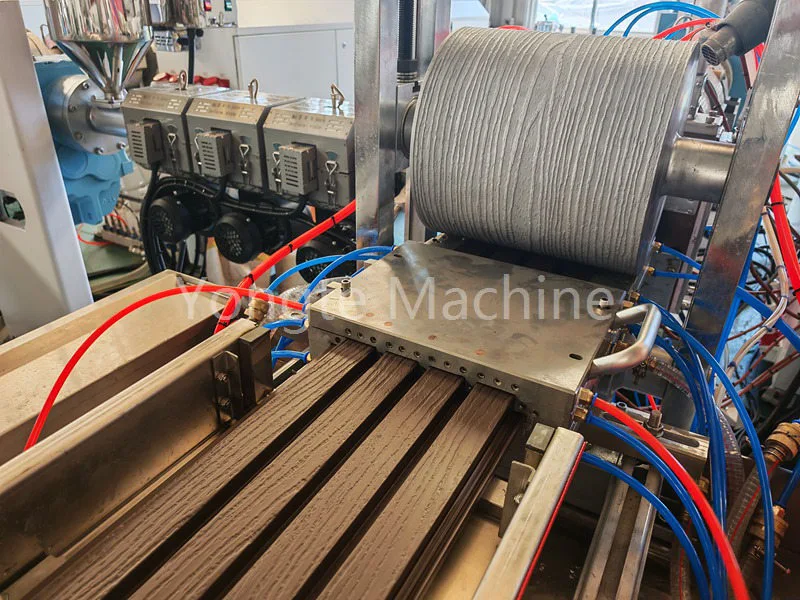
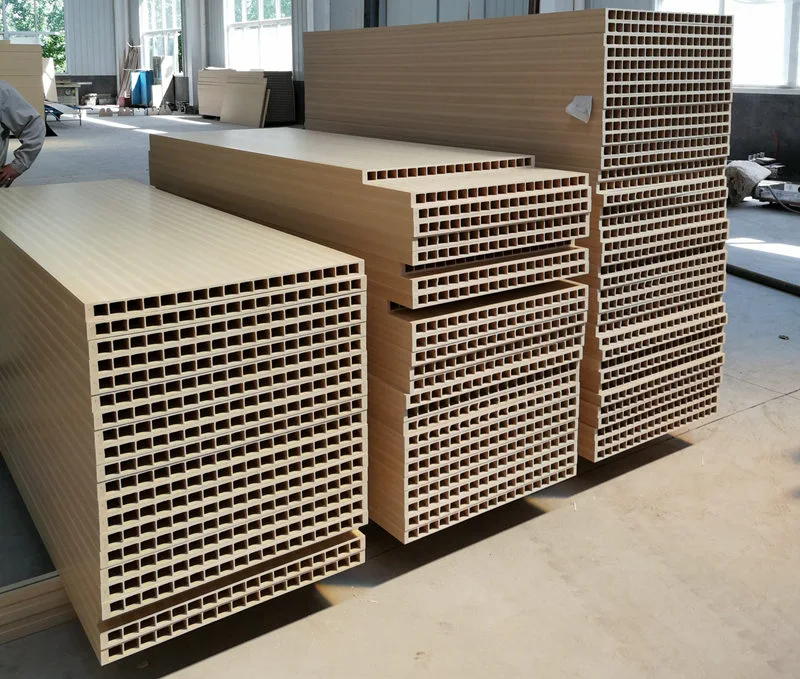
WPC doors are produced by compositing PVC and wood powder, typically featuring a hollow structure formed in a single extrusion step. Multiple reinforcing ribs are usually installed inside the hollow cavity to boost the profile’s overall strength. Distortion of these ribs not only affects surface flatness but also weakens structural support, potentially hindering the proper insertion of steel liners during subsequent door panel assembly, thus directly impacting the finished door’s quality and installation performance. Drawing on extensive production experience, Yongte engineers have pinpointed common causes of rib distortion during WPC door extrusion and developed practical solutions. These enable technicians to rapidly diagnose issues, adjust parameters and equipment settings, lower defect rates, and ensure consistent profile quality. The following section systematically details the specific manifestations and remedies for each cause, prioritized by importance.
Distortion in WPC door reinforcement strips typically involves the internal ribs, with common signs including lateral shifts or S-shaped warping, inconsistent thickness (varying between thicker and thinner sections), overall twisting, and, in severe instances, detachment from the outer wall, cavity misalignment, or rebound deformation post-cooling.
Core mechanism: uneven extrusion from the machine head → asymmetric shaping resistance → non-uniform cooling shrinkage → skewed traction force distribution.
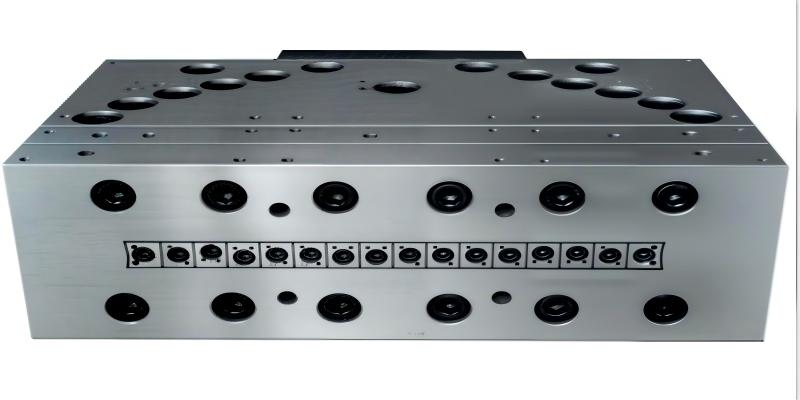
1、WPC door extrusion die head and mold (most common – prioritize troubleshooting)
Causes
1. Imbalanced mold flow channels: Significant flow resistance disparity between the rib and outer wall; narrow or long rib feed channels slow material flow relative to the outer wall, causing ribs to stretch and bend; alternatively, localized material buildup in rib channels causes fluctuating flow rates.
2. Asymmetric rib die gaps: Larger gaps on one die edge and smaller on the other create uneven thickness (thicker on one side, thinner on the other), leading to inherent bending upon extrusion.
3. Uneven die temperature distribution: Excessively high temperatures in the rib area increase melt fluidity, causing stretching and deviation; excessively low temperatures raise melt elasticity and internal stress, resulting in rebound and distortion after ejection.
4. Die head carbon buildup: Coked wood powder adheres to reinforcement flow channels, causing local blockages, flow fluctuations, and periodic rib misalignment.
5. Deformed or loose reinforcement bars (die core support rods): Misaligned die core positioning rods shift the reinforcement forming position off-center, causing direct rib deviation during extrusion.
Solutions
1. Die preparation: Polish the rib flow channel to balance discharge rates between the outer wall and rib; appropriately widen the rib’s position in the channel to ensure sufficient material supply, keeping the rib flow rate slightly equal to or slower than that of the outer wall, avoiding significantly faster outer wall flow. Calibrate die opening gaps and uniformly adjust the reinforcing edge; inspect die core support rods, lock and align their coaxiality, and replace any deformed rods.
2. Zoned temperature control: Maintain the mold core’s reinforcement zone at a slightly lower temperature than the outer wall to reduce melt flowability and minimize rebound; keep the overall temperature below 185°C (for PVC wood-plastic composites) to prevent wood powder carbonization. Regularly disassemble the mold to clear accumulated coke; apply thermal insulation during downtime to prevent wood powder from carbonizing and adhering to the walls.
2、Formulation and material factors
Causes
1. Uneven particle size distribution and high moisture content: Heating moisture generates foam and internal bubbles, causing inconsistent local strength and uneven cooling shrinkage, which leads to bending; excessively coarse wood powder causes significant fluctuations in the molten material's elastic modulus.
2. Lubrication imbalance: Excessive external lubrication makes the melt surface too slippery, resulting in poor contact between the rib and shaping sleeve and potential deviation; insufficient external lubrication increases friction, deforming the rib under unilateral pulling by the shaping sleeve; insufficient internal lubrication raises melt elasticity, causing rebound upon mold ejection.
3. Excessive calcium carbonate filler content: Reduces melt ductility and impairs necking toughness, making the material prone to tensile distortion.
Uneven material mixing and batch variation: Causes periodic changes in melt viscosity, varying reinforcement bar thickness, and S-bend formation.
Solutions
1. Wood powder drying: Control moisture content to <1% and ensure uniform particle size to prevent excessive coarseness.
2. Fine-tune the lubrication system: Reduce excessive external lubrication; ensure sufficient internal lubrication to improve melt homogeneity; make minor stabilizer adjustments to guarantee thermal stability.
3. Stable mixing process: Maintain constant high-speed mixing and cooling discharge temperatures, and ensure consistent mixing time per batch.
3、Forming Cooling System (The forming stage is critical for rib shaping)
Cause
1. Asymmetry between left and right vacuum forming sleeves: excessive vacuum on one side pulls ribs toward it, causing misalignment; high vacuum directly deforms thin-walled ribs; insufficient vacuum prevents proper adhesion to the sleeve, leading to positional instability.
2. Uneven cooling in mold cavity water channels: rapid inner-side cooling causes early hardening, while slower outer-side cooling continues shrinkage, creating a differential that bends the reinforcement bar.
3. Wear or misalignment of the shaping sleeve’s entry guide: off-center insertion forces ribs out of alignment.
4. Internal ribs of the forming sleeve correspond to mold cavity burrs and steps, resulting in high unilateral frictional resistance.
Solution
1. Independently adjust vacuum on both sides to ensure balance; avoid arbitrary increases; appropriately reduce vacuum for thin-walled areas.
2. Inspect water circuits for leaks or blockages; clear clogs; install additional cooling lines at corresponding cavities for uniform cooling; monitor inlet and outlet water temperatures.
3. Adjust the setting station to ensure coaxial alignment of the die head, setting sleeve, and traction mechanism; grind burrs on the setting sleeve; replace if severely worn.
4、Traction and Extrusion Process
Cause
1. Asynchronous traction or uneven belt tension (differential tension between left and right sides); unbalanced vertical or lateral pulling force (one side tighter), imposing lateral stress that bends internal ribs; fluctuating traction speed (alternating fast and slow) alters rib elongation.
2. Mismatch between extrusion and drawing speeds: Excessive drawing speed stretches and thins ribs, inducing tensile internal stress that causes rebound and bending upon release; insufficient speed compresses ribs, leading to bulging and deformation.
3. Unstable screw rotation and fluctuating melt pressure: Pulsating discharge causes periodic variations in rib thickness, resulting in wavy curvature.
4. Incorrect air gap between die nozzle and shaping sleeve: An excessive gap allows free stretching of molten material, prone to deviation; an insufficient gap risks material collision with the die.
Solution
1. Calibrate the tractor: Ensure uniform belt tension on both sides, inspect for wear, and verify pulling speed stability.
2. Balance extrusion and drawing speeds: Minimize rib stretch rate; for wood-plastic profiles, maintain the lowest feasible stretch rate to reduce internal stress.
3. Stabilize system pressure: Check for clogged filter screens and ensure proper configuration to minimize pressure pulsation.
4. Maintain an air gap of 10–20 mm to prevent lateral displacement before the profile enters the shaping sleeve.
5、Final Rebound (reinforcement bars gradually deform after cooling is complete)
Cause: Residual internal stress, improper cooling gradient, excessively rapid surface cooling, continuous internal contraction, and subsequent rib deformation.
Countermeasures: Extend the cooling water tank and incorporate post-cooling; regulate the cooling gradient from high to low to prevent abrupt temperature drops; appropriately reduce the drawing ratio.
Related News
- Large Parallel Twin-Screw Plastic Recycling Extruders for African Client Under Production
- Yongte plastic recycling extruder running in Africa
- How many molds are needed for one set of door frames?
- Integrated Anti-Bridging Feeding System for Recycled Plastic Extrusion
- Yongte Rubber Foam Microporous Seepage Pipe Production Line Successfully Commissioned for Indian Client
- Advantages of Rubber Soaker Irrigation Pipes vs Traditional Irrigation Tubes
Leave me a message



News Recommendations