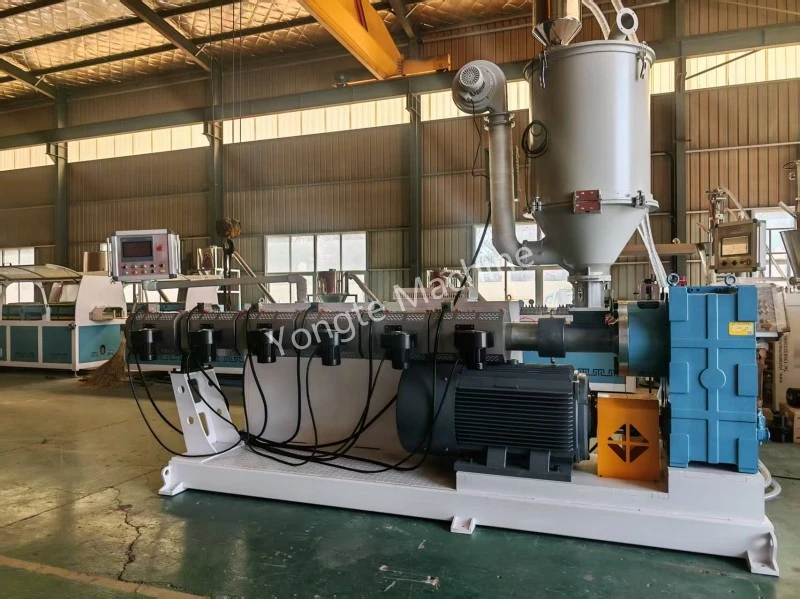
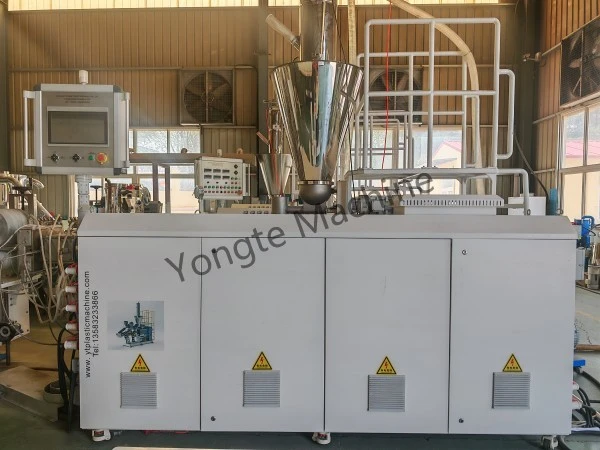
Why failed foam in WPC door frame production line?
Solutions for solving the non-foaming problem in WPC door frame production
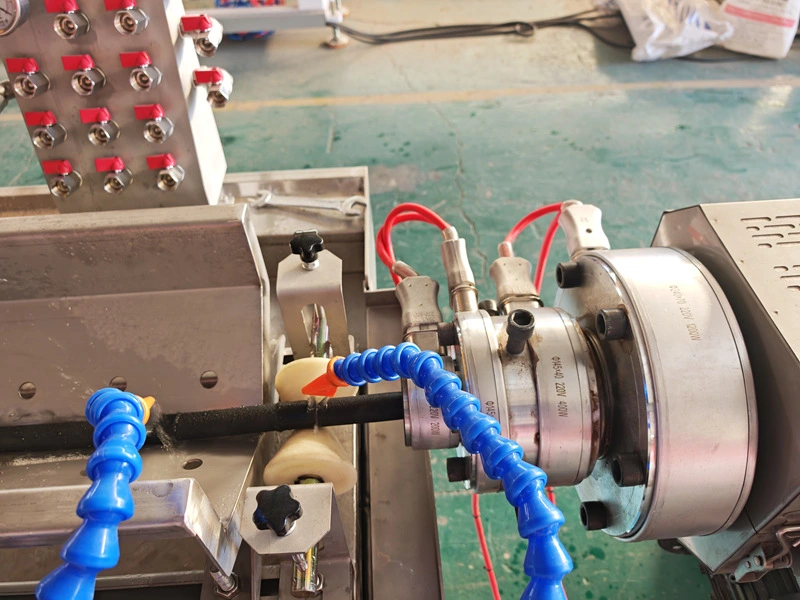
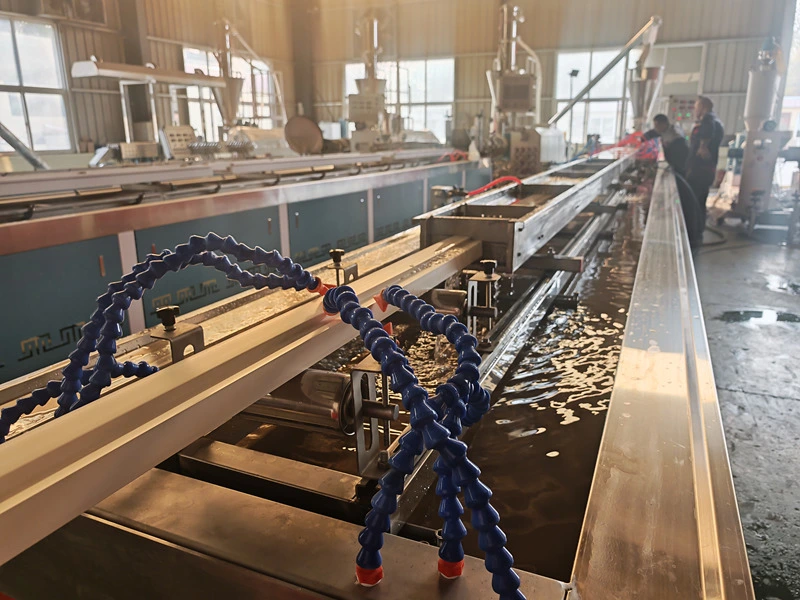
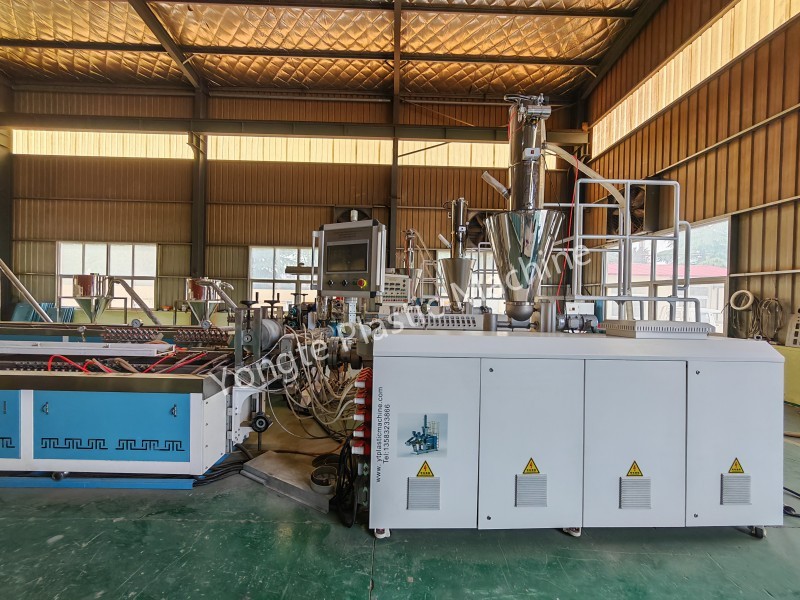
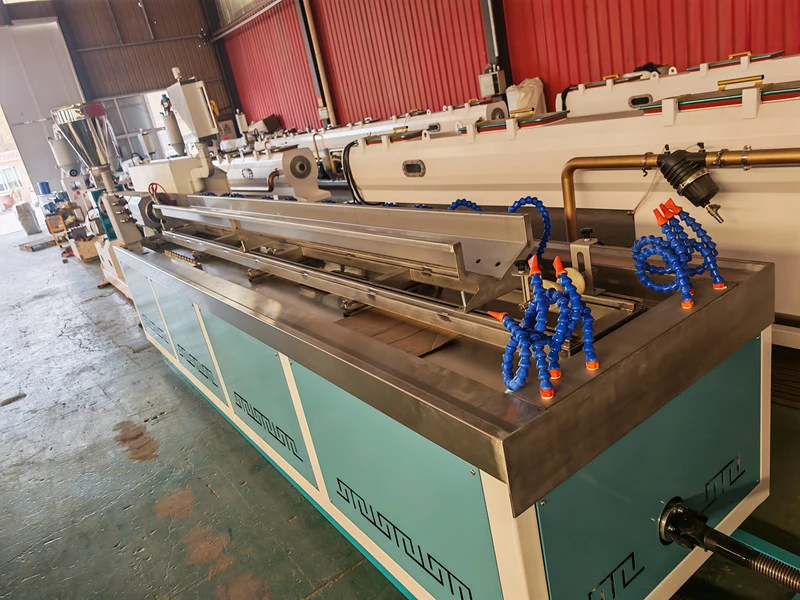
Yongte WPC door frame manufacturing machine creates top - quality door frames from PVC–wood composite material by using foaming technology. This state - of - the - art equipment combines precise temperature control modules and special screw setups to perfect the combination of the PVC matrix and wood fibers. Meanwhile, its foaming system guarantees even cell distribution, which improves both the structural strength and heat - insulating characteristics of the finished door frames.
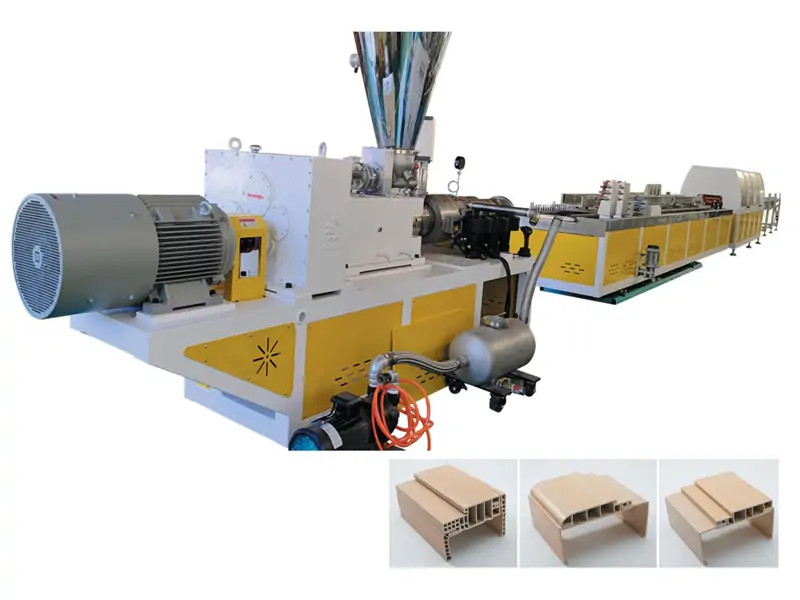
However, many operators encounter difficulties with foam formation during production, resulting in excessive product weight and consequently higher manufacturing costs—factors that can lead to market exclusion. Drawing on years of industry experience, Yongte engineers have compiled and analyzed the following solutions to address the foam formation issue. The reasons outlined below explain why wood–plastic door frames fail to foam during extrusion and outline steps for conducting a self-examination.
I. Formulation and Raw Material Issues (Most Common)
1. Defective or insufficient foaming agent
· Phenomenon: No expansion upon mold ejection; extremely high density; hard texture.
Foaming agent causes and Solutions
|
Causes |
Solution |
|
Insufficient dosage of foaming agent (AC/NC/OBSH) (normal range: 0.8–1.5 kg per 100 kg of PVC) |
Increase the amount of foaming agent by 0.2–0.3 kg per batch; gradually adjust to 1.0–1.2 kg per 100 kg of PVC.
|
|
Foaming agent exhibits hygroscopicity, clumping, expiration, or a sharp decline in decomposition efficiency. |
Replace with a new batch of foaming agent and store it in a dry environment. |
|
The absence of activators (such as ZnO or ZnSt) results in excessively high decomposition temperatures and incomplete decomposition. |
Add 0.1–0.3 kg of ZnO as an activator to reduce the decomposition temperature. |
2. Imbalanced foaming regulator (e.g., ACR or foaming regulator)
· Phenomenon: Either no foaming occurs, or foaming yields coarse cell structure or cell collapse.
Application of foaming regulator and Solution
|
Foaming regulator |
Problem Presentation |
Solution |
|
Insufficient dosage
|
Low melt strength → Failure to capture gases → Absence of foaming or bubble rupture |
1. Standard dosage: 5–8 kg (ACR530) 2. If foaming does not occur: Add 0.5–1 part of modifier to enhance melt strength 3. If foaming still does not occur: Reduce the modifier dosage by 0.3–0.5 kg to decrease melt viscosity |
|
Excessive dosage |
Excessive melt viscosity → Restricted bubble expansion → High density with no foaming |
1. Standard dosage: 5–8 kg (ACR530) 2. If foaming does not occur: Add 0.5–1 part of modifier to enhance melt strength 3. If foaming still does not occur: Reduce the modifier dosage by 0.3–0.5 kg to decrease melt viscosity |
o
3. Imbalanced lubrication system (incorrect internal/external slip ratio)
· Phenomenon: Rapid or slow plasticization; failure to expand after mold ejection; darkened surface.
Lubrication Issues and Solutions in Foaming Process
|
Issue |
Cause |
Effect |
Solution |
|
Excessive internal slip |
Rapid plasticization and premature foaming |
Pressure release at the die; no foaming upon demolding |
Reduce internal slip and increase external slip |
|
Excessive external slip |
Low melt viscosity and poor gas entrapment |
Failure to foam |
Typical lubricant ratio: internal slip (stearic acid) 0.5–0.9 kgs; external slip (PE wax or OPE) 0.3–0.8 kgs |
|
Insufficient lubrication |
Poor plasticization, high torque, uneven temperature distribution |
Incomplete foaming agent decomposition |
Increase internal slip and minimize external slip |
o
4. Excessive filler, wood flour, or recycled material
· Phenomenon: Excessively dry material; poor melt flow; difficulty in foaming.
Filler problem and solution
|
问题 |
解决方案 |
|
Total filler (wood flour + calcium carbonate) exceeding 180–220 kgs, or recycled material ratio >30–50%, leads to excessively high melt strength and poor gas diffusion. |
Limit recycled material ratio to ≤30%; control total filler content within 150–200 kgs. |
|
Undried wood flour (moisture content >2%) → reduced heat absorption, impaired plasticization, and interference with foaming. |
Dry wood flour at 80–120°C for 2–4 hours to achieve moisture content <0.5%. |
o
5. Insufficient or poor-quality thermal stabilizer
· Phenomenon: Local overheating, yellowing, premature foaming agent decomposition, and failure to foam upon mold ejection.
· Solutions:
o • Use lead salt or calcium–zinc stabilizer at 4.5–6 kgs to ensure high-temperature stability.
• Consider reformulating the stabilization system to prevent premature decomposition and lubrication imbalance.
II. Extrusion Process Parameters (Temperature / Pressure / Screw Speed)
1. Incorrect temperature profile (primary process cause)
· Non-foaming typical temperature issues:
Temperature problem and result
|
Temperature problem |
Affect |
Result |
|
Barrel temperature too low |
foaming agent fails to decompose |
no foaming |
|
Excessively high front - zone temperature |
premature foaming |
loss of internal die pressure; no expansion upon demolding |
|
Insufficient mold cavity temperature |
overly rigid melt |
bubbles cannot expand |
· Recommended temperature profile (conical twin-screw extruder):
o • Feed zone: 140–155°C (to prevent premature foaming).
o • Melting/compression zone: 160–175°C (foaming agent decomposition window).
o • Barrel tail/flange zone: 165–178°C.
· • Die/mouth die: 160–172°C (5–10°C lower than barrel temperature).
Suggested temperature for each zone
|
Zones |
Temperature suggestion(Unit:°C) |
Note |
|
Feed zone |
140–155 |
to prevent premature foaming |
|
Melting/compression zone |
160–175 |
foaming agent decomposition window |
|
Barrel tail/flange zone |
165–178 |
- |
|
Die/mouth die |
160–172 |
5–10°C lower than barrel temperature |
· Adjustment procedure:
1. • First, raise temperature by 5–10°C and observe whether foaming initiates.
2. • If still non-foaming: increase melting zone temperature by 5–8°C.
3. • If premature foaming occurs: reduce feed-zone temperature by 5–10°C.
2. Screw speed–feeding mismatch
Screw speed problem and solution
|
Screw speed problem |
Problem manifestation |
Solution |
|
Insufficient screw speed |
Poor plasticization and prolonged residence time → premature foaming or gas dissolution |
Normal operating range: 18-28 rpm; for non-foaming conditions, increase the speed by 3-5 rpm to improve shear and plasticizing performance. |
|
The screw speed is too high. |
Shear overheating and rapid plasticization → premature foaming |
Normal operating range: 18-28 rpm; for premature foaming, reduce the speed by 3-5 rpm to delay plasticization. |
|
Feeding speed and extrusion speed mismatch
|
Pressure instability
|
Normal operating range: 18-28 rpm |
o
3. Insufficient intra-die pressure
· Phenomenon: No expansion upon mold ejection; high density.
· Causes:
o • Excessive die gap; insufficient compression ratio; premature pressure relief.
· Solutions:
o • Reduce die gap appropriately and increase head pressure.
• Check for vacuum system leaks or over-evacuation.
III. Equipment and Die Issues
Machine problem and solution
|
Machine Problem |
Problem description |
Solution |
|
Extruder Screw wear |
Reduced compression ratio, poor plasticization, low pressure |
replace or repair screw |
|
Inaccurate temperature control |
Actual temperature deviates from displayed value by >10°C |
recalibrate thermocouples |
|
Mold runner design |
Dead zones, material accumulation, or uneven temperature distribution |
polish, clean, and/or add heating bands |
|
Exhaust/vacuum system |
Excessive suction → removal of foaming gas |
reduce vacuum pressure |
IV. Quick Troubleshooting Steps (in order of priority)
1. Material strip analysis:
o • Complete lack of expansion after mold ejection → insufficient foaming agent, undecomposed foaming agent, or excessively low temperature.
o • Bubble formation inside die but no expansion after demolding → premature foaming (excessive front-zone heat or excessive internal slip).
2. Prescription check:
o • Is the foaming agent + activator dosage adequate?
o • Is the foaming regulator dosage within 5–8 kgs?
o • Is internal slip excessive?
o • Is recycled material or filler content excessive?
3. Single-parameter adjustment (modify only one parameter at a time):
o Step 1: Raise melting-zone temperature by +5–10°C; observe.
o Step 2: Increase foaming regulator by +0.5 kgs.
o Step 3: Decrease internal slip by –0.2 kgs and increase external slip by +0.2 kgs.
o Step 4: Increase screw speed by +3–5 rpm.
4. Testing and verification:
o • After each adjustment, stabilize extrusion for 10–15 minutes before sampling.
• Evaluate density, cell structure (pore uniformity), and surface scaling.
· Recommended formulation for wood-plastic door frames (per 100 kgs PVC):
o • Foaming agent (AC): 1.0–1.2 kgs + ZnO: 0.2 kgs
o • Foaming regulator: 6–7 kgs
o • Internal lubricant (stearic acid): 0.6–0.8 kgs
o • External lubricant (PE wax): 0.4–0.6 kgs
o • Filler (dry basis): 60–80 kgs
o • Recycled material: ≤30%
Related News
- Trial to make coconut shell into WPC decking
- High-Yield & Energy-Saving Wood Powder Crushing and Grinding Machine: Yongte Passes European Client’s On-Site Performance Acceptance
- High-Performance WPC granulator for European Clients
- Plastic Lumber Extrusion Line for 50mm Solid Thick Panels
- Yongte Completes Solid Foam WPC Door Frame Extrusion Line for Indian Client
- Can Yongte plastic lumber machine produce different shapes and sizes of plastic lumber?
Leave me a message