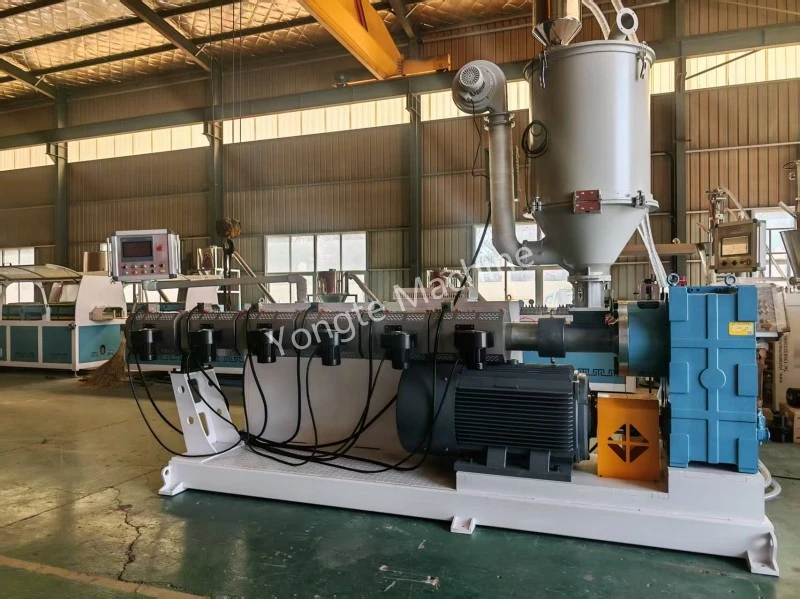
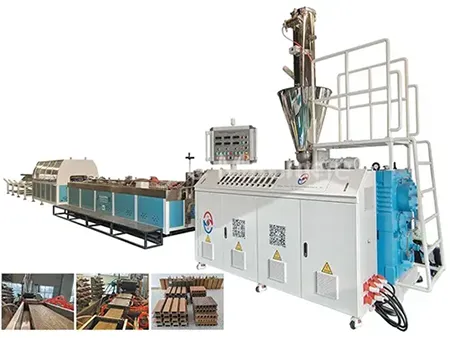
Solution for WPC Extruder Production Problems
Solutions for Unstable Discharge, Strand Breakage, and Die Material Leakage in WPC Extruders
In the production of wood-plastic composite (WPC) materials, extruders serve as the core processing equipment. During extended operation, common malfunctions—including unstable discharge, frequent strand breakage, and die material leakage—often arise. These issues directly reduce production efficiency, compromise the surface quality and dimensional accuracy of finished products, and lead to raw material waste—resulting in significant economic losses for manufacturers.
Drawing on years of on-site commissioning and after-sales service experience, professional engineers from Yongte have identified the root causes of these three typical WPC extruder faults and developed targeted, practical troubleshooting solutions. These measures enable enterprises to rapidly resolve equipment abnormalities and restore normal production operations.
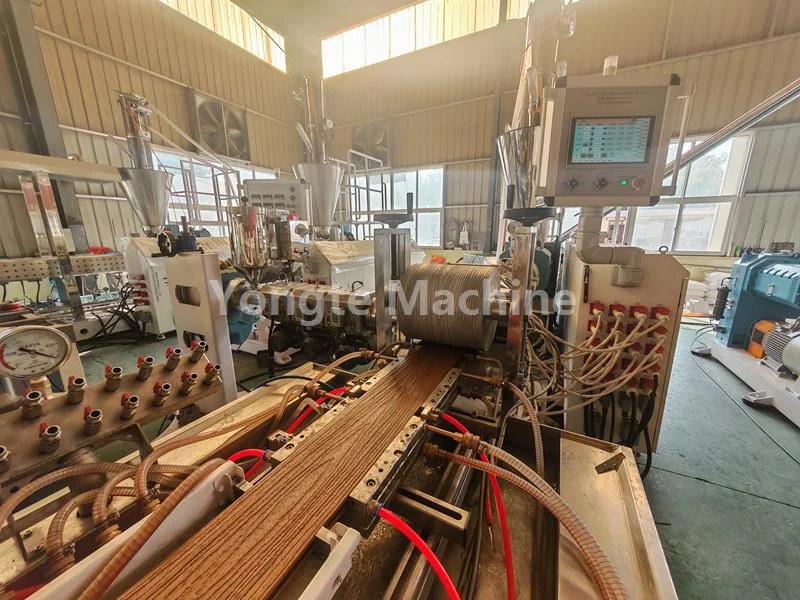
1. Unstable Discharge
Fault Manifestation
The output of WPC extruder fluctuates irregularly, the thickness of extruded profiles is uneven, and the material discharging speed is inconsistent, which is the primary cause of defective finished products.
Root Causes
Uneven feeding: Abnormal operation of the feeding system, excessive or insufficient raw material supply, and bridging phenomenon inside the feeding bin lead to discontinuous material delivery.
Screw slipping: Severe wear of the screw barrel, unreasonable material formula resulting in excessive material lubricity, and insufficient friction between raw materials and the screw cause slipping during material conveying.
Internal pressure fluctuation: Unreasonable backpressure setting, blocked partial runner inside the equipment, and abnormal temperature control lead to unstable molten material pressure in the plasticizing cavity.
Professional Solutions
Optimize the feeding system: Calibrate the operating parameters of the feeder to ensure constant and uniform feeding speed; install a stirring device inside the feeding bin to prevent raw material bridging.
Inspect and maintain accessories: Regularly check the wear degree of the screw and barrel, and replace worn parts in time; adjust the feeding resistance properly to eliminate screw slipping.
Stabilize backpressure and internal pressure: Set the backpressure value matching the material formula and production specifications; clean the internal runner of the equipment regularly to avoid local blockage and stabilize the overall operating pressure of the extruder.
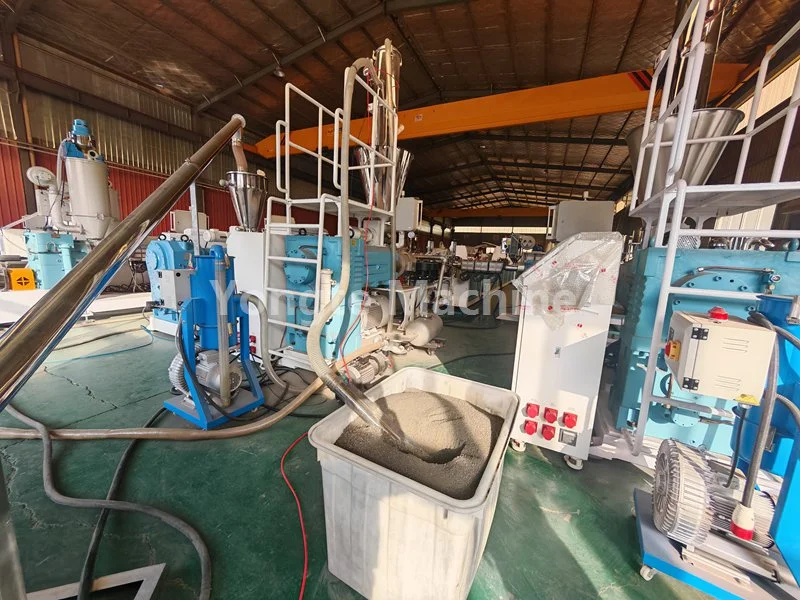
2. Strand Breaking
Fault Manifestation
The molten material extruded from the die cracks and breaks during continuous production, which forces frequent production shutdowns and seriously restricts continuous mass production.
Root Causes
Insufficient plasticization: The processing temperature is too low, or the shear force of the screw is insufficient. The wood powder and plastic matrix cannot be fully fused, resulting in poor toughness of the molten material and easy fracture during extrusion.
Over-plasticization: Excessively high temperature or excessive shear action causes the plastic matrix to be thermally decomposed and the material to be carbonized, reducing the structural strength of the extruded strand.
Unbalanced formula ratio: Unreasonable proportion of wood powder, plastic particles, lubricants and stabilizers, excessive filler content or mismatched auxiliary materials affect the overall plasticizing performance of raw materials.
Professional Solutions
Optimize temperature parameters: Adjust the temperature of each heating zone of the extruder section by section according to the material formula to ensure the raw materials reach the optimal plasticizing state and avoid insufficient plasticization or thermal degradation caused by extreme temperature.
Adjust shear strength: Match the screw speed and torque reasonably; replace screw elements with appropriate shear specifications according to production demands to balance material plasticizing efficiency and shear force.
Optimize raw material formula: Fine-tune the proportion of fillers and processing additives, add an appropriate amount of compatibilizer to improve the binding force between wood powder and plastic matrix, and eliminate strand breaking caused by formula defects.
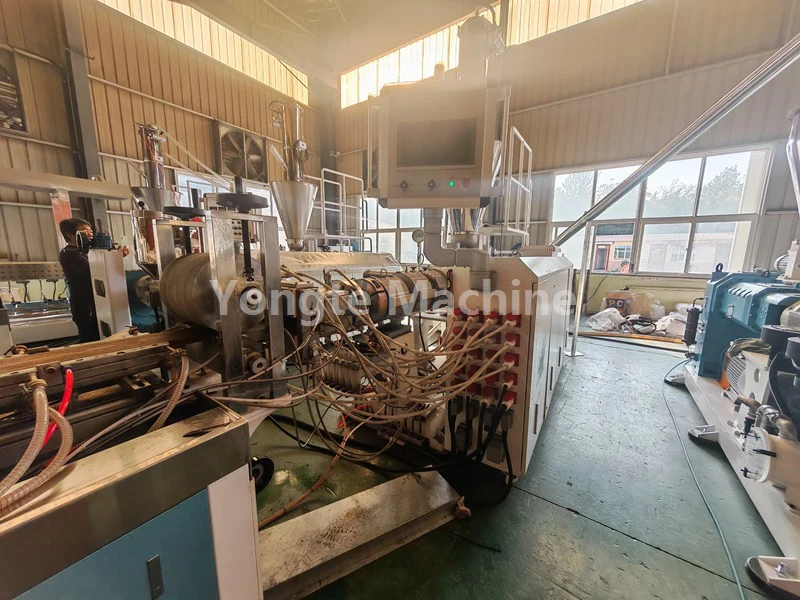
3. Die Material Leakage
Fault Manifestation
Molten material overflows from the joint gap of the die assembly position, which not only pollutes the equipment and production environment, but also leads to unstable local pressure of the die and affects the yield of finished products.
Root Causes
Abnormal extrusion pressure: The overall operating pressure of the equipment exceeds the bearing range of the die assembly gap, or the internal local pressure is too high.
Damaged sealing parts: Long-term high-temperature and high-pressure operation leads to aging, deformation and wear of die gaskets and sealing rings, resulting in reduced sealing performance.
Improper assembly: Uneven locking force of die fasteners, offset assembly position and unreasonable gap reservation between die components.
Professional Solutions
Clean the die regularly: Dismantle and clean the residual carbonized materials inside the die runner and assembly gap to prevent runner blockage from causing abnormal pressure surge.
Replace sealing accessories: Regularly inspect the sealing gaskets and rubber rings of the die, and replace aging and damaged sealing parts in a timely manner to restore the sealing performance of the assembly surface.
Standardize die assembly: Re-calibrate the die assembly position, lock the fasteners evenly and symmetrically to ensure uniform stress on the die joint surface, and control the assembly gap within the standard range.
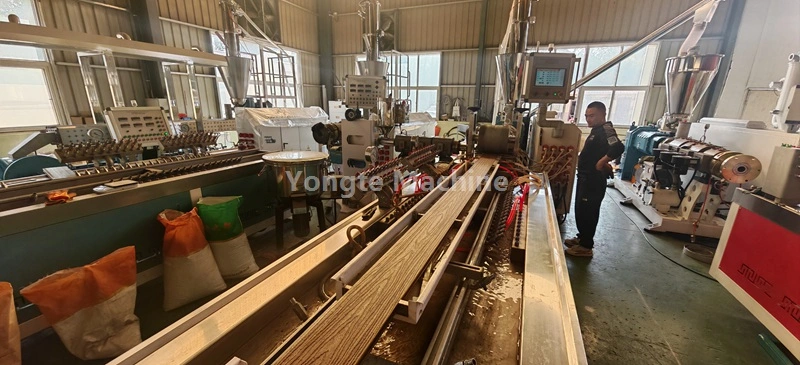
Summary
The most common faults in WPC extruders stem from the combined effects of three factors: parameter settings, equipment accessories, and raw material formulation.
In daily production, enterprises should implement a regular equipment maintenance program, configure processing parameters according to the specific characteristics of the raw materials, and promptly adjust the operating scheme when faults arise.
If you encounter extruder operation issues that are difficult to resolve, please contact Yongte’s technical team. We offer one-on-one professional technical support to help reduce failure rates and maximize production efficiency.
Related News
- Trial to make coconut shell into WPC decking
- High-Yield & Energy-Saving Wood Powder Crushing and Grinding Machine: Yongte Passes European Client’s On-Site Performance Acceptance
- High-Performance WPC granulator for European Clients
- Plastic Lumber Extrusion Line for 50mm Solid Thick Panels
- Yongte Completes Solid Foam WPC Door Frame Extrusion Line for Indian Client
- Can Yongte plastic lumber machine produce different shapes and sizes of plastic lumber?
Leave me a message