How Does a WPC Machine Turn Mixed Waste Into High-Value Profiles?
Abstract
Buying a WPC Machine can feel deceptively simple—until the first production run turns into a pile of warped boards, inconsistent color, clogged dies, and a maintenance team that now hates your name. Wood-plastic composite production sits right at the intersection of “messy” raw materials and “unforgiving” extrusion physics. Small deviations in moisture, particle size, melt pressure, or cooling can create big swings in surface finish, density, and strength.
This guide breaks down what actually drives stable output, where quality problems usually start, and how to choose a line configuration that fits your product goals—decking, wall panels, fences, door frames, or custom profiles. You’ll also get practical checklists, a defect-to-fix table, and straightforward answers to common purchasing questions so you can evaluate any WPC Machine proposal with confidence.
Table of Contents
- Outline
- Customer Pain Points a WPC Line Must Solve
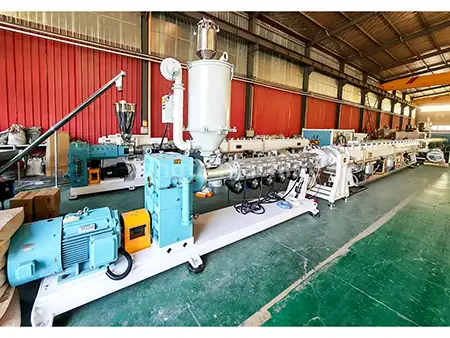
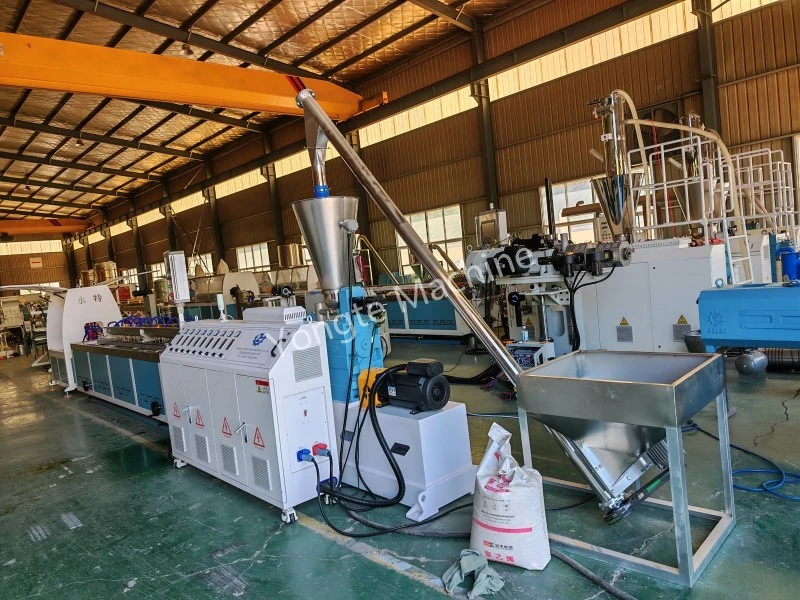
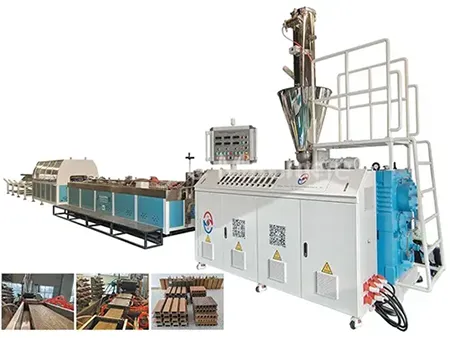
- What a WPC Machine Line Actually Includes
- Material Handling: Where Most Problems Begin
- Process Stability and Consistent Quality
- Common Defects and Fast Root-Cause Checks
- How to Choose the Right WPC Machine Configuration
- Operations: Throughput, Energy, and Maintenance Reality
- FAQ
- Next Steps
Outline
- Define the problems to solve: scrap rate, surface finish, dimensional stability, downtime, and cost per meter.
- Understand the core modules of a WPC Machine line: feeding, compounding/extrusion, die, calibration, cooling, haul-off, cutting, stacking.
- Lock down materials: moisture control, screening, dosing accuracy, and consistent additive dispersion.
- Stabilize the process: temperature profile, melt pressure, venting/degas, and cooling discipline.
- Use a defect checklist to troubleshoot quickly and avoid “random knob turning.”
- Select a configuration that matches product type, output target, and labor/skill constraints.
- Plan for operations: maintenance schedule, wear parts, energy expectations, and training.
Customer Pain Points a WPC Line Must Solve
A WPC Machine isn’t judged by how shiny it looks on delivery day—it’s judged by how boringly consistent it runs on day 60. In real factories, buyers typically care about five pain points:
- Inconsistent product quality: warpage, bubbles, color streaks, rough surfaces, low density, or weak screw retention.
- High scrap and rework: profiles out of tolerance, brittle edges, unstable embossing, or bad co-extrusion bonding.
- Raw material variability: wood flour moisture swings, recycled plastic contamination, different melt flow batches.
- Downtime and maintenance headaches: frequent die cleaning, worn screws/barrels, unreliable heaters, and feeding blockages.
- Cost per meter is too high: energy consumption, labor intensity, excessive additives to “patch” poor dispersion.
The good news: most of these issues are predictable. The not-so-fun news: they’re often caused by fundamentals (materials and process stability), not by one magic accessory. If you treat a WPC Machine like a “plug-and-play” plastic extruder, you’ll pay for it in scrap.
What a WPC Machine Line Actually Includes
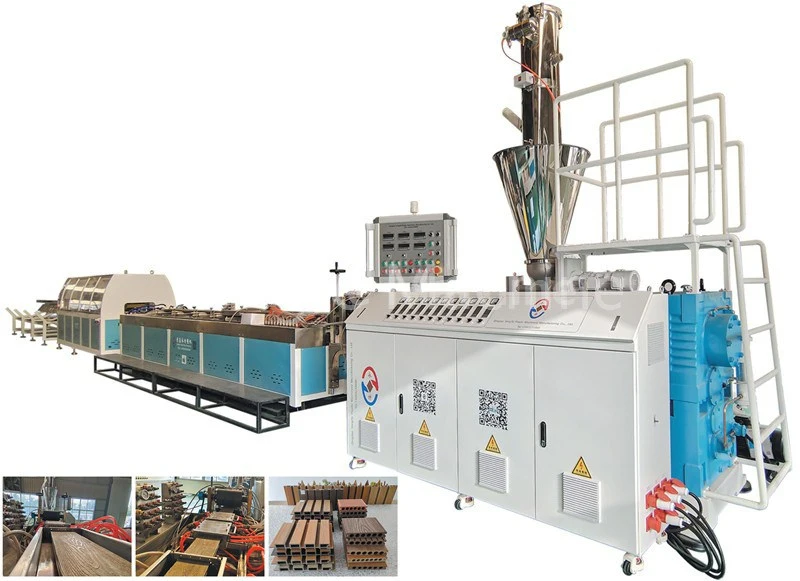
People say “WPC machine” as if it’s one unit. In practice, it’s a coordinated line where each module protects the next one from instability. A typical profile extrusion line can include:
- Storage + drying: silos, dryers, and buffer hoppers that prevent moisture shocks.
- Dosing and feeding: gravimetric/volumetric feeders for wood flour, polymer, additives, and color masterbatch.
- Compounding/extrusion unit: the heart of the WPC Machine, where mixing, melting, dispersion, and pressure generation happen.
- Melt filtration (optional): screens or filters to catch contaminants (especially important with recycled plastics).
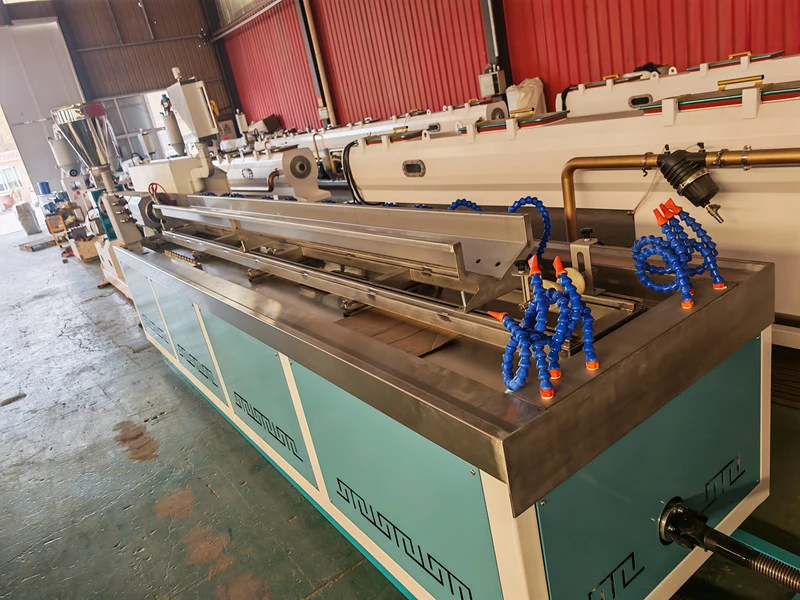
- Die + calibrator: defines shape, supports dimensional accuracy, and stabilizes the surface.
- Cooling system: usually a mix of vacuum calibration, water cooling, and controlled air drying.
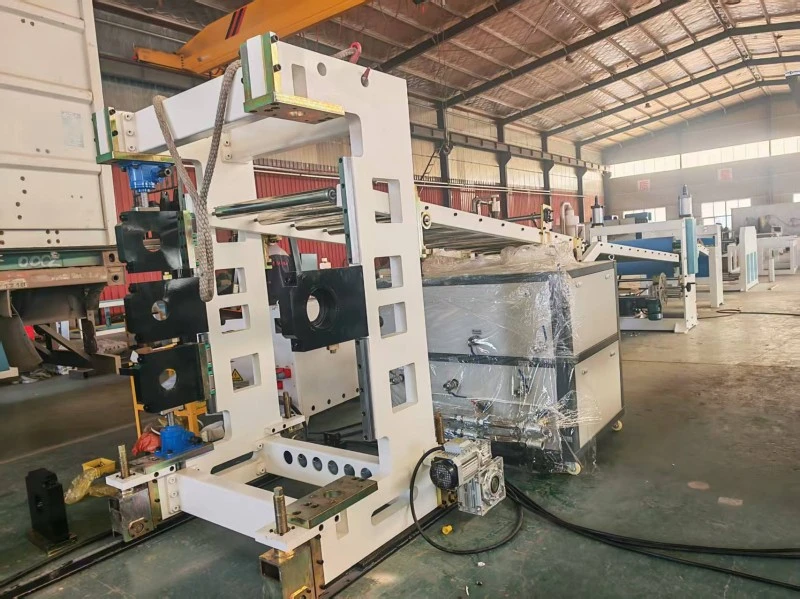
- Haul-off: keeps pulling force steady so thickness doesn’t breathe.
- Cutting + stacking: clean cuts, consistent length, and safe output handling.
- Embossing/co-extrusion (optional): surface textures, anti-slip patterns, or cap layers for premium products.
When evaluating any WPC Machine, ask one question: Which modules are included to prevent instability, and which modules are “optional” that you’ll end up needing anyway?
Material Handling: Where Most Problems Begin
If you want stable output, start by being strict with the boring stuff: moisture, particle size, and dosing accuracy. WPC combines hydrophilic wood and hydrophobic plastic—meaning it’s naturally prone to steam, voids, and weak interfacial bonding when your prep is sloppy.
Material controls that pay for themselves:
- Moisture discipline: wood flour is often targeted at a low, stable range (commonly under a few percent). What matters most is consistency across shifts.
- Screening and metal protection: simple screening can remove oversize particles that cause die lines; magnets help protect screws and barrels.
- Accurate dosing: color and coupling agents are “small percentage, huge impact.” Poor dosing looks like random color shifts and weak mechanical performance.
- Clean recycling loops: if you recycle edge trim and start-up scrap, reintroduce it in a controlled ratio instead of “dumping it back in.”
A reliable WPC Machine line doesn’t just extrude—it helps you reduce variability. This is why many factories prefer integrated feeding and automation options: the line should protect you from human inconsistency, not amplify it.
Process Stability and Consistent Quality
Once materials are controlled, quality becomes a game of stability: stable feeding, stable melting, stable pressure, stable cooling. The most successful WPC plants build a repeatable “window” and run inside it—rather than chasing output with constant parameter changes.
Four stability pillars for any WPC Machine line:
- Steady feeding: bridging, pulsation, or air entrainment at the feeder will show up as density swings downstream.
- Correct temperature profile: too low risks poor fusion and rough surfaces; too high risks degradation, odor, and weak properties.
- Effective venting/degas: moisture and volatiles must be removed before the die to prevent bubbles and internal voids.
- Disciplined calibration and cooling: the calibrator is where dimensions are “locked.” Poor cooling strategy creates warpage and shrink surprises.
Here’s a practical mindset shift: you don’t “fix” warpage at the end of the line. You prevent it earlier through stable melt, consistent pulling, and balanced cooling. A well-configured WPC Machine makes those controls easy to apply—especially when operators are trained with clear standard operating points.
Common Defects and Fast Root-Cause Checks
When defects happen, teams often jump straight into guesswork. A faster approach is to map each symptom to the most likely upstream causes. Use the table below as a first-pass troubleshooting guide for your WPC Machine line.
| Symptom | Most common causes | First checks to run |
|---|---|---|
| Bubbles / voids | Moisture spikes, poor venting, unstable feeding, trapped air | Check wood moisture trend, confirm vent vacuum/cleanliness, verify feeder pulsation |
| Warpage after cooling | Unbalanced cooling, pull speed instability, uneven wall thickness | Inspect calibrator contact, stabilize haul-off, verify die flow balance |
| Rough surface / burn marks | Overheating, degradation, dirty die, wrong temperature gradient | Review barrel zone settings, check die buildup, confirm stable melt pressure |
| Color streaks | Poor dispersion, dosing drift, inconsistent recycled input | Calibrate feeders, improve pre-mix consistency, standardize regrind ratio |
| Low density / weak strength | Poor fusion, excessive moisture, insufficient mixing, wrong formulation | Check melt temperature window, verify venting, review coupling agent dosing |
The goal isn’t to memorize every defect. The goal is to stop blaming “bad luck” and start building a repeatable diagnostic routine. A good WPC Machine supplier should support this with commissioning parameters, operator training, and clear maintenance schedules.
How to Choose the Right WPC Machine Configuration
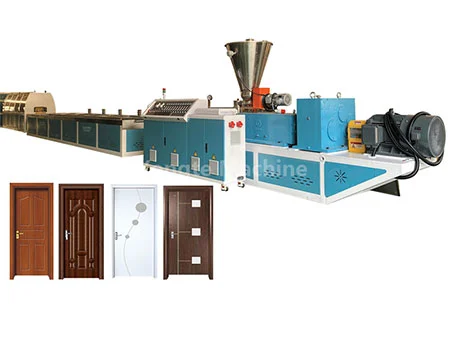
“Best” doesn’t exist. “Best for your product mix and labor reality” absolutely does. Start by deciding whether you need a direct profile line, a pelletizing route, or both.
| Approach | When it fits best | What to watch out for |
|---|---|---|
| Direct profile extrusion | High-volume standard profiles like decking, fencing, cladding | Tighter control needed for feeding and cooling; startup scrap can be higher without good SOPs |
| Compounding + pelletizing | Many SKUs, frequent color changes, outsourced profile extrusion, or storage/transport needs | Extra processing step adds cost; pellet quality must be consistent to avoid downstream issues |
Selection checklist you can use in supplier discussions:
- Product scope: decking, wall panel, fence, door frame, or custom profile? Each changes die and calibration needs.
- Surface goal: sanded, brushed, embossed, or cap-layer co-extrusion?
- Raw material strategy: virgin polymer, recycled polymer, internal scrap loop, or mixed sources?
- Output target: do you need steady high throughput, or flexibility across many SKUs?
- Operator skill level: if your team is new to WPC, prioritize automation, stable feeding, and easy changeover design.
- Wear parts plan: confirm screw/barrel materials, expected wear areas, and lead times for spares.
If you’re evaluating suppliers, you should hear a clear story about how their WPC Machine configuration reduces variability—especially around feeding, venting, and calibration. That’s where consistent quality really comes from.
Operations: Throughput, Energy, and Maintenance Reality
After installation, the daily questions become very practical: Can we hold tolerance for eight hours straight? How fast can we change product size? How often do we clean the die?
Practical operating tips that reduce headaches:
- Standardize startup and shutdown: most lines lose money not in steady-state production, but during transition periods.
- Track moisture and pressure trends: if either drifts, quality will drift. Trends catch issues before scrap piles up.
- Schedule die and calibrator care: preventive cleaning beats emergency downtime every time.
- Keep wear parts on-site: at minimum, plan for heaters/sensors and key mechanical spares based on your line’s design.
- Train operators with “cause and effect”: teach what each adjustment influences, so the team doesn’t fight the process blindly.
Many buyers also underestimate the value of commissioning support. A supplier who helps you lock in a stable process window can reduce your ramp-up time dramatically. If you’re considering Qingdao Yongte Plastic Machinery Co., Ltd., for example, ask for a commissioning plan that includes parameter handover, operator training, and a clear spare-parts list aligned with your product.
FAQ
Q: What products can a WPC Machine typically produce?
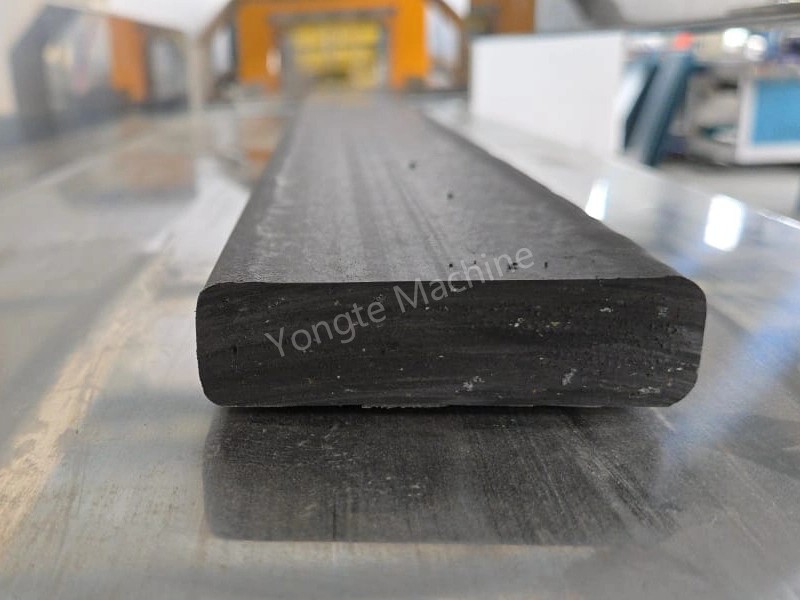
A WPC Machine line is commonly used for decking boards, wall cladding, fencing, railing, door frames, skirting, and custom profiles. The core difference is the die/calibration design and the downstream handling (embossing, co-extrusion, cutting style).
Q: Do we need drying if we already “feel” the wood flour is dry?
In WPC, “feels dry” is not a control method. Moisture variation is one of the fastest routes to bubbles, voids, and surface defects. Even if you don’t need aggressive drying, you usually need consistent conditioning and storage discipline.
Q: Is recycled plastic workable in a WPC Machine line?
Yes, but success depends on how stable and clean the recycled stream is. Filtration, screening, and controlled regrind ratios become much more important, and your troubleshooting routine must include contamination checks.
Q: Why do we get warpage even when the dimensions look correct at the calibrator?
Warpage often shows up after cooling because internal stress “releases” later. Look for unbalanced cooling, pull instability, and uneven wall thickness. The fix is usually upstream process stability, not just downstream adjustments.
Q: What should we ask for during acceptance testing?
Ask for repeatability: stable output over time, tolerance consistency, surface finish stability, and documented parameter windows. Also verify changeover steps and confirm spare parts and wear parts are specified clearly.
Q: How many times should the keyword “WPC Machine” appear in our internal specs?
In specs, focus on clarity rather than repetition. Define your product standards, line configuration, and acceptance criteria. The supplier should respond with a configuration that matches your goals and constraints.
Q: What’s the fastest way to reduce scrap on a new WPC Machine line?
Lock down three things: consistent feeding, stable temperature/pressure, and disciplined calibration/cooling. Then document the stable operating window and train operators to stay inside it.
Q: Should we choose direct extrusion or pelletizing first?
If your goal is high-volume standard profiles, direct profile extrusion is often efficient. If you need flexibility across many SKUs or want to separate compounding from profile production, pelletizing can be a better foundation.
Next Steps
A WPC Machine is an investment in repeatability. If your supplier can help you control material variability, stabilize the extrusion window, and standardize commissioning and training, your line can move from “constant firefighting” to predictable daily output.
If you want to discuss your target products, capacity goals, raw material plan, and preferred line configuration, reach out to Qingdao Yongte Plastic Machinery Co., Ltd. for a tailored proposal—share your profile drawings and requirements, and contact us to get practical recommendations and a clear quotation plan.
Related News
- How to solve the problems of abnormal noise and excessive vibration in WPC extruders
- Is a WPC Machine the Key to Sustainable Wood-Plastic Composite Manufacturing and Higher Production Efficiency
- How Can an HDPE Board Extrusion Machine Revolutionize Your Plastic Manufacturing Process
- How Can the ABS Profile Extrusion Line Revolutionize Plastic Profile Manufacturing
- What Surface Treatment Can Be Applied for WPC Door?
- How rubber soaker hose used for irrigation?
Leave me a message