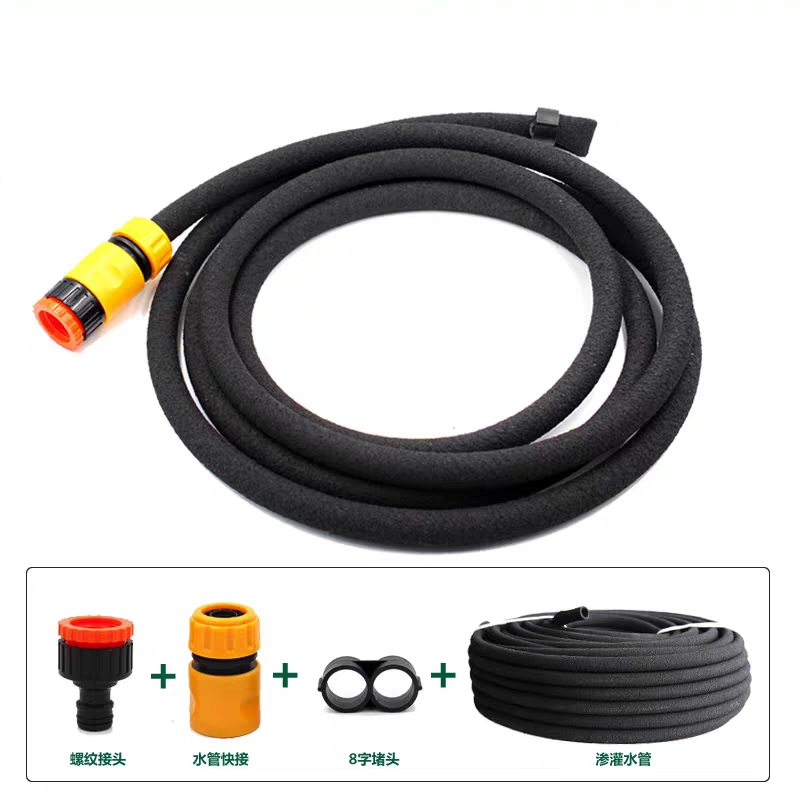
What is the Working Principle of the Rubber Foam Water-Infiltration Irrigation Pipe?
Working Principle of the Rubber Foam Water-Infiltration Irrigation Pipe
Core Principle
The core operating principle of the rubber foam infiltration pipe lies in its unique wall structure. This pipe utilizes a interconnected microporous network formed on its surface, enabling continuous and uniform irrigation even under low internal water pressure. Under the combined effect of internal water pressure and soil capillary suction, water slowly and evenly infiltrates the surrounding soil through this microporous network. When soil moisture in the irrigated area approaches saturation, the water potential difference between the pipe interior and exterior decreases, automatically reducing the infiltration rate; conversely, when soil dries out, the water potential difference increases, correspondingly boosting the infiltration rate—thereby achieving intelligent balance between water supply and demand. This mechanism not only significantly enhances water utilization efficiency and conserves irrigation water, but its microporous structure also endows the pipe with exceptional resistance to both physical and biological clogging.
Work Mechanism (Four-Step Closed Loop)
1.1. Water Supply and Pressure Stage: The irrigation water is delivered into the rubber foam infiltration pipe via the water supply system, which typically operates at a low pressure range (e.g., 0.1–0.5 MPa). Under this pressure, the pipe is filled with irrigation water, creating a stable initial head that provides a continuous and steady driving force for the subsequent infiltration process.
2.2. Micro-pore seepage stage: Driven by the pressure difference between the inside and outside and the capillary force of the soil matrix, water within the pipeline begins to migrate and seep slowly along the intricate interconnected micro-pores on the inner wall (with a structure resembling sponge rubber). This process occurs uniformly in all directions, enabling continuous and even water delivery to the soil around the pipeline in a 360-degree manner, effectively preventing localized over-wetting or irrigation dead zones.
3.3. Self-balancing Regulation Phase: This is the critical step enabling the technology's intelligent water-saving capability. When soil moisture is high, the water potential in soil pores increases correspondingly, reducing the potential difference with the water inside the pipes and weakening the driving force for water infiltration, thereby automatically decreasing the infiltration rate per unit time. Conversely, when the soil becomes dry, the soil water potential drops sharply, increasing the potential difference with the pipe water and accelerating water infiltration, thus raising the infiltration rate. This dynamic feedback regulation mechanism based on soil moisture status achieves adaptive matching between irrigation water volume and crop water requirements.
4.4. Anti-Clogging Protection Stage: The micropore size of the rubber foam infiltration pipe is precisely designed and controlled, typically being extremely fine (hardly discernible to the naked eye). These micropores inherently provide a physical barrier against soil particles and fine root systems. Additionally, the pipe is usually coated with a permeable non-woven fabric or other filtering material as a protective layer. This outer filter layer effectively intercepts sediment particles and plant roots from the soil, preventing them from penetrating and clogging the pipe's micropores, thereby ensuring the irrigation system operates consistently, reliably, and durably over the long term.
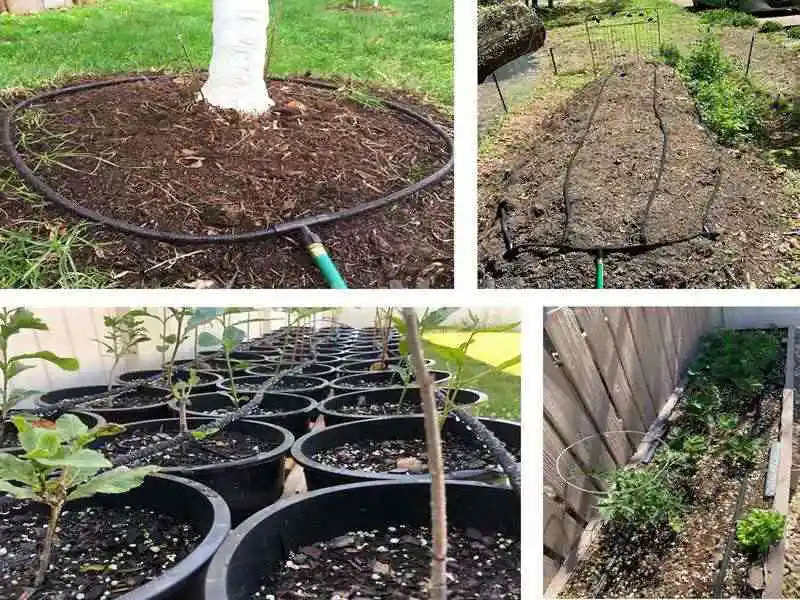
Key Points Regarding Equipment and Materials
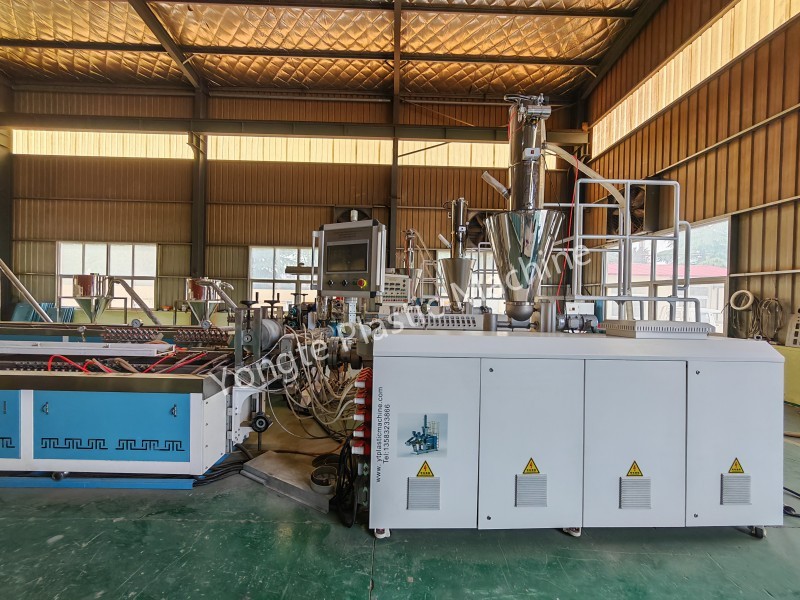
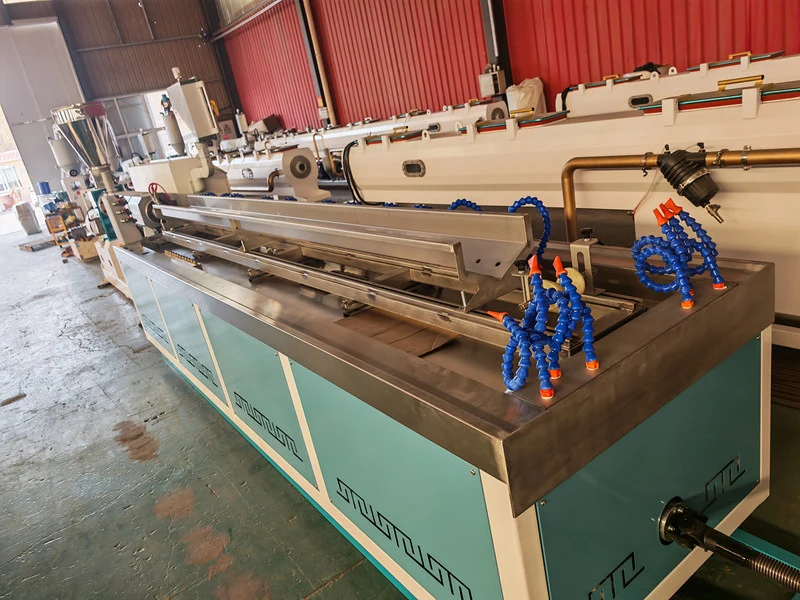
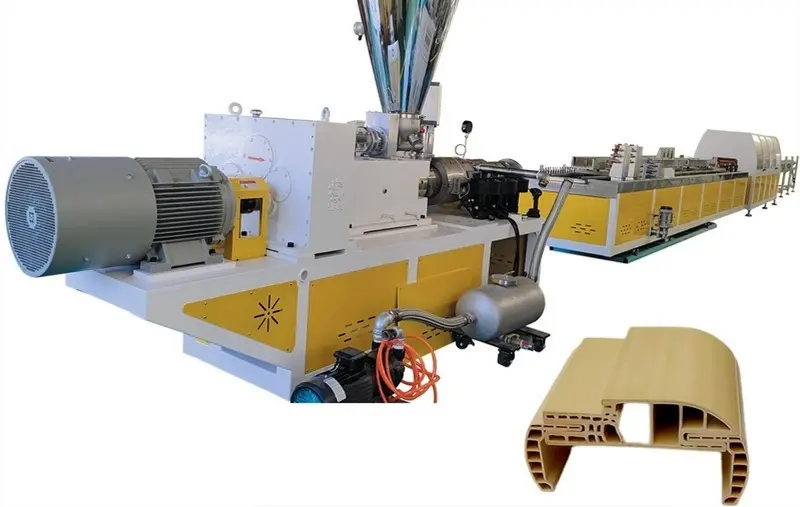
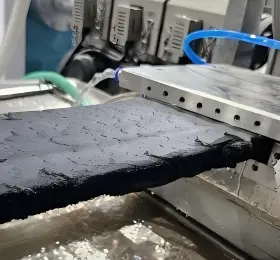
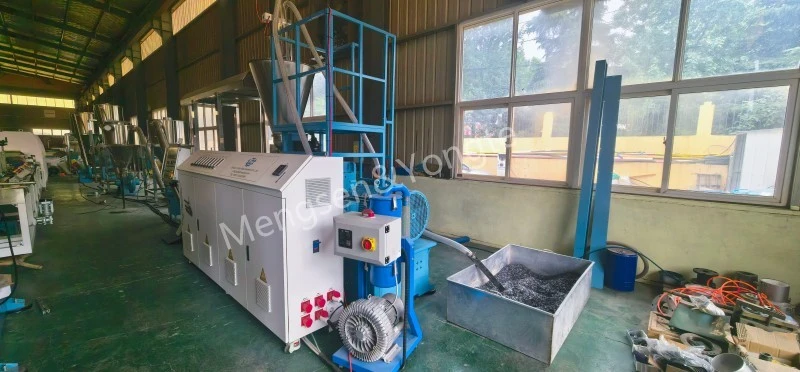
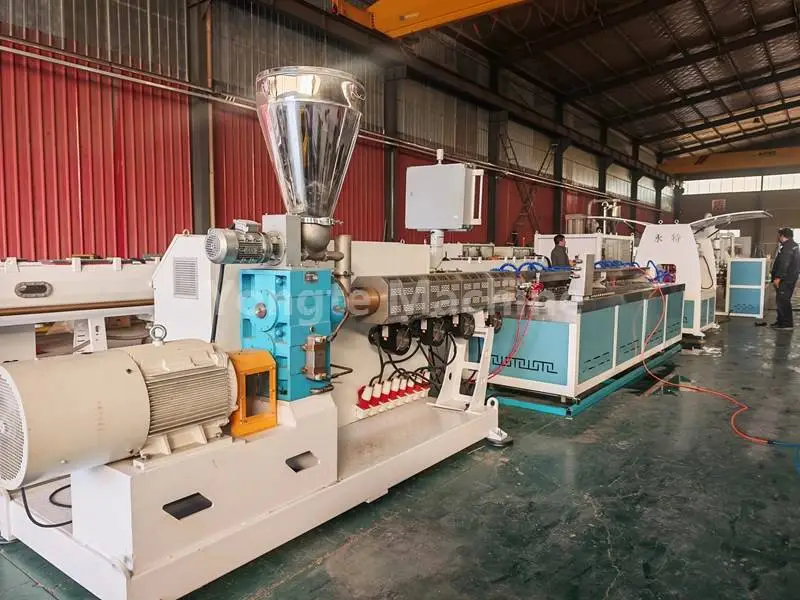
· -Production Equipment: The manufacturing of rubber foam drainage pipes typically employs a continuous extrusion molding process, with the main equipment workflow comprising three critical stages. First, the extrusion molding stage forms pipe blanks from the mixed rubber compound via the extruder head; next, the foaming and shaping stage precisely controls the decomposition temperature and duration of the foaming agent to create a uniform, dense, and interconnected cellular structure within the pipe wall material; finally, the cooling and drawing stage cools and solidifies the formed pipes while performing length adjustment, ensuring dimensional stability and permanent fixation of the microporous structure.
· -Key Materials: The pipes are based on synthetic rubber or rubber-based polymer materials. During production, precise additions of foaming agents (for creating micropores), stabilizers (for controlling the foaming process and stabilizing the pore structure), and other functional additives are required. By adjusting the formulation and process parameters, the average pore size, porosity, and connectivity of the final product can be controlled. Structurally, the inner layer is designed to be relatively dense to ensure water transport strength, while the outer layer forms a three-dimensional foamed structure for efficient water permeability, achieving an optimal balance between mechanical strength and water permeability.
Differences from traditional seepage pipe materials
· -Traditional perforated pipes (e.g., PE perforated pipes): Their water infiltration relies on discrete holes mechanically machined into the pipe wall. These holes are limited in number, unevenly distributed, and relatively large in diameter, leading to uneven water infiltration and the formation of strip-like or point-like wet zones. Additionally, the larger hole openings are prone to blockage by soil particles or root systems, resulting in high maintenance requirements. Operation typically demands high pressure to ensure adequate water discharge.
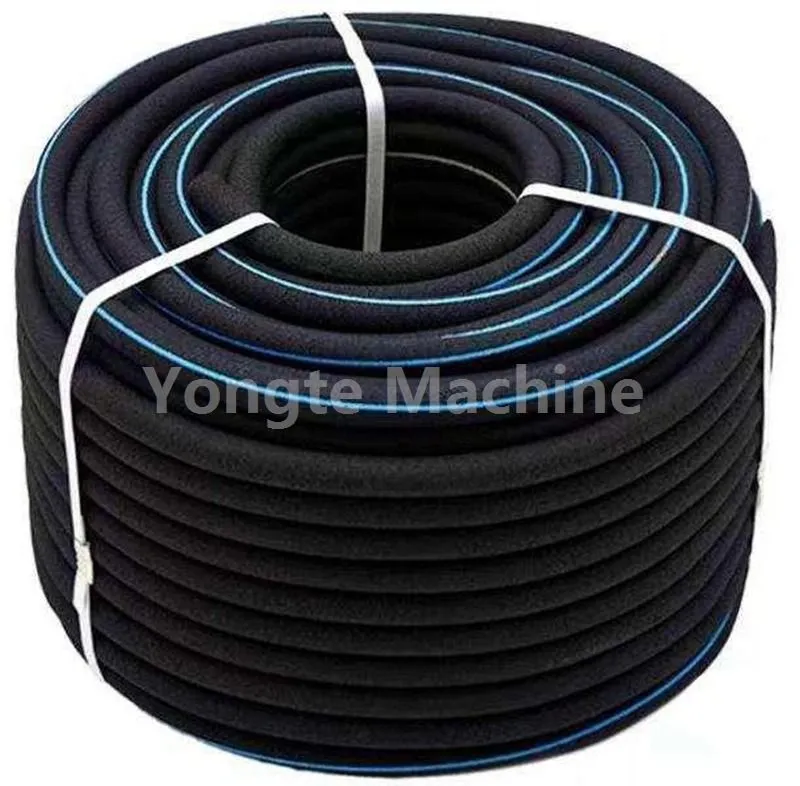
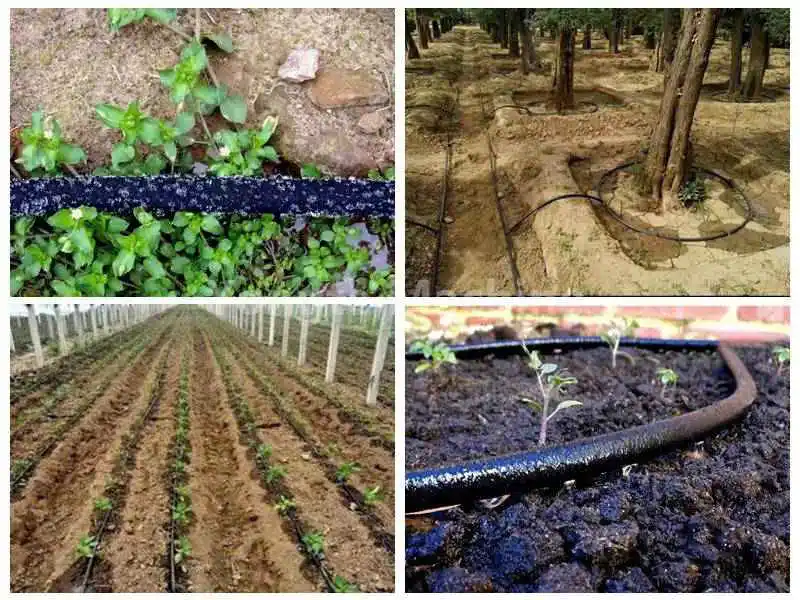
· -Rubber foam drainage pipe: Its most distinctive feature lies in the creation of a drainage surface composed of countless interconnected micropores extending across the entire pipe wall. This structure ensures highly uniform water infiltration, forming a continuous moist layer. The microporous design inherently resists clogging and operates efficiently even under low pressure. Consequently, it is particularly suitable for applications requiring stringent water conservation and precise irrigation uniformity (e.g., precision agriculture), as well as for soft soil foundation treatment applications demanding consistent drainage performance.
Related News
- Advantages of Rubber Soaker Irrigation Pipes vs Traditional Irrigation Tubes
- Can Yongte Supply Turnkey Project Service for WPC decking plant?
- 200x50mm Recycled Solid Plastic Lumber Machine Tested Successfully
- Yongte WPC Column making machine with co-extrusion is successfully tested
- How can plastic film wastage be used to produce wood-plastic composite (WPC) products?
- WPC Extrusion Machine Temperature Setting
Leave me a message