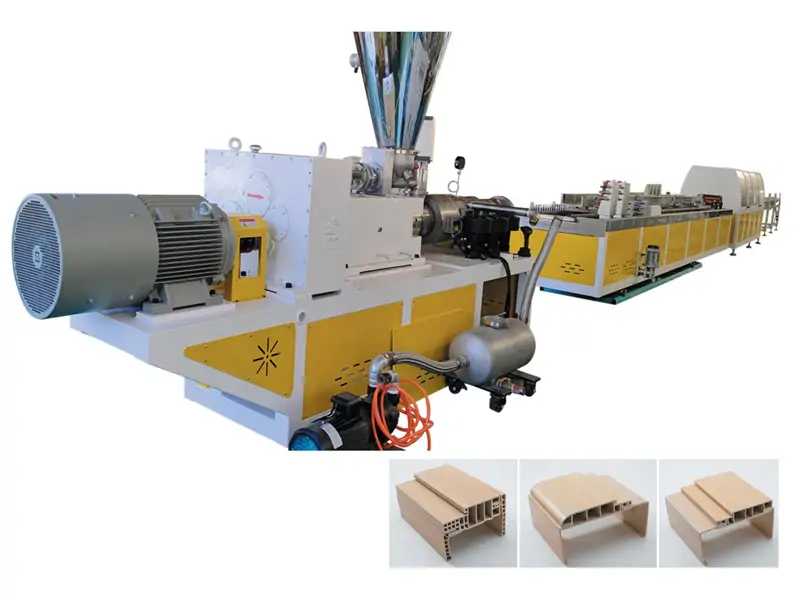
How to Adjust the Screw Speed of WPC Extruder?
How to adjust the screw speed of a wood-plastic WPC extruder?
The screw speed regulation mechanism of wood-plastic extruders operates on a core principle: frequency converters precisely control the main motor's operating frequency, which then transmits power through a gearbox to drive screw rotation. The entire operational workflow is designed with intuitive interfaces for easy mastery. As a professional manufacturer of wood-plastic extrusion equipment, Yongte has optimized extruder designs through multiple enhancements, making screw speed adjustment simpler and more effective. Below, I will detail practical on-site procedures for speed regulation, key parameter monitoring methods, and critical operational considerations to ensure comprehensive understanding and safe application.
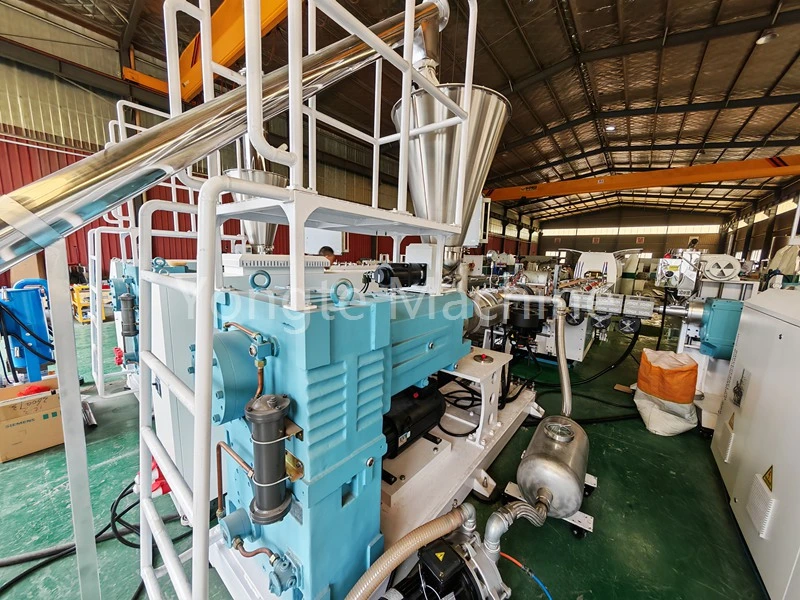
1. Conventional adjustment method (applicable to 65/132 type wood-plastic extruder)
1. Adjust via the control panel
On the device's control panel, locate the relevant area labeled as "Host Speed", "Host Frequency", or "Screw Speed".
Use the knob, potentiometer, or digital buttons on the panel to directly increase or decrease the set value for speed adjustment.
-Common units are typically Hertz (Hz) or revolutions per minute (r/min), with specific display depending on device configuration.
2. Correspondence between main motor speed and screw speed
The speed regulation range of the main motor typically ranges from 0 to 1470 r/min.
The actual rotational speed of the screw typically ranges from 0 to 35 revolutions per minute (RPM), as exemplified by the 65/132 tapered double-screw model.
The specific rotational speed can be calculated using the formula: Actual screw speed = Motor speed ÷ Reducer ratio of the gearbox.
3. Selection between automatic and manual modes
-Manual mode: Sets a fixed rotational speed value directly, suitable for stable production stages to maintain consistent output.
-Automatic mode: The system automatically adjusts the rotational speed based on parameters such as feeder feeding conditions and melt pressure, which helps prevent equipment overload and optimize the production process.
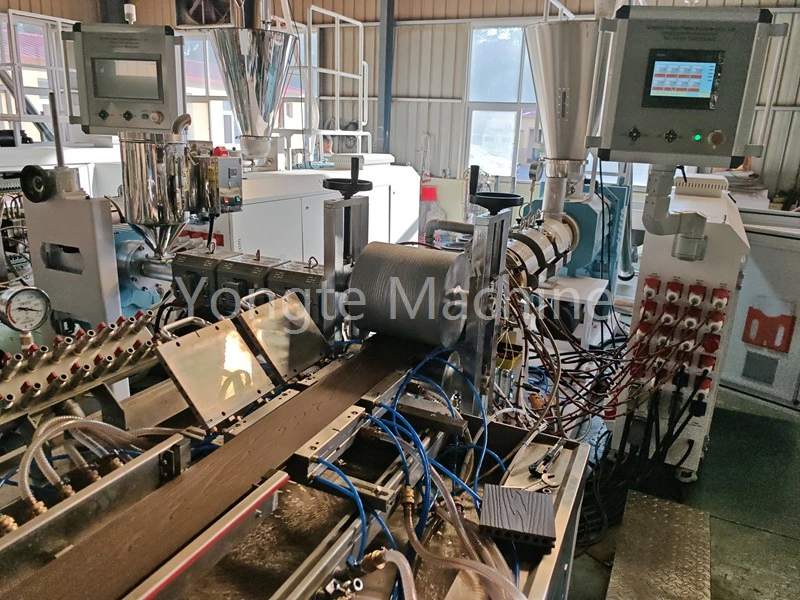
II. How to Adjust Appropriate Rotational Speed in Wood-Plastic Production (Based on Practical Experience)
-Power-on startup phase
First, set the main motor speed within a lower range (e.g., 300 to 600 r/min) and allow the equipment to run idly. Closely monitor the main motor current, operational noise of the equipment, and initial discharge condition. Only after confirming no abnormalities should the speed be gradually increased slowly.
Reference range for normal delivery
-PVC-based wood-plastic composites (e.g., flooring, wall panels): It is recommended to maintain the rotational speed between 12 to 25 revolutions per minute.
-PE or PP-based wood-plastic composites: With high wood powder content or significant filler load, the rotational speed should be controlled at 10 to 20 revolutions per minute to ensure adequate plasticization.
Principles to be followed during adjustment
Ensure that the operating current of the main motor does not exceed its rated calibration value.
-The extruded material should meet the quality requirements of uniform plasticization, absence of scorching discoloration, and absence of bubbles or pores.
Maintain stable melt pressure readings to avoid significant fluctuations.
During adjustment, avoid significant jumps in rotational speed. The recommended fine-tuning range should be within ±2 to 5 Hz per adjustment.
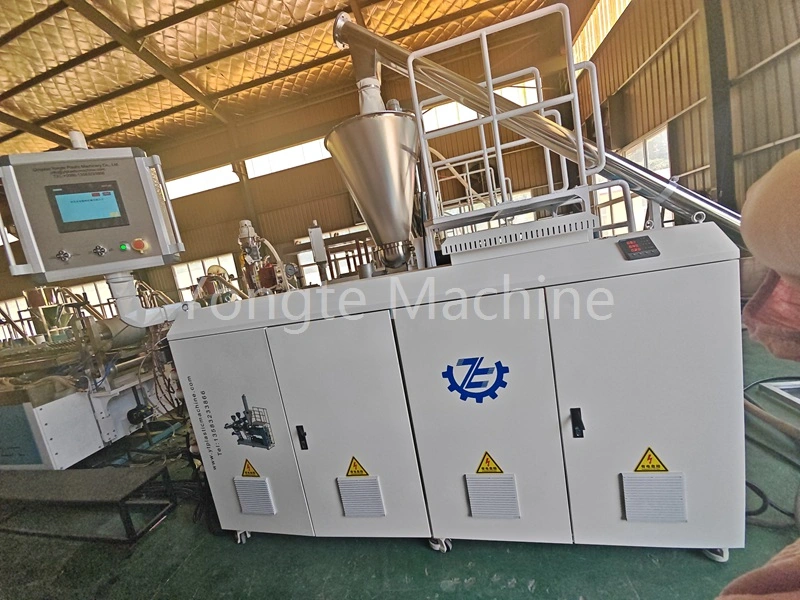
III. Common Issues and Their Regulatory Response Methods
-If charring or yellowing occurs during material discharge → The screw speed should be appropriately reduced.
-If the material exhibits poor plasticization with visible unmelted particles, the rotational speed may be slightly increased while simultaneously raising the heating temperature appropriately.
-If the main motor current exceeds the limit and triggers an alarm, immediately reduce the rotational speed and check whether the feeding rate is excessive or if there is mechanical resistance.
-When encountering unstable dimensions or quality of plates or profiles → The rotational speed setting should be fixed to avoid frequent changes in process parameters.
IV. Brief Summary
The regulation of screw speed fundamentally involves adjusting the main motor's rotational speed or frequency through the control panel. During wood-plastic production, it is crucial to avoid setting excessively high speeds. Maintaining the screw speed within a stable range of 15 to 28 revolutions per minute (RPM) in most cases ensures optimal balance between production efficiency and product quality, making this the most commonly adopted and reliable operational approach.
Related News
- Trial to make coconut shell into WPC decking
- High-Yield & Energy-Saving Wood Powder Crushing and Grinding Machine: Yongte Passes European Client’s On-Site Performance Acceptance
- High-Performance WPC granulator for European Clients
- Plastic Lumber Extrusion Line for 50mm Solid Thick Panels
- Yongte Completes Solid Foam WPC Door Frame Extrusion Line for Indian Client
- Can Yongte plastic lumber machine produce different shapes and sizes of plastic lumber?
Leave me a message