Professional Solutions for Yellowing, Streaks and Brittleness Cracking of Wood-Plastic Composite Door Surfaces
Professional Solutions for Yellowing, Streaks and Brittleness Cracking of Wood-Plastic Composite Door Surfaces
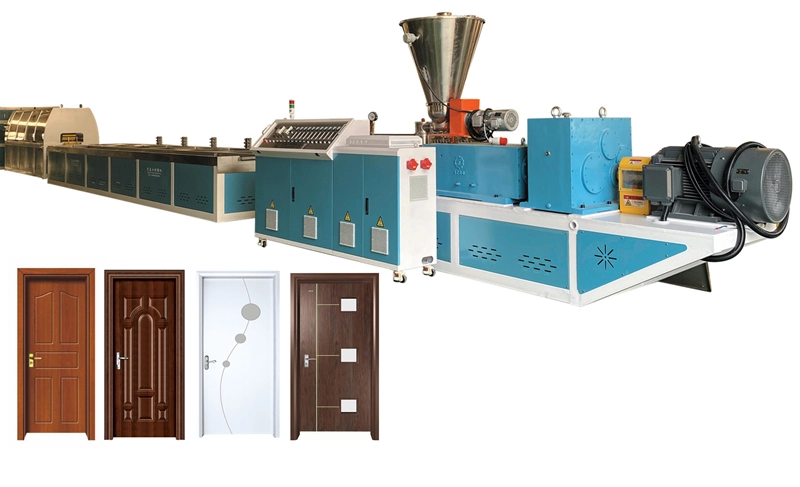
Wood-Plastic Composite (WPC) doors are widely favored in the building decoration industry due to their excellent environmental performance, moisture resistance, corrosion resistance and customizable molding characteristics. However, surface defects such as yellowing, irregular streaks and brittle cracking often occur during production and application, which seriously affect the surface aesthetics, structural stability and service life of WPC door products. Based on years of front-line R&D and production engineering experience, YONGTE engineers have systematically analyzed the root causes of common defects and formulated targeted technical optimization solutions for industry reference and implementation.
1. Solution for WPC Door Surface Yellowing
Surface yellowing is one of the most common quality problems of WPC doors, which is mainly caused by thermal oxidative degradation of polymer substrates, insufficient stability of auxiliary systems and unreasonable processing temperature control during extrusion and molding. Long-term high-temperature processing will accelerate the aging and discoloration of plastic components, while the mismatch of stabilizers and lubricants will further aggravate yellowing defects.
The targeted optimization solutions are as follows:
- Processing temperature reduction: Optimize the temperature setting of each section of the extrusion and molding equipment, appropriately reduce the overall processing temperature, eliminate local overheating dead zones, avoid thermal decomposition and oxidation discoloration of WPC materials under high-temperature conditions for a long time, and fundamentally reduce thermal yellowing.
- Supplement thermal stabilizers: Add high-efficiency composite thermal stabilizers according to the material formula ratio, make up for the insufficient stability of the original formula, effectively inhibit the molecular chain degradation and oxidation reaction of polymer materials during processing and use, and enhance the anti-yellowing and anti-aging performance of products.
- Optimize internal and external lubricant ratio: Adjust the proportion of internal lubricants and external lubricants in the auxiliary formula. A reasonable lubricant matching degree can improve the material fluidity, avoid local overheating caused by excessive friction and shear force during material processing, and prevent yellowing caused by friction thermal degradation.
2. Solution for WPC Door Surface Streaks
Surface streaks refer to irregular color stripes and texture differences on the surface of WPC door products, which mainly stem from uneven material mixing and insufficient plasticization in the production process. Incomplete mixing of raw materials leads to inconsistent local component ratios of the materials, while inadequate plasticization causes ununiform melting and bonding of wood powder and plastic substrates, eventually forming obvious streak defects on the product surface.
The core improvement measures are to upgrade the mixing and refining process and optimize the matching degree of screw speed:
- Improve material mixing and refining effect: Optimize the mixing process parameters, adjust the mixing time, mixing speed and feeding sequence, ensure the uniform dispersion of wood powder, plastic particles, stabilizers, lubricants and other additives, avoid component agglomeration and local formula deviation, and eliminate streaks caused by uneven raw material mixing.
- Optimize screw speed matching: Match the screw speed according to the material formula and production output, solve the problem of insufficient plasticization caused by mismatched speed, ensure that the materials achieve full melting, uniform plasticization and stable extrusion in the screw barrel, improve the consistency of material molding, and erase surface streak defects.
3. Solution for WPC Door Brittleness and Cracking
Brittle cracking of WPC doors includes surface fine cracks and structural brittle fracture, which directly reduces the mechanical strength and service durability of products. This defect is mainly induced by three key factors: excessive shear force in processing, overhigh processing temperature and excessive filler addition. Excessive shear force and high temperature will damage the internal molecular structure of the material and reduce toughness, while excessive inorganic fillers will weaken the bonding force between polymer substrates and wood fibers, resulting in poor flexibility and easy cracking of the product.
The targeted adjustment schemes for formula and process are as follows:
- Optimize processing shear force and temperature parameters: Adjust the screw structure and operating parameters to avoid excessive shear force on the material; reasonably reduce the processing temperature of key sections to prevent thermal aging and molecular chain fracture of the material caused by long-term high temperature, so as to improve the toughness and impact resistance of WPC materials.
- Control filler addition amount: Optimize the formula ratio of inorganic fillers and wood powder, reduce excessive filler addition, ensure the effective bonding between polymer matrix and fiber fillers, improve the internal compactness and flexibility of the product, and solve the brittle cracking problem caused by excessive filler filling.
- Comprehensively optimize the overall formula: Appropriately add toughening modifiers on the basis of adjusting fillers and process parameters, further balance the rigidity and toughness of WPC materials, eliminate internal stress generated during molding, and fundamentally prevent brittle cracking defects of finished doors.
4. Conclusion
The common surface quality defects of WPC doors are closely related to raw material formula, auxiliary matching and production process parameters. Yellowing is dominated by thermal oxidation and auxiliary mismatch, streaks are caused by uneven mixing and insufficient plasticization, and brittle cracking is mainly attributed to excessive shear, overhigh temperature and unreasonable filler dosage. Through targeted temperature adjustment, formula optimization, process parameter matching and mixing process upgrading, the above defects can be effectively eliminated, so as to significantly improve the surface quality, mechanical performance and market competitiveness of WPC door products.
Related News
- Advantages of Rubber Soaker Irrigation Pipes vs Traditional Irrigation Tubes
- Can Yongte Supply Turnkey Project Service for WPC decking plant?
- 200x50mm Recycled Solid Plastic Lumber Machine Tested Successfully
- Yongte WPC Column making machine with co-extrusion is successfully tested
- How can plastic film wastage be used to produce wood-plastic composite (WPC) products?
- WPC Extrusion Machine Temperature Setting
Leave me a message