

Company News
 28 2026-09
Will the WPC production plant cause environmental pollution?
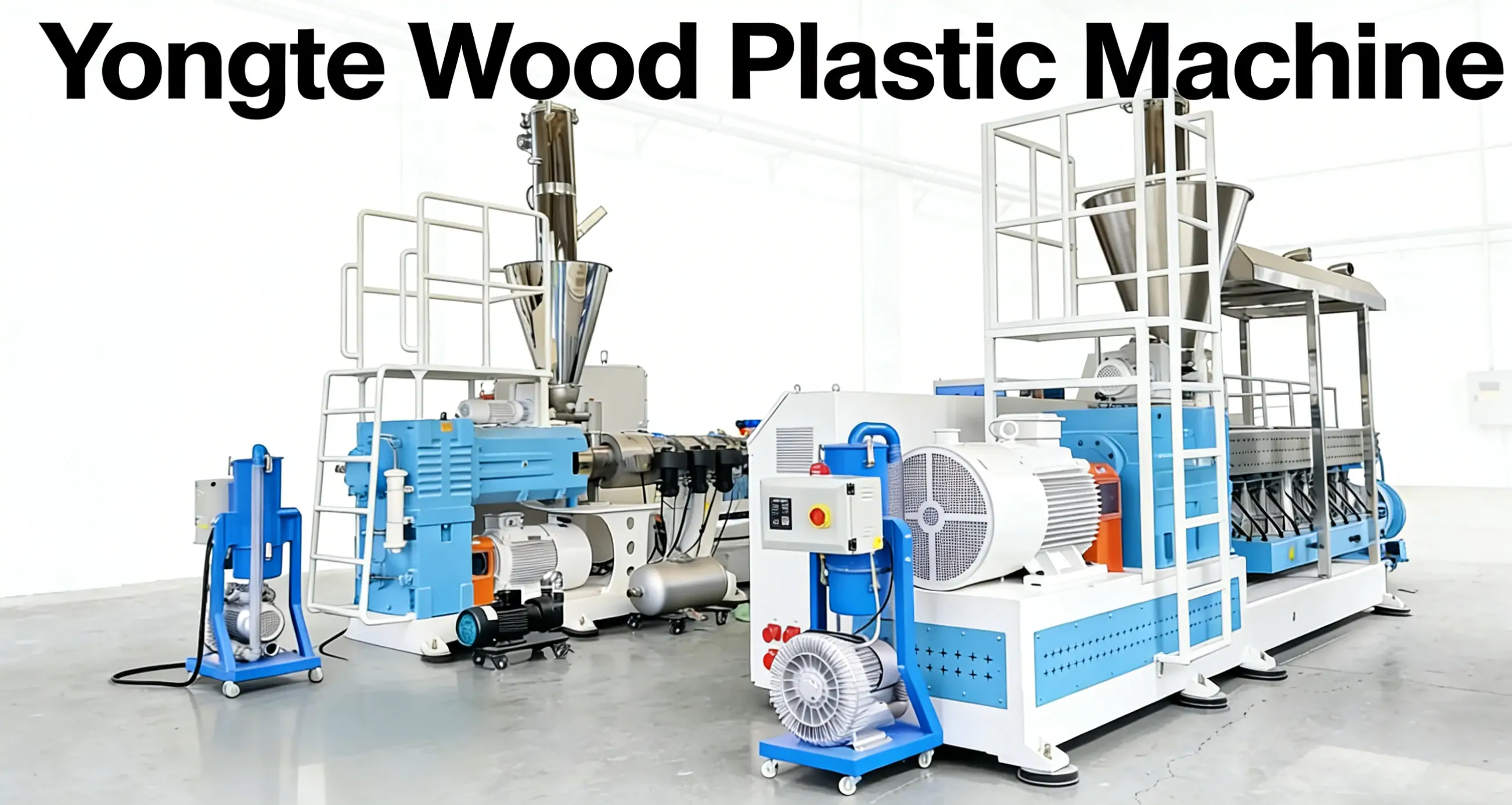
Yongte WPC production plant (wood plastic composite production line) is a specialized complete set of production equipment designed for processing waste plastics and waste wood fibers into wood-plastic products.
 20 2026-09
Flange Connection for Screw and Gearbox of Conical twin screw extruder
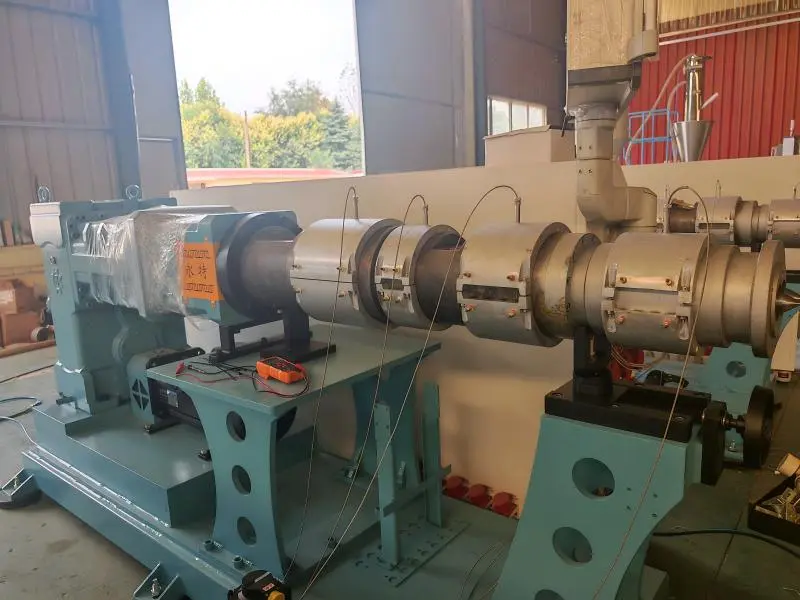
Yongte's conical twin-screw extruders typically employ an elastic coupling connection method; however, in response to a specific customer requirement, Yongte engineers have specially designed and manufactured a batch of conical twin-screw extruders featuring a flange-based rigid direct connection – these units are primarily used for the extrusion production of PVC window profiles.
 15 2026-09
How to solve WPC door strip misalignment problem?
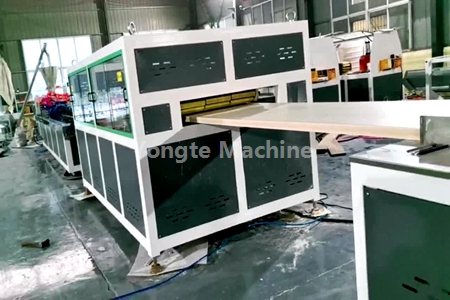
Distortion in WPC door reinforcement strips typically involves the internal ribs, with common signs including lateral shifts or S-shaped warping, inconsistent thickness (varying between thicker and thinner sections), overall twisting, and, in severe instances, detachment from the outer wall, cavity misalignment, or rebound deformation post-cooling.
Core mechanism: uneven extrusion from the machine head → asymmetric shaping resistance → non-uniform cooling shrinkage → skewed traction force distribution.
 14 2026-09
Mold Optimization for Waste Plastic Lumber Machine
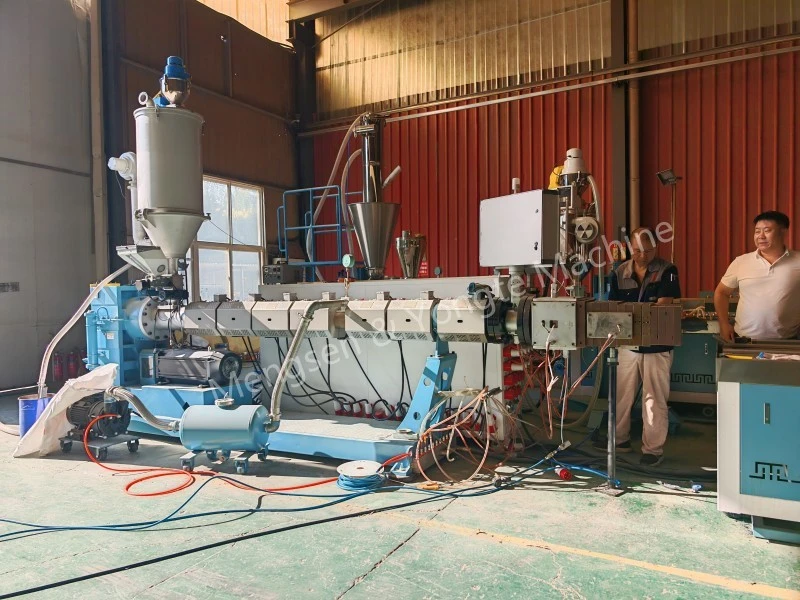
Our team recently completed a new round of extrusion trial production for 200*50mm solid thick plastic profiles, also known as plastic lumber. The core objective of this project is to achieve standardized, continuous and automated mass production of high-performance solid plastic lumber using waste plastics as the raw material, promoting technical iteration and industrial upgrading of waste plastic recycling and high-value reprocessing.
 11 2026-09
Disassembly and Assembly Parallel Double Screw for WPC Pelletizing Machine
Yongte WPC Pelletizing machine with SH75 Parallel Double-Screw Extruder – Building-block-style parallel double-screw threaded components (conveying blocks, kneading blocks, shearing blocks). These components must be operated in pairs with the left and right screws properly phased to ensure the correct phase relationship between the two screws during assembly, thereby preventing component interference or abnormal equipment operation caused by phase deviation.
 10 2026-09
Causes of screw sudden fracture during operation of WPC granulator extruder
The fracture of WPC granulator extruder parallel double-screw threaded components represents a brittle fracture mode; it is rarely caused by a single factor such as instantaneous overload, but rather results from the combined effects of material defects, stress concentration, and operational shock loads. These causes can be classified into four major categories: the material itself, machining and assembly processes, manufacturing and operating conditions, and equipment malfunctions.