How To Improve Production Speed of WPC Decking Extrusion Line?
Optimizing Production Speed for WPC Decking Extrusion Lines: A Comprehensive Guide
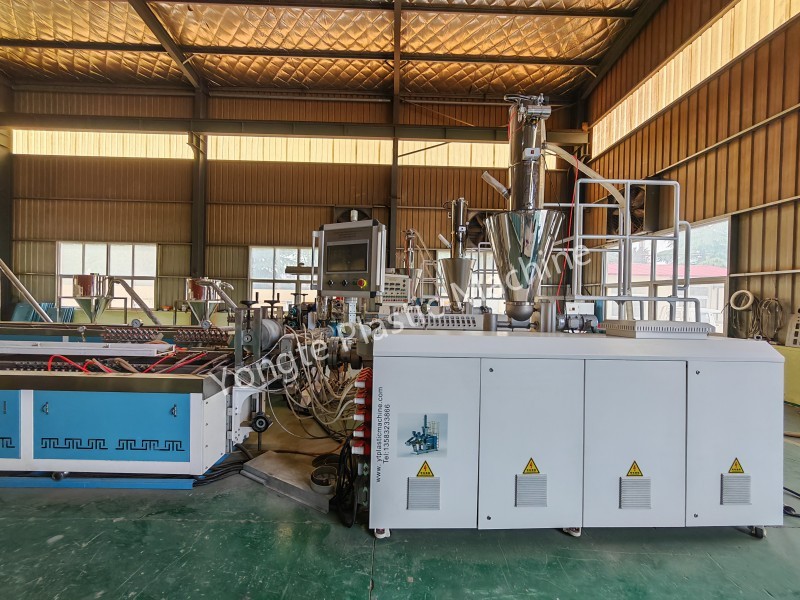
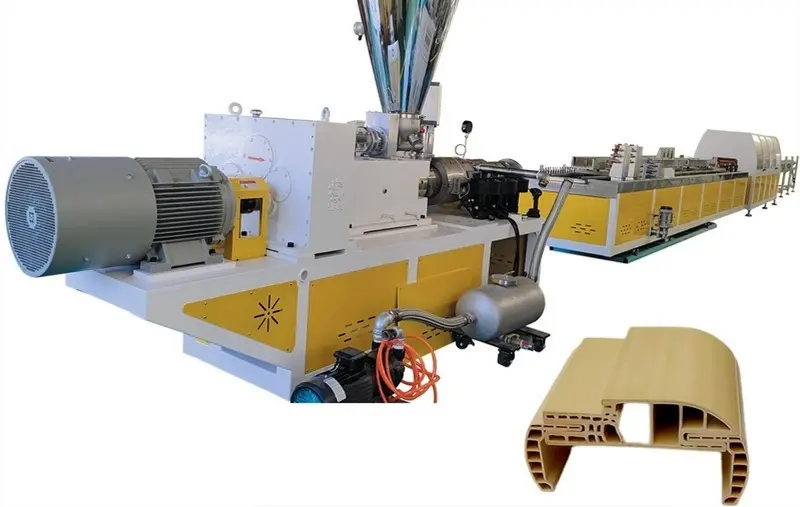
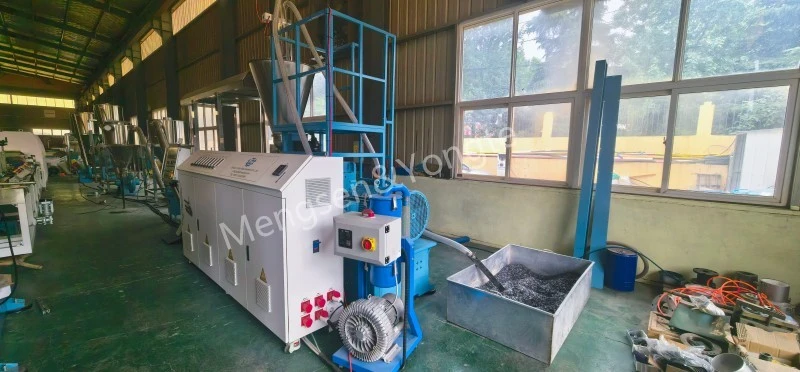
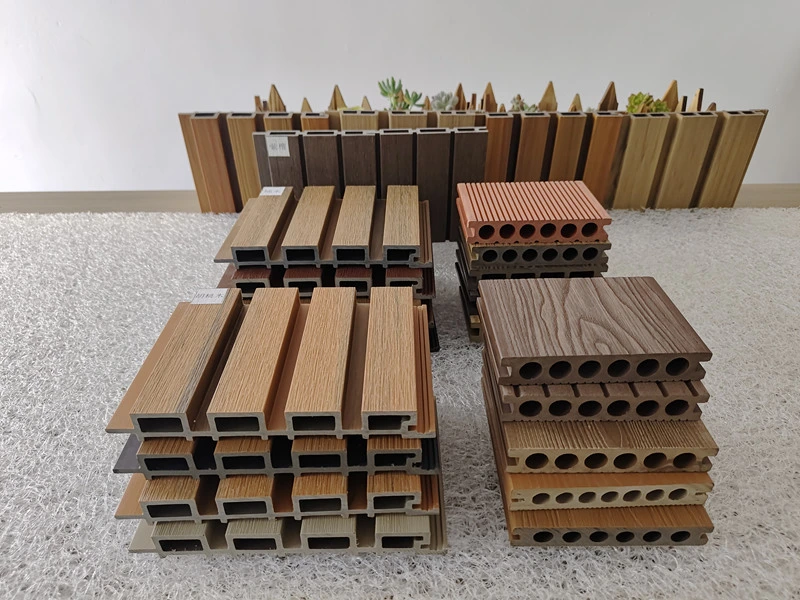
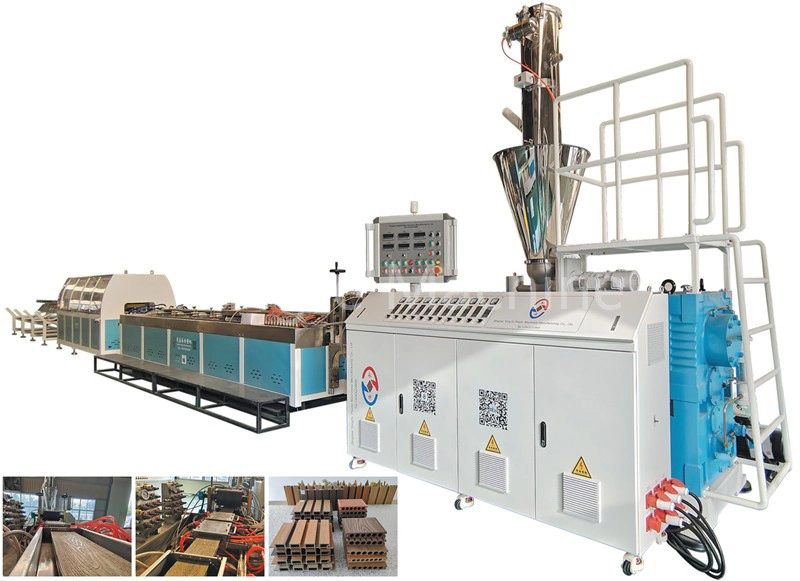
Yongte is professional manufacturer for high speed WPC decking extrusion line with high capacity to make high quality WPC decking products. To maximize production speed in WPC decking extrusion lines, the core strategy focuses on five interconnected objectives: stabilizing plasticization efficiency, minimizing material resistance, enabling rapid cooling, ensuring full-line synchronization, and reducing downtime—all while upholding stringent product quality standards.
I. Formulation and Raw Material Pretreatment (Foundation for Smooth Extrusion)
1. Optimize formulation to enhance flowability and thermal stability
· Compatibility agent/linker: Add sufficient maleic anhydride-grafted PE/PP (e.g., MAH-g-PE) to enhance wood powder-plastic adhesion, thereby reducing agglomeration and melt fracture.
· Lubricant system:
o Internal lubricants (e.g., stearic acid, PE wax) reduce melt viscosity, thereby decreasing screw shear heat and main unit load.
o External lubricants (e.g., paraffin, oxidized polyethylene wax): Reduce material-to-cylinder/mold friction and lower extrusion pressure.
o The total addition amount should be controlled within 1%–3% to prevent excessive external sliding that may cause stratification and surface defects.
· Filling and wood powder: The moisture content of wood powder should be controlled to ≤3%, with uniform particle size (80–120 mesh); activated calcium carbonate should be selected to reduce oil absorption and viscosity increase.
2. Mixing and Pre-plasticization (Front-end Bottleneck)
· High-speed hot mixing combined with cold mixing ensures uniform mixing without dead zones, preventing localized "dead material" or agglomeration.
· When feasible, the pre-grinding process can be incorporated to fuse powdered materials into granules, ensuring more stable feeding, faster plasticization, and a 20%–30% increase in line speed.
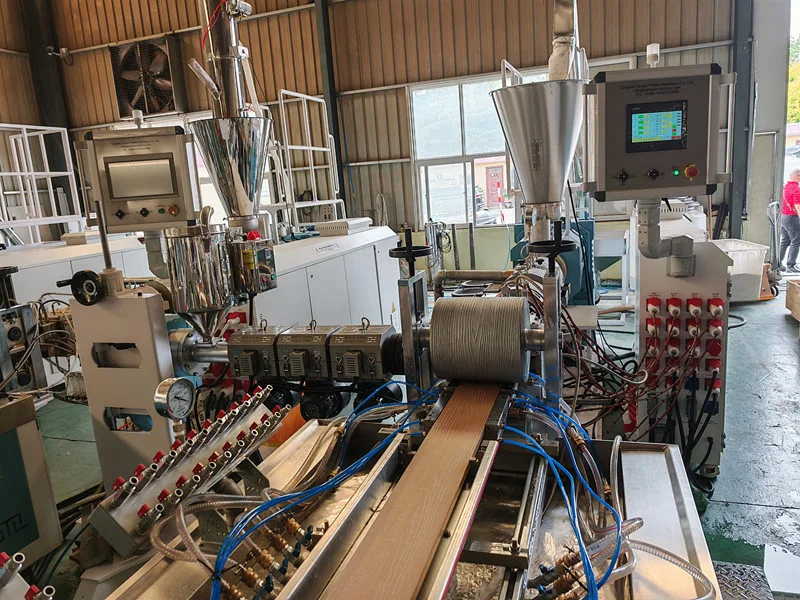
II. Extruder Host and Screw (Core Power Unit)
1. Optimization of Screw and Barrel
· High aspect ratio (L/D=40–48) and high-torque parallel twin screws are selected to enhance shear and mixing performance, making them suitable for high-filling WPC formulations.
· Screw combination: increase the volume of conveying section, optimize the layout of mixing block / shear block, reduce the shear heat and improve the conveying efficiency under the premise of plasticizing.
· Mold barrel heating: employs zoned precision temperature control (PID) with temperature fluctuations ≤±1℃ to prevent localized overheating or insufficient plasticization.
2. Speed and load matching (key to acceleration)
· Motor speed: Gradually increase the speed while maintaining 70%-90% of the rated torque and stable current (PE/PP systems can reach 150-250 rpm).
· Feeding synchronization: A weight-loss feeder is employed, which is closed-loop linked with the main machine's rotational speed to ensure a screw slot filling rate of 70%–90%, preventing "idle rotation" or overload.
· Vacuum system: Maintains stable high vacuum (-0.08 to-0.09 MPa), promptly removes water vapor and volatile components, reduces bubbles, improves surface quality, and enhances processing speed.
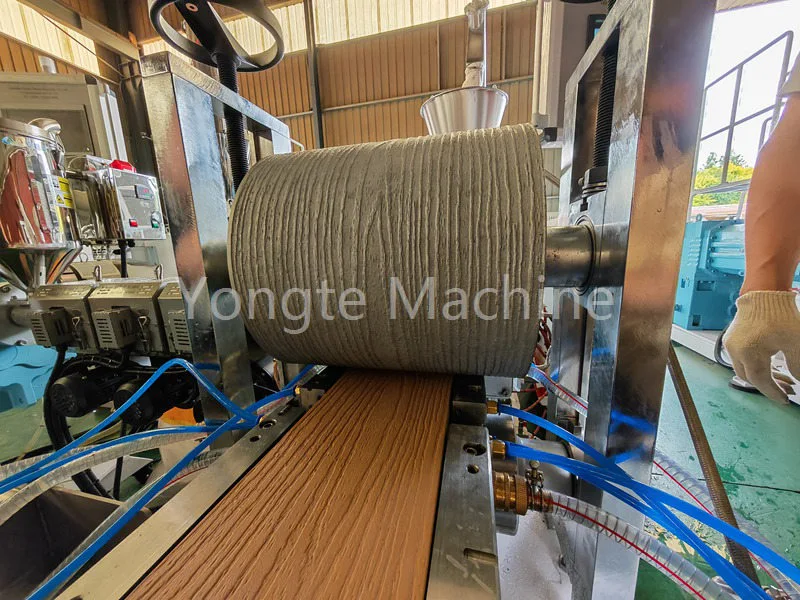
III. Mould and Setting (Determine Maximum Linear Speed)
1. Mold Design and Flow Channel Optimization
· The hanger type and fish tail type die head optimized by CFD simulation have smooth flow channel and uniform pressure distribution, which can avoid material sticking and local overheating.
· The gap of the die is reasonable, and the compression ratio is moderate (3-5:1), which reduces the extrusion pressure and melt resistance.
· Mold heating: with zoned temperature control and sufficient heating power, the temperature of the melt in the mold cavity is ensured to be uniform and the fluidity is consistent.
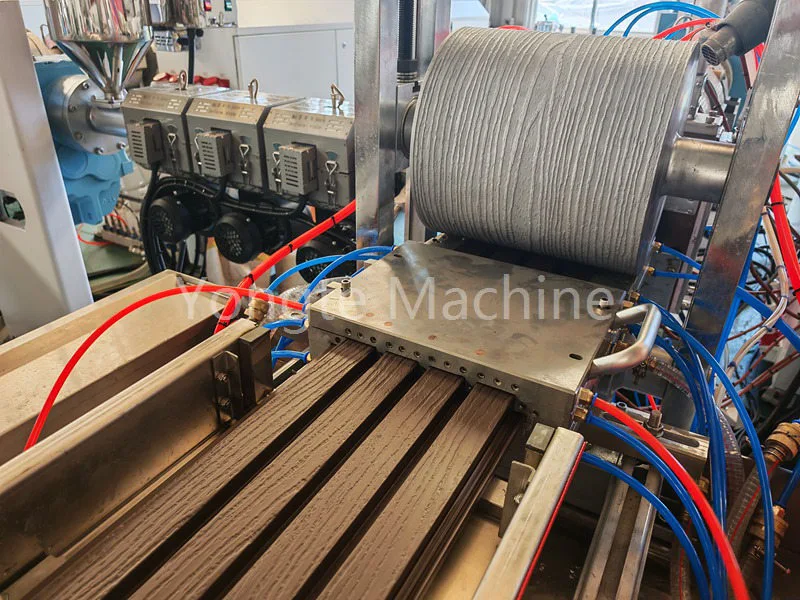
2. Calibration system (core bottleneck for speed improvement)
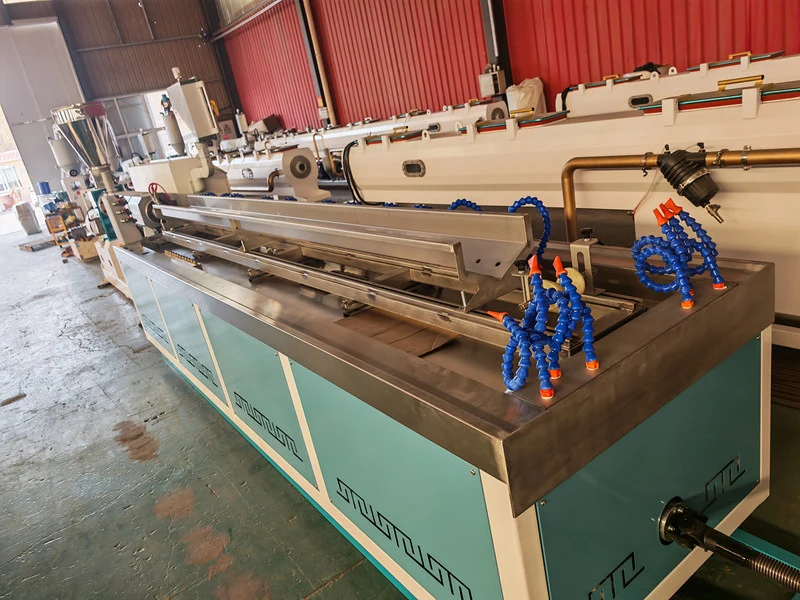
· The elongated setting table (typically 8–12m) increases the cooling area and contact time.
· coolant passage :
o The high-flow, low-temperature circulating water (15–25°C) is employed to rapidly dissipate heat and shorten the setting time.
o Multi-point spraying in the mold and vacuum adsorption ensure the profile adheres to the mold quickly, maintains dimensional stability, and prevents deformation.
· Vacuum stability: Ensures the profile is fully adsorbed in the forming die with uniform cooling, significantly enhancing the traction speed.
IV. Traction, Cooling, and Rear Section (Synchronous Across the Entire Line)
1. Traction System
· The multi-roll, high-friction traction machine is synchronized with the main machine speed in closed-loop (PID), with linear speed fluctuation ≤±0.1m/min.
· Traction speed matching extrusion rate: Under the premise of allowing shaping cooling, gradually increase the traction to achieve "high-speed extrusion + high-speed traction".
2. Cooling system (secondary cooling)
· Extend the spray cooling water tank (5–10m) to ensure the profiles rapidly cool to room temperature after leaving the forming table, preventing subsequent deformation or poor cutting.
· Cooling fan auxiliary: Surface forced air cooling to enhance cooling efficiency.
3. Cutting and Palletizing (Reducing Downtime)
· The production is continuous without stopping.
· Optimize cutting parameters to reduce burrs and waste, and lower the frequency of tool changes and cleaning.
· Automatic palletizing / stacking: reduces manual intervention and improves production efficiency.
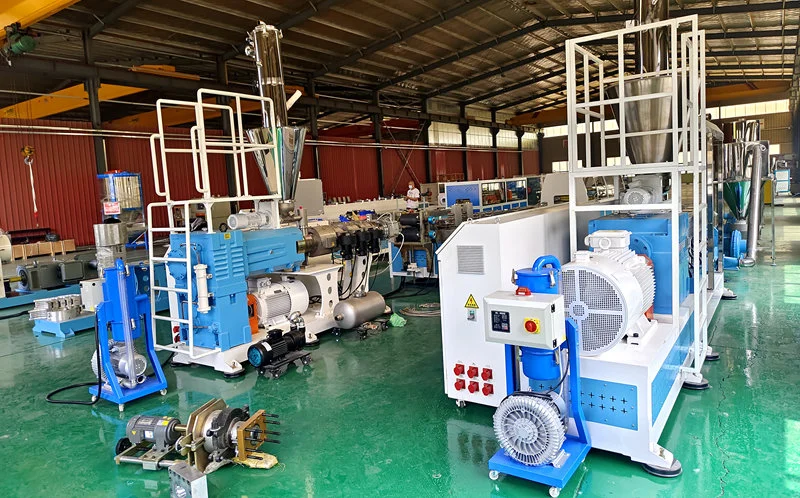
V. Process Control and Intelligence (Stabilized Acceleration)
· Temperature curve optimization:
o The barrel: low temperature in feeding section (anti-bridging) → gradually heating in plasticizing section → constant temperature in homogenizing section → slightly higher in die head (to maintain fluidity).
o Avoid the "low front, high back" pattern to prevent insufficient plasticization and pressure spikes.
· Pressure monitoring:
Maintain the die head pressure within a reasonable range (e.g., 10–18 MPa). If significant pressure fluctuations occur, reduce the speed or review the formulation/mold.
· Integrated system control:
PLC manages all components including host, feeding, vacuum, traction, cooling, and cutting with one-touch start/stop and real-time parameter adjustment.
· Online inspection:
laser diameter measurement, real-time feedback of thickness/breadth, automatic fine-tuning of traction/temperature, reducing scrap and downtime for adjustments.
Summary
To achieve comprehensive optimization, improvements must span multiple critical areas: formula and raw material pretreatment, extrusion main machine and screw configuration, mold design and shaping systems, traction cooling and downstream processes, as well as process control and intelligent management systems. First, optimizing the material formula to enhance fluidity and thermal stability—combined with precise mixing and pre-plasticization—establishes the fundamental basis for smooth extrusion. Second, upgrading screw-barrel assemblies while ensuring optimal speed-load matching serves as a pivotal driver for speed enhancement. Third, sophisticated mold design, flow channel optimization, and vacuum shaping table improvements act as critical enablers for maximizing line speed. Additionally, downstream process optimization—encompassing traction systems, cooling lines, and automated cutting/palletizing—facilitates full-line synchronization and minimizes production downtime. Finally, advanced process control and intelligent technologies ensure stable, consistent production, thereby realizing sustainable speed improvements without compromising product quality.
Related News
- Advantages of Rubber Soaker Irrigation Pipes vs Traditional Irrigation Tubes
- Can Yongte Supply Turnkey Project Service for WPC decking plant?
- 200x50mm Recycled Solid Plastic Lumber Machine Tested Successfully
- Yongte WPC Column making machine with co-extrusion is successfully tested
- How can plastic film wastage be used to produce wood-plastic composite (WPC) products?
- WPC Extrusion Machine Temperature Setting
Leave me a message